The very first chapter of your Economics NCERT textbook, Class 10 is quite dense and involves a lot of thinking and analysis. Therefore, you need all the important concepts and points in one place to master the chapter.
Looking for the best Development Chapter Notes 1 Economics Class 10?
“Development Chapter Notes 1 Economics Class 10“ is a little step in that direction. Read your NCERT textbook and revise the chapter again and again to get the keywords and concepts stick to you brain.
We’ve also added some interactive elements to help you actively engage with the “Development” Chapter 1 notes (Class 10 Economics) and understand the concepts more clearly.
These Development Chapter Notes 1 Economics Class 10 are designed for easy revision, covering everything from Per Capita Income to Sustainable Development. This guide simplifies the complex NCERT concepts into easy-to-memorise points, complete with interactive self-assessment quizzes to test your knowledge instantly.
Happy reading – Development Chapter Notes 1 Economics Class 10
What is Development? Class 10 Economics Overview.
What is Development?
Development refers to our aspirations and desires about how we want to live and what kind of country/society we want.
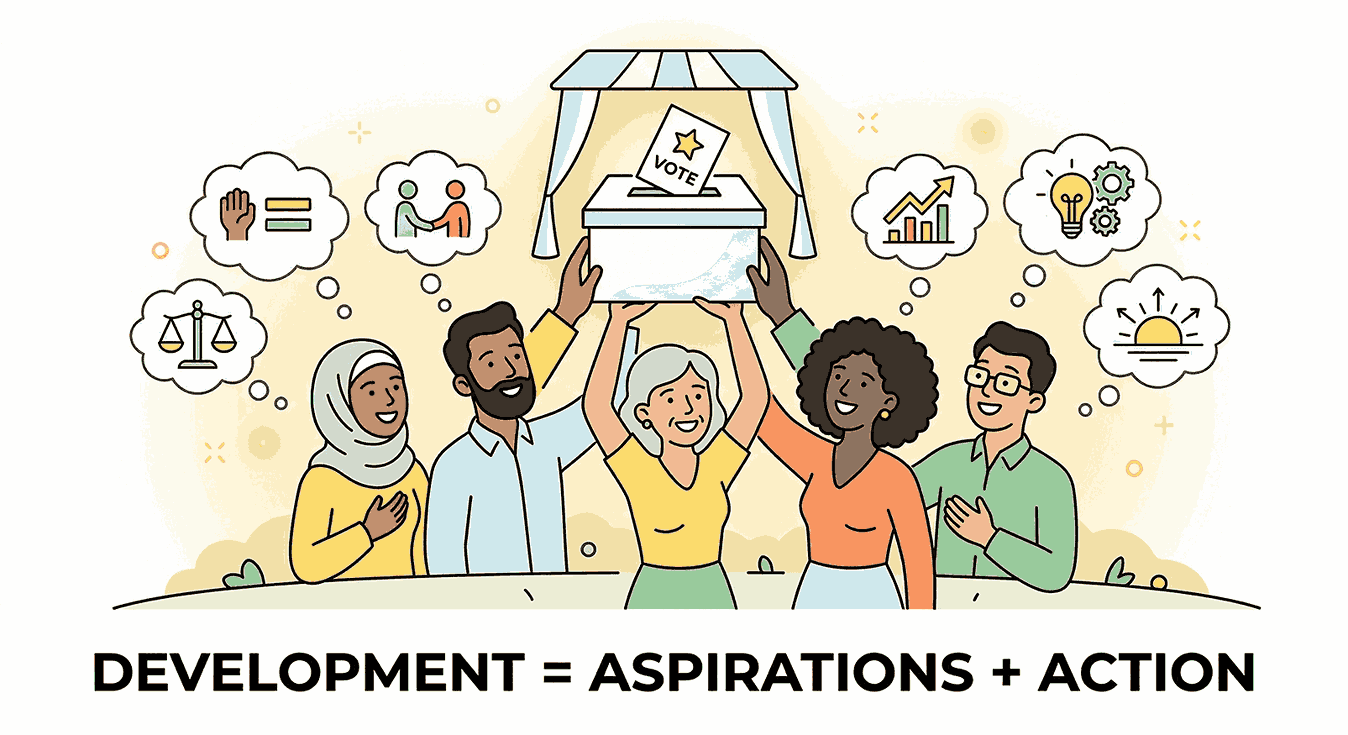
It involves key questions:
What do we require?
Can life be better for all?
How should people live together?
Can there be more equality?
Development = thoughtful questioning + collective efforts to achieve a better, more equal life.
WHAT DEVELOPMENT PROMISES — DIFFERENT PEOPLE, DIFFERENT GOALS
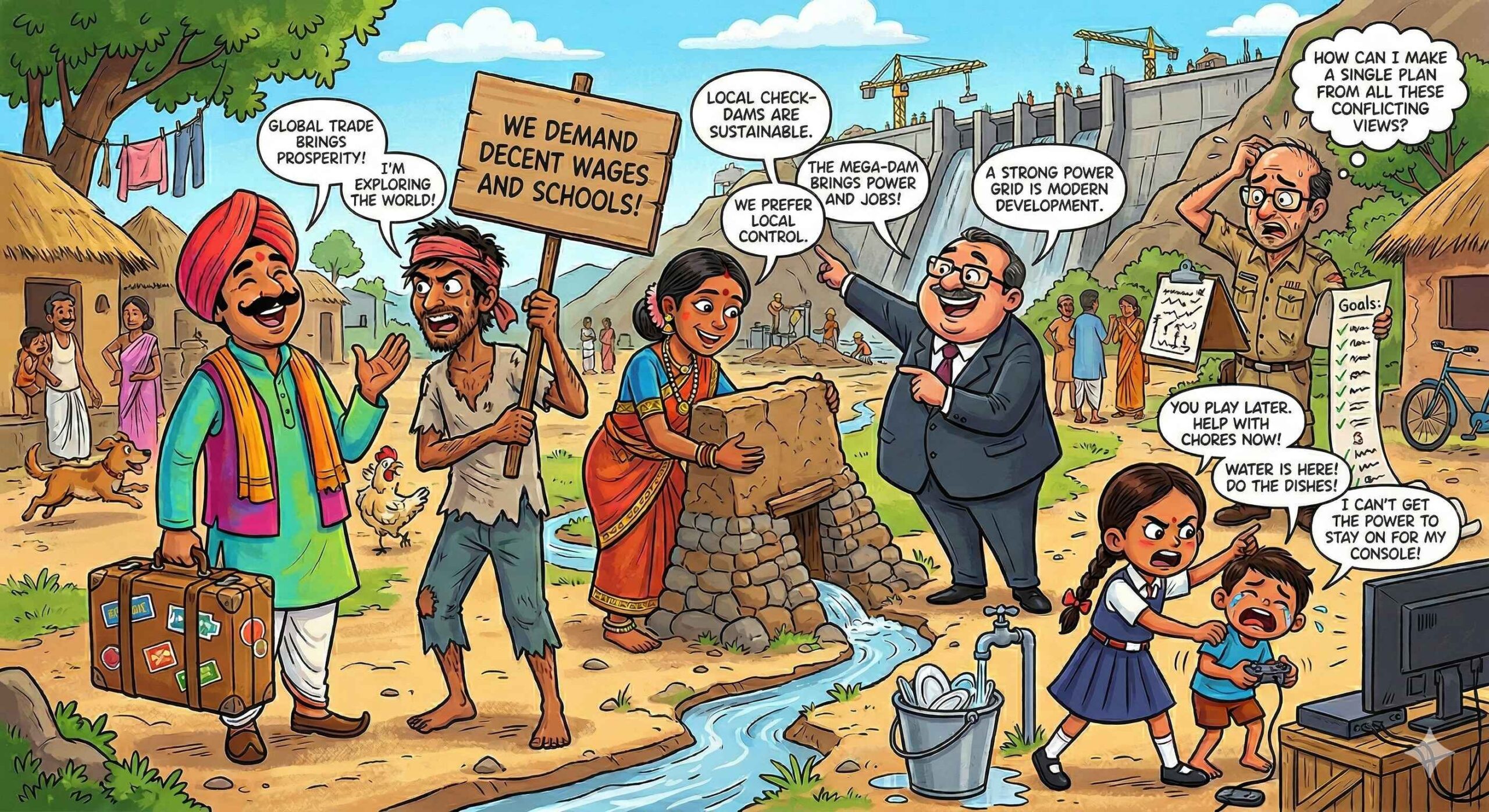
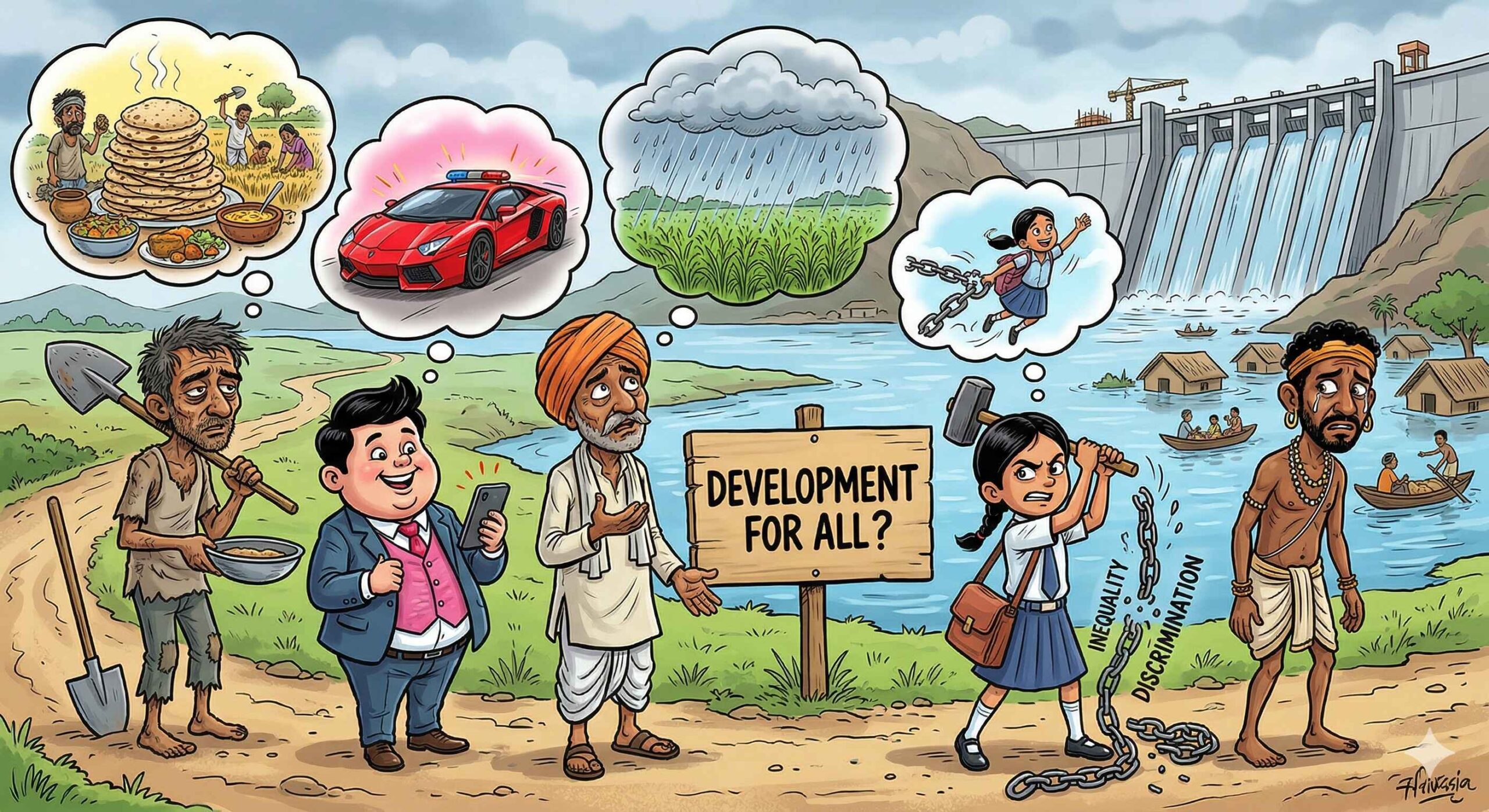
↪ Development means different things to different people based on their needs, aspirations, and life situations.
↪ Each person wants what is most important for them to live a better life
| Higher education, a good career, luxurious life | Developmental Goals / Aspirations |
|---|---|
| Landless rural labourers | More days of work, better wages, quality education, and no social discrimination |
| Prosperous farmers (Punjab) | High income, better crop prices, cheap labour, children settle abroad |
| Rain-dependent farmers | Irrigation facilities, protection from uncertain rainfall |
| Rural woman (land-owning family) | Equal freedom, ability to make decisions, pursue education (even abroad) |
| Urban unemployed youth | Job opportunities, stable income, better living conditions |
| Rich urban boy | Higher education, good career, luxurious life |
| Rich urban girl | Equal opportunities, freedom, and career growth |
| Adivasi (Narmada Valley) | Higher education, a good career, and a luxurious life |
Different people = Different goals
Development depends on individual priorities
Goals are shaped by
- Economic condition
- Gender
- Social status
- Location
😡Conflicting Goals
Sometimes, one person’s development can harm another.
Examples:
- A girl wants equality, but her brother may resist
- Industrialists want dams → more electricity
But it may displace tribals (adivasis)
👉 This shows:
- Development can be conflicting
- What is beneficial for one may be harmful for another
Hence,
- Development is not uniform.
- It is subjective (person-dependent).
- It can even be destructive for others
INCOME AND OTHER GOALS
₹ Income: A Common Goal
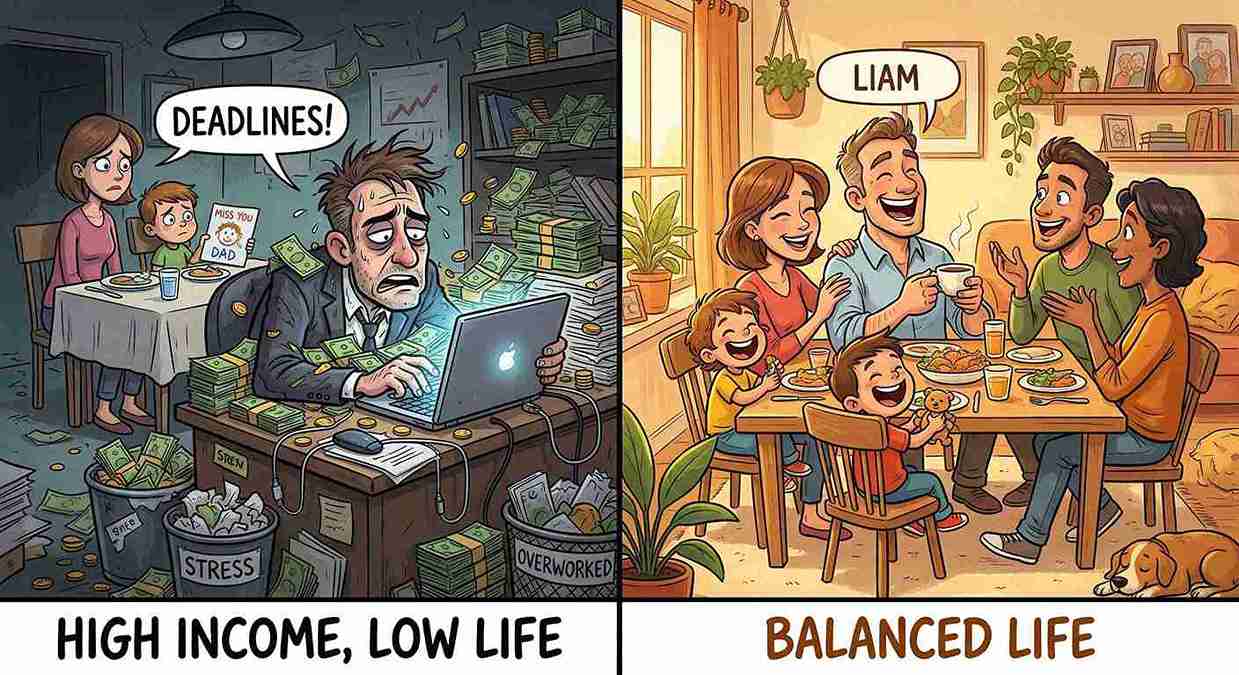
Most people want:
- Regular work
- Better wages
- Fair prices for their products
👉 This means higher income is a common goal for development.
Beyond Income: Other Important Goals
People also value
non-material goals, such as:
- Equal treatment
- Freedom
- Security
- Respect
They strongly resent discrimination
👉 These are often as important as income, sometimes even more important.
| Material Goals | Non-Material Goals |
|---|---|
| Income, money, goods | Respect, freedom, equality |
| Can be measured | Cannot be easily measured |
| Example: Salary | Example: Friendship, dignity |
Therefore:
Life depends on both material and non-material things
When choosing a
job, people consider:
- Income (salary)
- Job security
- Working conditions
- Family well-being
- Learning opportunities
Women, Work & Development
Paid work → increases dignity and respect
But also:
- Respect in society → more opportunities for women
- Safe environment → encourages women to work or start businesses
- Sharing housework → supports equality
👉 Development is a two-way process
Hence,
Development is a mix of goals. It includes:
- Income (material goals)
- Respect, freedom, equality (non-material goals)
👉 True development = Better income + Better quality of life
NATIONAL DEVELOPMENT
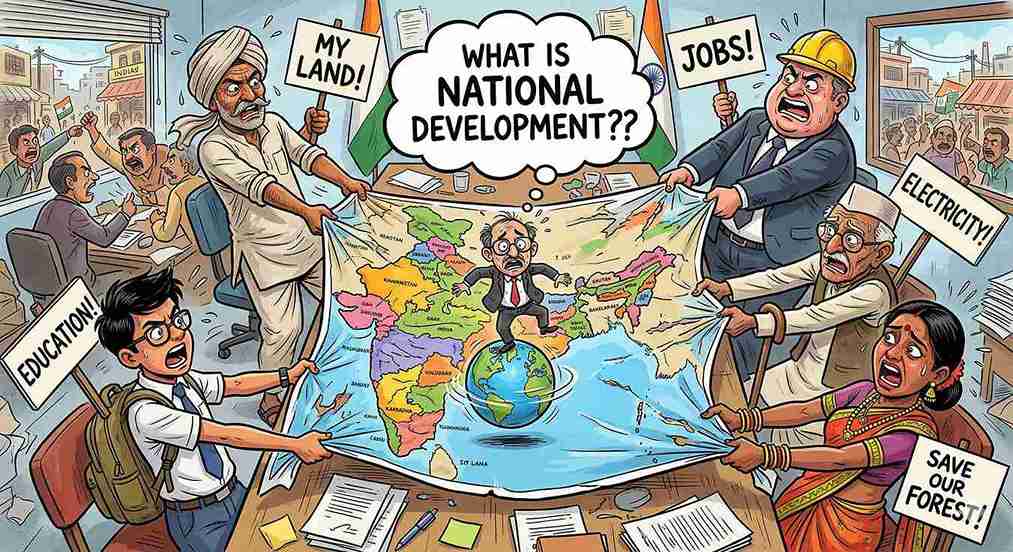
Since individuals have different goals, their ideas of national development also differ
Different people may
suggest different ideas like:
- More jobs
- Better education
- Improved infrastructure
- Greater equality
Conflicting Ideas
- Not all ideas of development are the same
- Some ideas may even conflict with each other
👉 Example:
- Building industries → more jobs ✅
- But may harm the environment or local people ❌
Questions for National Development
To decide the right path, we must ask:
- Is it fair and just for all?
- Does it benefit a large number of people or only a few?
- Is there a better alternative?
- Does it avoid conflicts and harm?
HOW TO COMPARE DIFFERENT COUNTRIES OR STATES?
Development can mean different things, yet countries are called:
- Developed
- Underdeveloped
Comparing Countries
- For countries, income is considered a key attribute
- 👉 Higher income = More developed country
- Reason:
- More income means access to:
- Goods
- Services
- Better living conditions
- More income means access to:
What is the country’s Income?
- Total Income = Income of all residents of the country
But not useful for comparison because:
Countries have different populations
Per Capita Income (Important Concept)
Per Capita Income = Total Income ÷ Total Population
👉 This shows:
- Average income per person
- Helps compare whether people are better off
| Low-Income Countries | Per Capita Income (2023) |
|---|---|
| High Income Countries | US$ 63,400 and above |
| Low Income Countries | US$ 2400 or less |
| India | Low-Income Countries |
INCOME AND OTHER CRITERIA
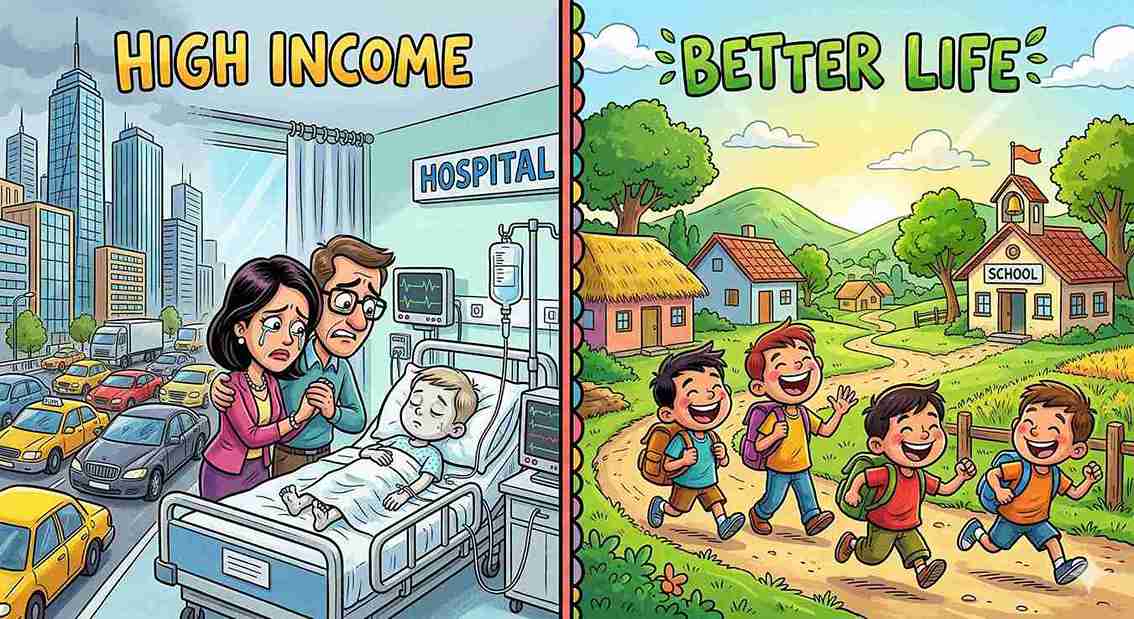
People want not only better income but also:
Security,
Respect,
Equal treatment,
Freedom
| State | Per Capita Income (2021–22) |
|---|---|
| Haryana | ₹ 2,64,729 |
| Kerala | ₹ 2,34,405 |
| Bihar | ₹ 47,498 |
Based on per capita income:
- Haryana → Most developed
- Bihar → Least developed
| State | Infant Mortality Rate | Literacy Rate (%) | Net Attendance Ratio (%) |
|---|---|---|---|
| Haryana | 28 | 82 | 73 |
| Kerala | 6 | 94 | 94 |
| Bihar | 27 | 62 | 69 |
Observations
Kerala:
- Very low Infant Mortality
Rate (6) - High Literacy (94%)
- High School Attendance (94%)
Haryana:
- Higher Infant Mortality (28) than Kerala
- But higher income
Bihar:
- Low income
- Low literacy (62%)
- About one-third of children are not attending school
We can see,
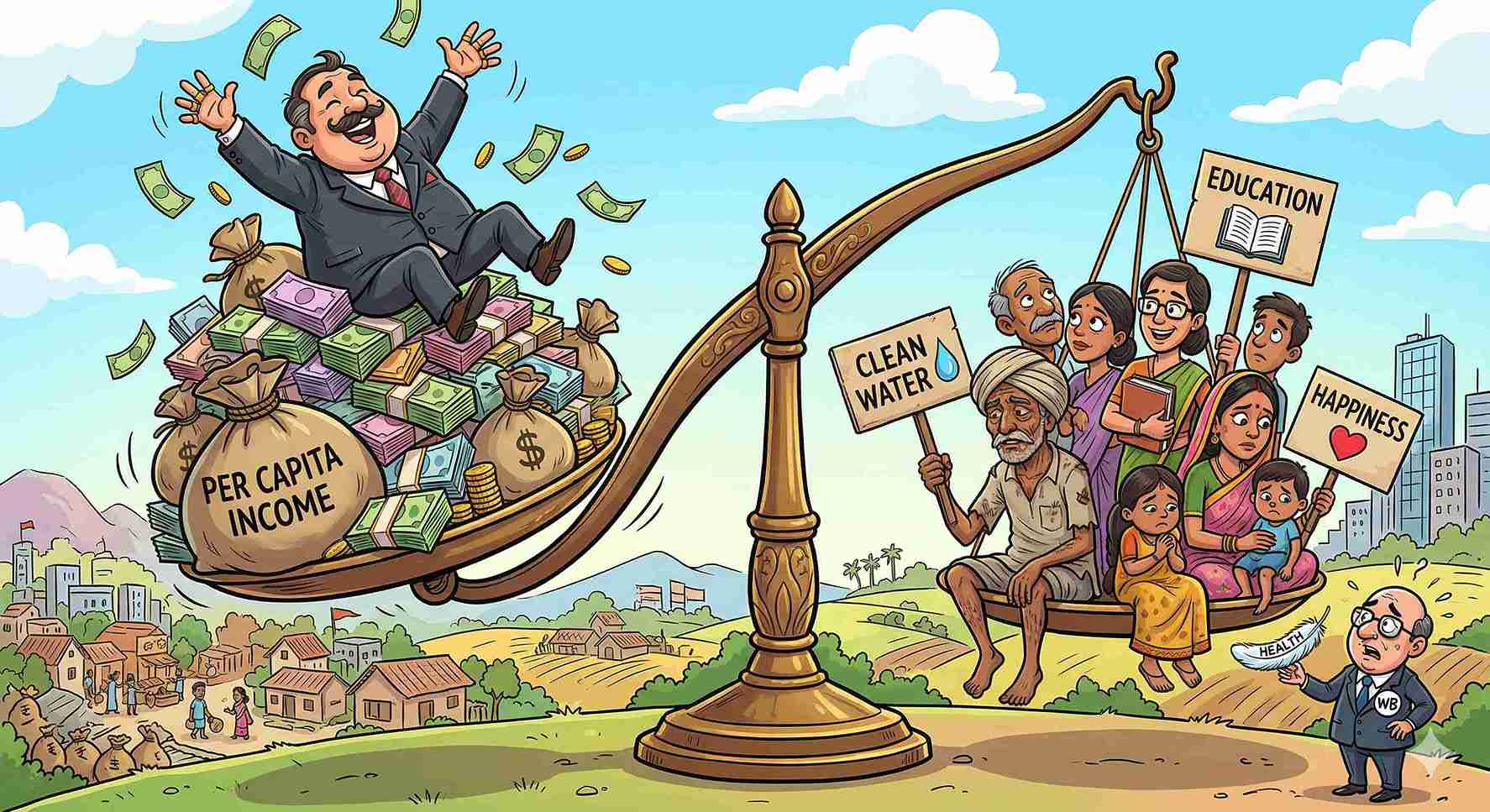
Higher income does not always mean better development. Other criteria like:
- Health (IMR)
- Education (literacy, attendance)
are also equally important
PUBLIC FACILITIES
Income alone is not adequate to ensure:
1️⃣ All goods and services
2️⃣ A good quality of life
Money cannot
always buy:
- Pollution-free environment
- Unadulterated medicines
- Protection from infectious diseases
Many important services are best provided collectively:
1️⃣ Security
2️⃣ Education
3️⃣ Health facilities
Example:
- Collective security is cheaper than individual security
- Education is possible when:
- Many children want to study
- The government provides schools and facilities
Role of Public Facilities
- Kerala:
- Low Infant Mortality Rate
- Due to adequate health and education facilities
- Public Distribution System (PDS):
- Where it functions well → better health and nutrition
Human Development
Focus is on:
- People
- Health
- Well-being
👉 Development means:
What is happening to citizens, not just income
HUMAN DEVELOPMENT REPORT
HDR
Published by UNDP
United Nations Development Programme
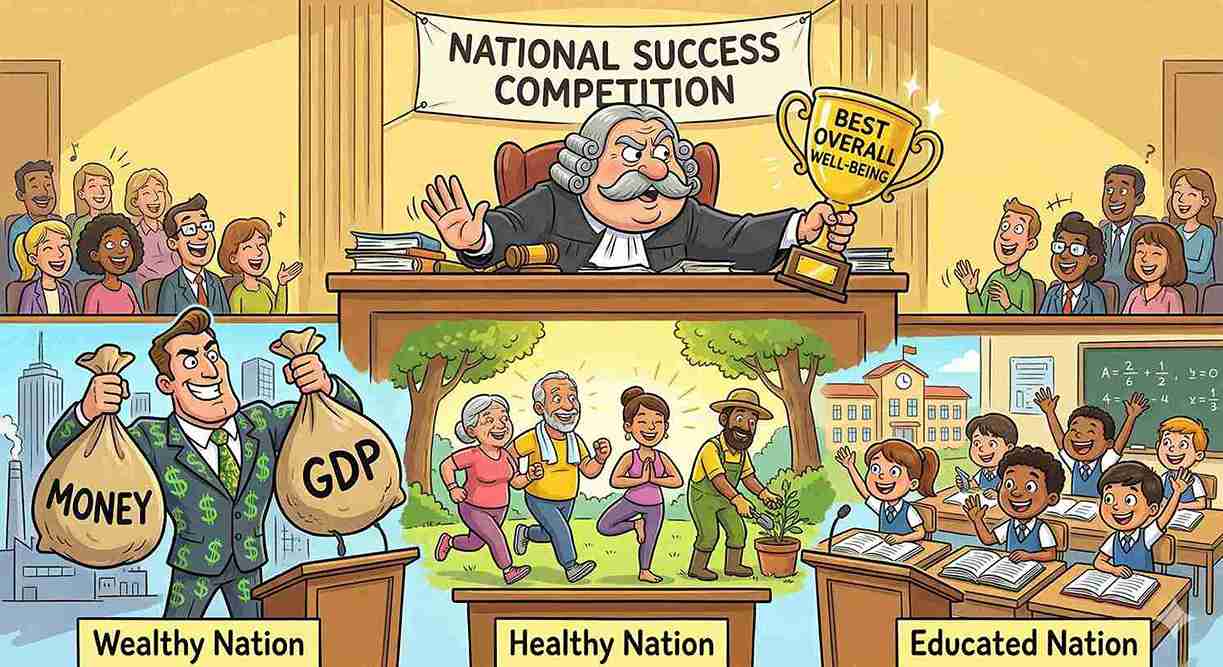
Key criteria:
- Health
- Education
- Income
Compares countries
based on:
- Educational levels
- Health status
- Per capita income
Human Development Index (HDI)
Used to rank countries
Key Indicators
- Life Expectancy at Birth
→ Average expected length of life - Per Capita Income
→ Measured in dollars
→ Ensures equal comparison
across countries
SUSTAINABILITY OF DEVELOPMENT
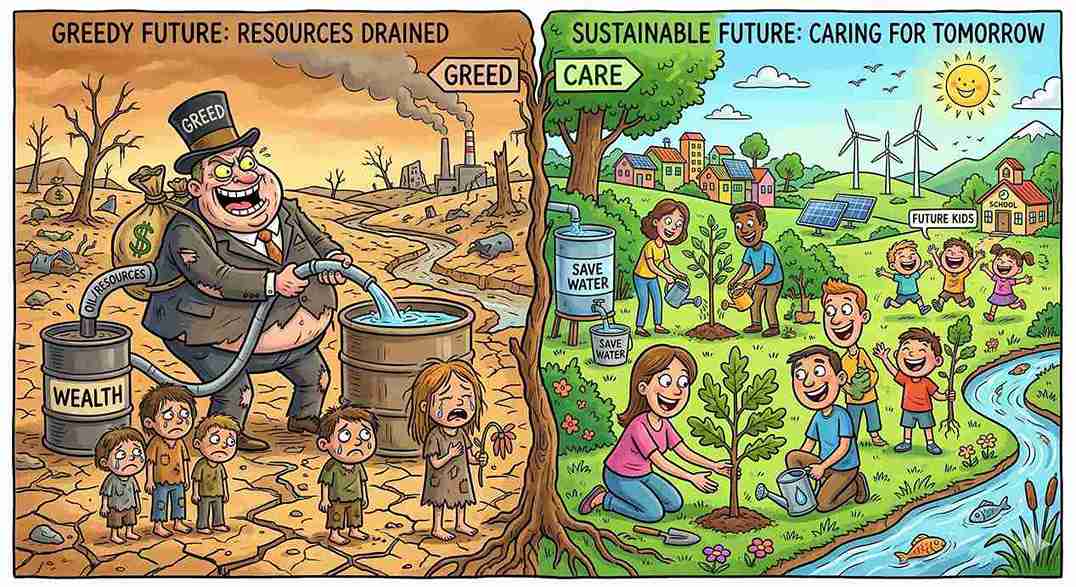
Development should:
- Increase or be maintained
- Be available for future generations
Renewable Resources
- Resources that are replenished by nature
- Examples: Groundwater, crops, plants
- ⚠️ Problem:
- Can be overused
- Example:
- Using more groundwater than rainfall replenishes
Non-Renewable Resources
- Resources with fixed stock
- Cannot be replenished
- 👉 Example:
- Crude oil
- ⚠️ Note:
- New sources may be discovered
- But will still get exhausted over time
Environmental
Impact
- Do not respect national or
- state boundaries
- Affect everyone
👉 The future of all is interconnected
Sustainability as a Field
A new area of knowledge
Involves:
- Scientists
- Economists
- Philosophers
- Social scientists
Core Idea
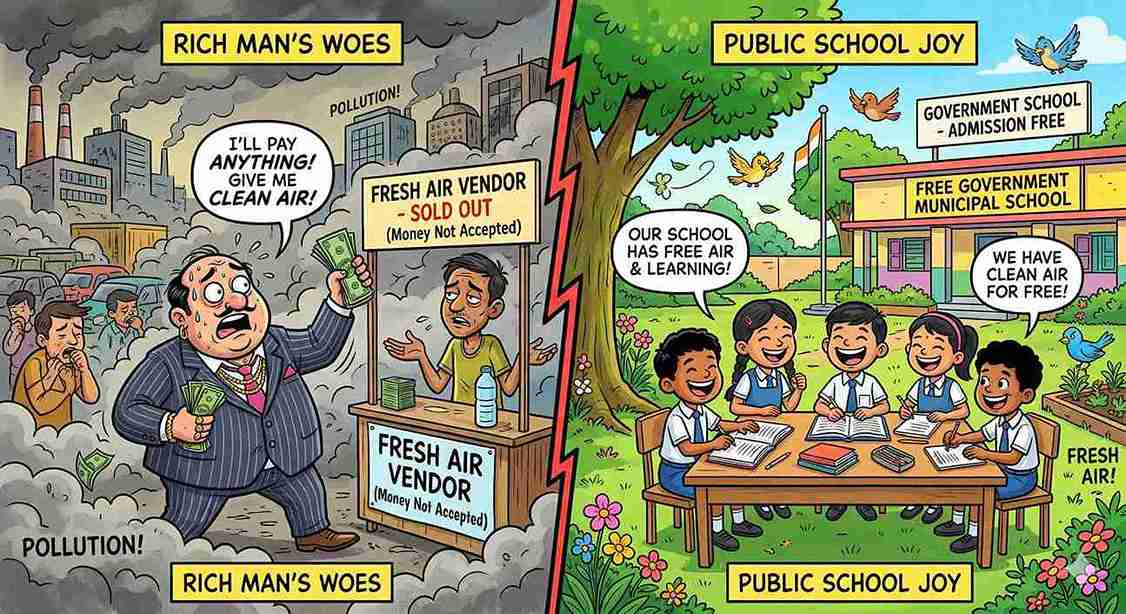
- Development must:
- Meet present needs
- Without harming future generations
Self-Assessment: Development Chapter Notes 1 Economics Class 10
Different people have different notions because each person seeks what is most important for fulfilling their own aspirations or desires.
Industrialists may want more dams for electricity, but tribals who get displaced may resent this and prefer small check dams.
For a landless rural labourer, development means more work, better wages, quality education for their children, and an end to social discrimination.
🏛️ Public Facilities Challenge
Choose: Should this be provided collectively or privately?
📊 Which State Tops This?
Choose the state that matches the description.
Renewable resources are replenished by nature (like groundwater), while non-renewable resources have a fixed stock and get exhausted after use (like crude oil).
Renewable resources can be overused if we consume them faster than nature can replenish them, making them unsustainable.
Environmental degradation does not respect national boundaries, so the future of all countries is linked together.
No, public facilities are also needed for development.
One thing money cannot buy is a pollution-free environment.
Public facilities are important because they provide essential services to all people.
Kerala has low IMR due to better health and education facilities.
Human development focuses on people, their health, and well-being.
🧠 Goal Sorter
Is this an income/material goal or a non‑material goal?
Development involves thinking about our aspirations, essential requirements, equality, and how to achieve a better life for all.
The past is important because the way we live today is influenced by it, and we cannot desire change without being aware of it.
Hopes and possibilities can be achieved in real life only through a democratic political process.
Income is not enough because it does not show health and education levels.
The UNDP publishes the Human Development Report.
HDI stands for Human Development Index.
One health indicator is life expectancy.
HDR compares health, education, and income.
♻️ Resource Sort
Is this resource renewable or non‑renewable?
🎯 Match the term to its meaning
Tap a card → then tap another card. Match all pairs!
🧩 Match the person to their aspiration
Tap a person → then tap a goal. Find all 4 matches!
The main basis for comparing countries is income.
Total income is not useful for comparison because countries have different populations.
Per capita income is the average income per person.
The World Bank classifies countries based on income.
A common goal for all people is higher income through better work and wages.
Two non-material goals are freedom and respect.
Yes, non-material things are equally or more important than income.
Job security is important because it gives a sense of safety and stability.
True development includes a mix of income and non-material goals.
🇮🇳 National Development: You Decide
Choose the option that is more fair & just for the country.
No, people also want security, respect, equality, and freedom.
Haryana has the highest per capita income.
Kerala has the lowest Infant Mortality Rate.
IMR indicates deaths of children before age one per 1000 births.
No, income alone is not enough to measure development. Other criteria are also important.
People have different views on national development because they have different needs and aspirations.
Yes, development ideas can conflict — they can benefit some people while harming others.
The main aim of national development is to ensure fair and maximum benefit for all people.
While choosing development goals, we should consider justice, fairness, and the number of beneficiaries.
FAQs Development Chapter Notes 1 Economics Class 10
What are the two main common goals of development?
Development is a mix of goals. While a higher income (a material goal) is the most common desire, people also prioritise non-material goals such as equal treatment, freedom, security, and respect. For many, these non-material factors are just as important as the money they earn.
Why is Per Capita Income used to compare countries instead of Total Income?
Total income is not a reliable measure because countries have different population sizes. Per Capita Income (Average Income) is calculated by dividing the total income of the country by its total population. This allows for a fairer comparison of the standard of living and whether the average person in one country is better off than in another.
How does Kerala have a better development record than Haryana despite lower income?
While Haryana has a higher Per Capita Income, Kerala performs better in human development indicators. Kerala has a significantly lower Infant Mortality Rate (IMR) and higher Literacy Rates because it has invested more effectively in public facilities like basic health care and education.
What is the difference between Renewable and Non-Renewable resources?
Renewable Resources: These are replenished by nature, such as groundwater and solar energy. However, they can still be exhausted if overused beyond their replenishment rate.
Who publishes the Human Development Report, and what are its criteria?
The Human Development Report (HDR) is published annually by the UNDP (United Nations Development Programme). It ranks countries using the Human Development Index (HDI) based on three key criteria:
Health Status (Life expectancy at birth)
Educational Levels (Literacy and school attendance)
Per Capita Income (Standard of living)