
Physics starts feeling real in this chapter. These Work, Energy, and Simple Machines Ch 7 notes cover exactly where that happens — when you finally understand why pushing a wall tires you out but counts as zero work, why a ball thrown upward slows down, and how a small force can lift something much heavier.
But the chapter is dense — formulas, theorems, definitions, and three different machines all packed together.
That’s what makes Work, Energy, and Simple Machines Ch 7 notes different from just reading the textbook — they cut through all of that, keeping only what matters for your understanding and your exams.
So whether you’re revising the night before or building concepts from scratch, these Work, Energy, and Simple Machines Ch 7 notes are the only thing you need to open.
These notes are made strictly based on the [Exploration] NCERT Science textbook for grade 9, Chapter 7
Work Done by a Constant Force
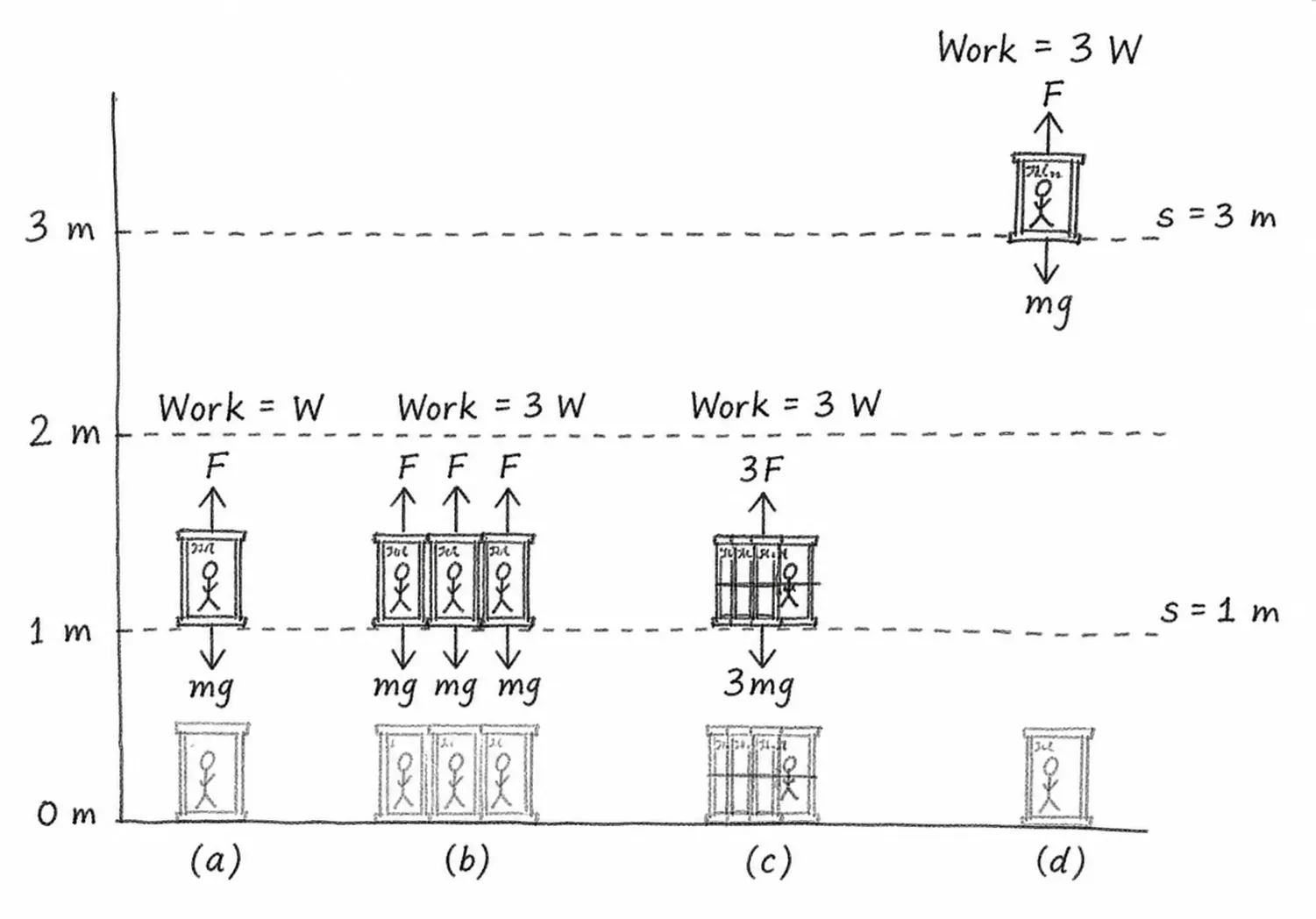
Important Observations:
➽ Work ∝ Force applied (more bags lifted = more work)
➽ Work ∝ Displacement (lifting higher = more work)
➽ Both force and displacement must be in the same direction
Definition:
“Work done on an object by a constant force = force applied × displacement in the direction of the force.“
W = F × s
SI Unit of work = Joule (J)
1 J = 1 N × 1 m Or 1 J = 1 Nm
1 joule = work done when 1 N of force moves an object 1 m in the direction of force
Since,
1 N = 1 kg m s–2
Using,
1 J = 1 Nm
Therefore,
1 J = 1 kg m² s⁻²
Force-Displacement Graph:
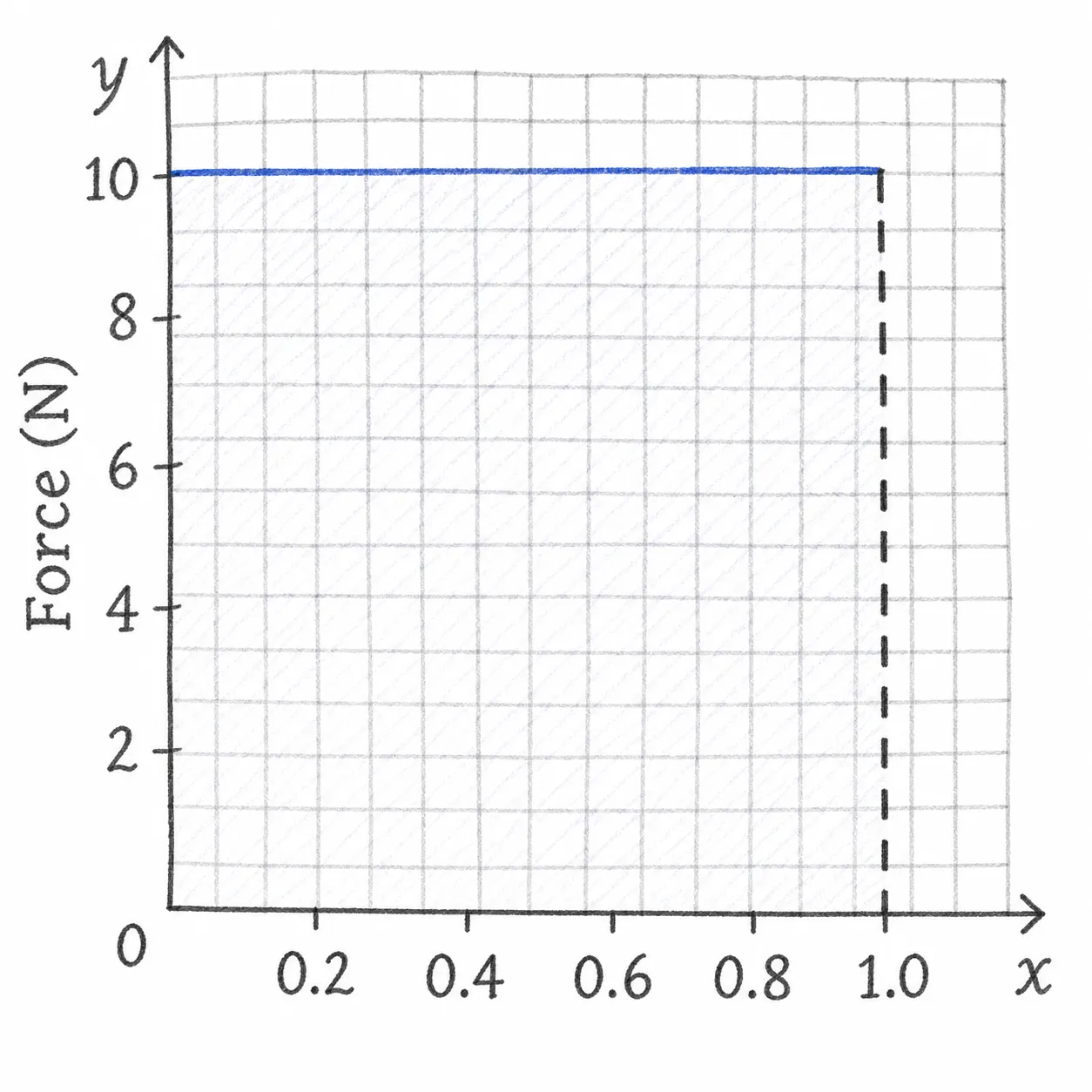
➽ Force (y-axis) vs Displacement (x-axis)
➽ Work done = Area under the graph
➽ For constant force ➜ area = rectangle
➽ For variable force ➜ area under the curve (between initial & final positions)
Remember:
➽ The formula works for any direction — vertical, horizontal, or otherwise
➽ Larger force, same distance ➜ more work
➽ Same force, larger distance ➜ more work
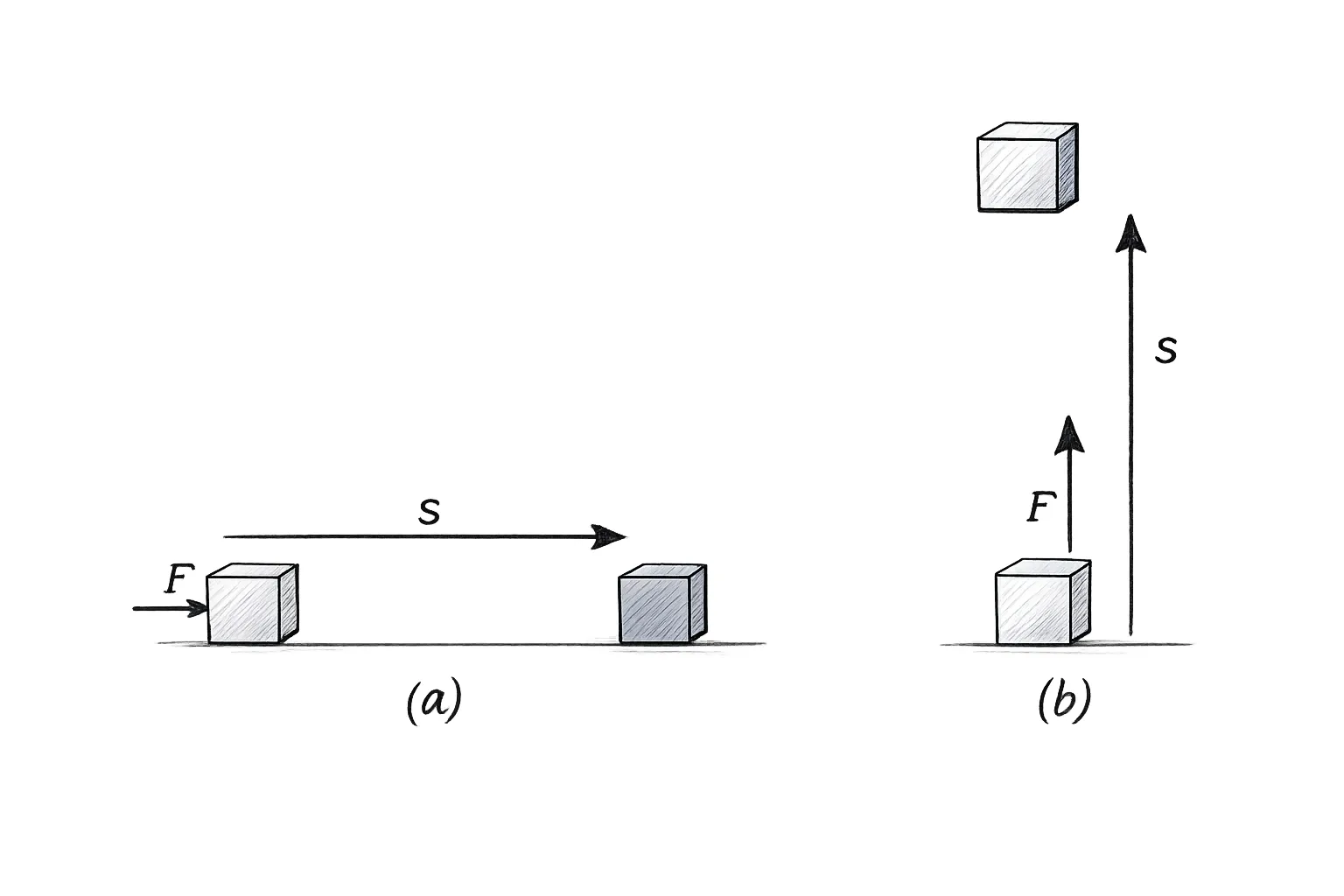
When is work done equal to zero?
W = F × s, so W = 0 when:
➽ F = 0 ➜ no force applied
➽ s = 0 ➜ no displacement (e.g., pushing a rigid wall)
Note: You may feel tired pushing a wall, but scientifically, no work is done on it — muscles use internal body energy, not mechanical work.
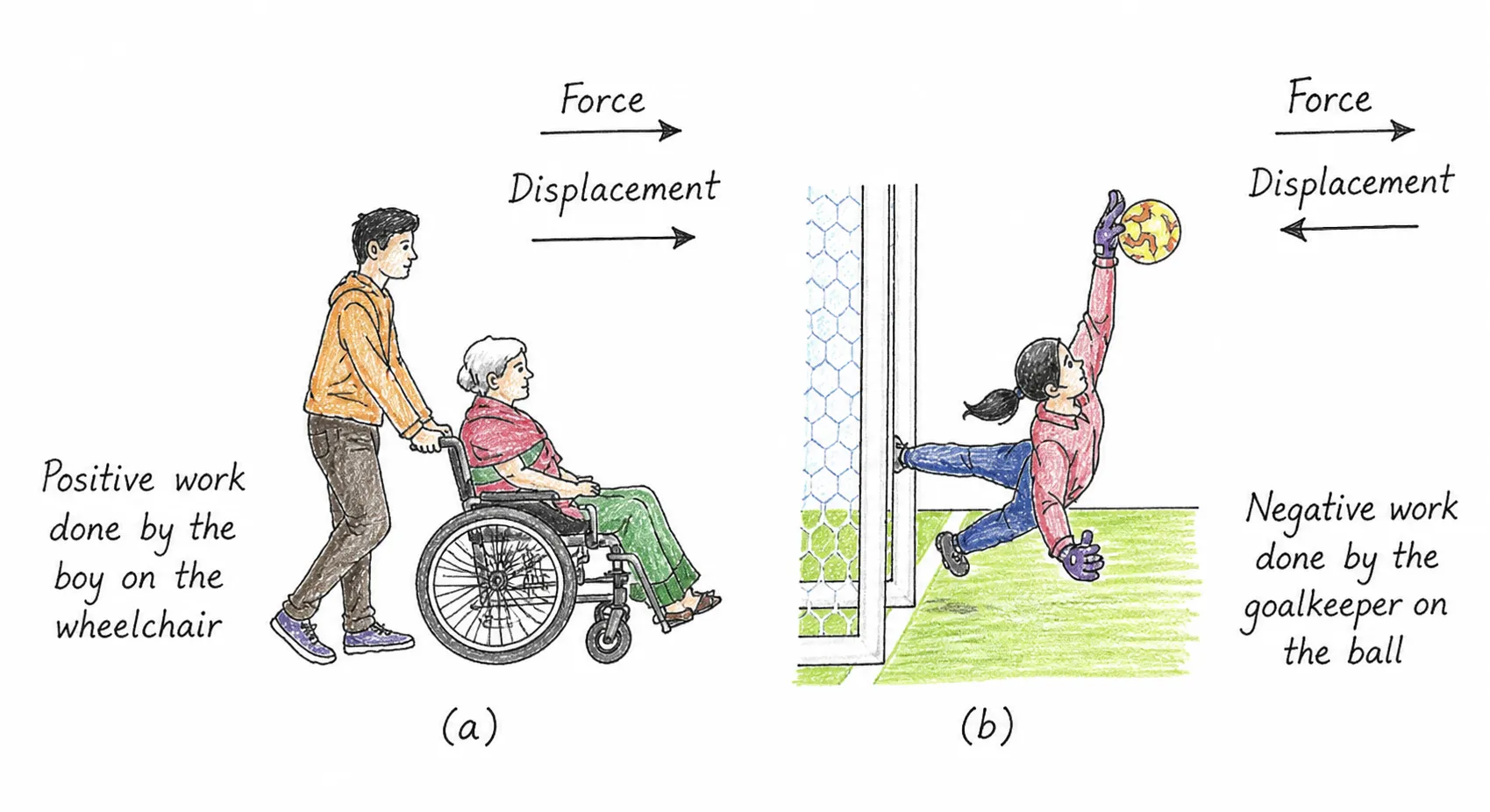
Positive and negative work done
| Condition | Work Done | Example |
|---|---|---|
| Force & displacement in same direction | Positive | Pushing a wheelchair |
| Force & displacement in opposite directions | Negative | Force & displacement in the same direction |
The Work-Energy Theorem
Energy
“An object having the capacity to do work is said to possess energy.“
Moving ball ➜ can knock wickets ➜ has energy
Raised flowerpot ➜ can damage objects below ➜ has energy
How is Energy Gained?
➽ Positive work done on an object ➜ object gains energy
➽ That energy can then be transferred to another object
e.g., ball hits wickets ➜ transfers energy ➜ wickets move
The work Energy Theorem
“Work done on an object = Change in its energy.“
Work and energy are closely related — work done appears as a change in energy
Holds for
- Single objects
- System of objects
- Even when forces are not constant
SI Unit
➽ Energy and Work share the same unit → Joule (J)
Forms of Energy
Energy = capacity to do work
Energy Can Exist in Many Forms
➽ Mechanical, Electrical, Thermal, Chemical, Sound, Light, etc.
➽ Energy can be converted from one form to another
Examples of Conversion
➽ Bulb ➜ Electrical ➜ Light
➽ Electric heater ➜ Electrical ➜ Thermal
➽ Food ➜ Chemical → Mechanical (muscles)
➽ Ringing bell ➜ Mechanical ➜ Sound
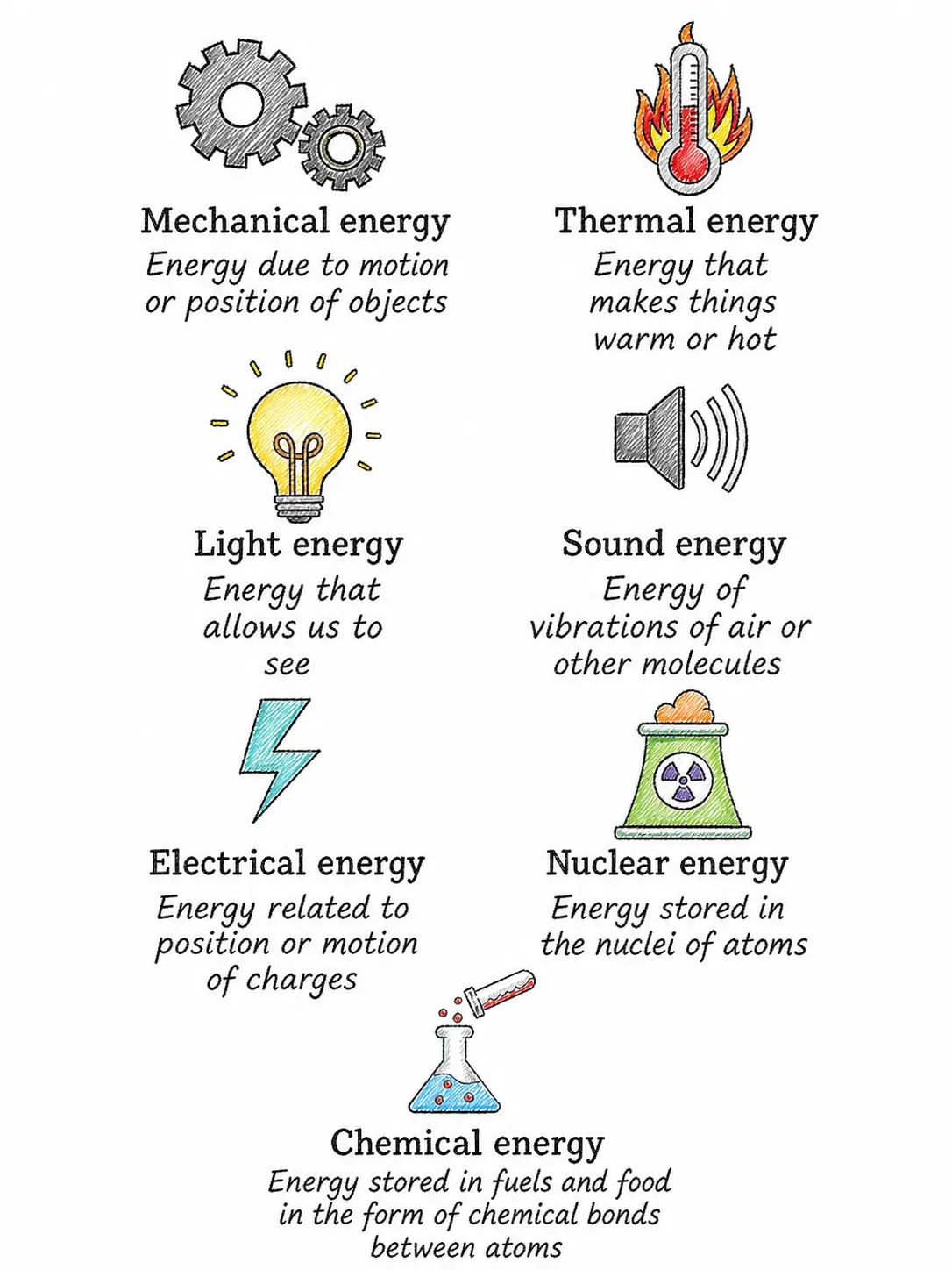
Mechanical Energy
“The energy an object possesses due to its motion or position.“
Two types:
● Kinetic Energy
● Potential Energy
Kinetic energy
“Energy possessed by an object due to its motion“
➽ All moving objects have KE
➽ Stationary object ➜ KE = 0
Formula Derivation (Brief)
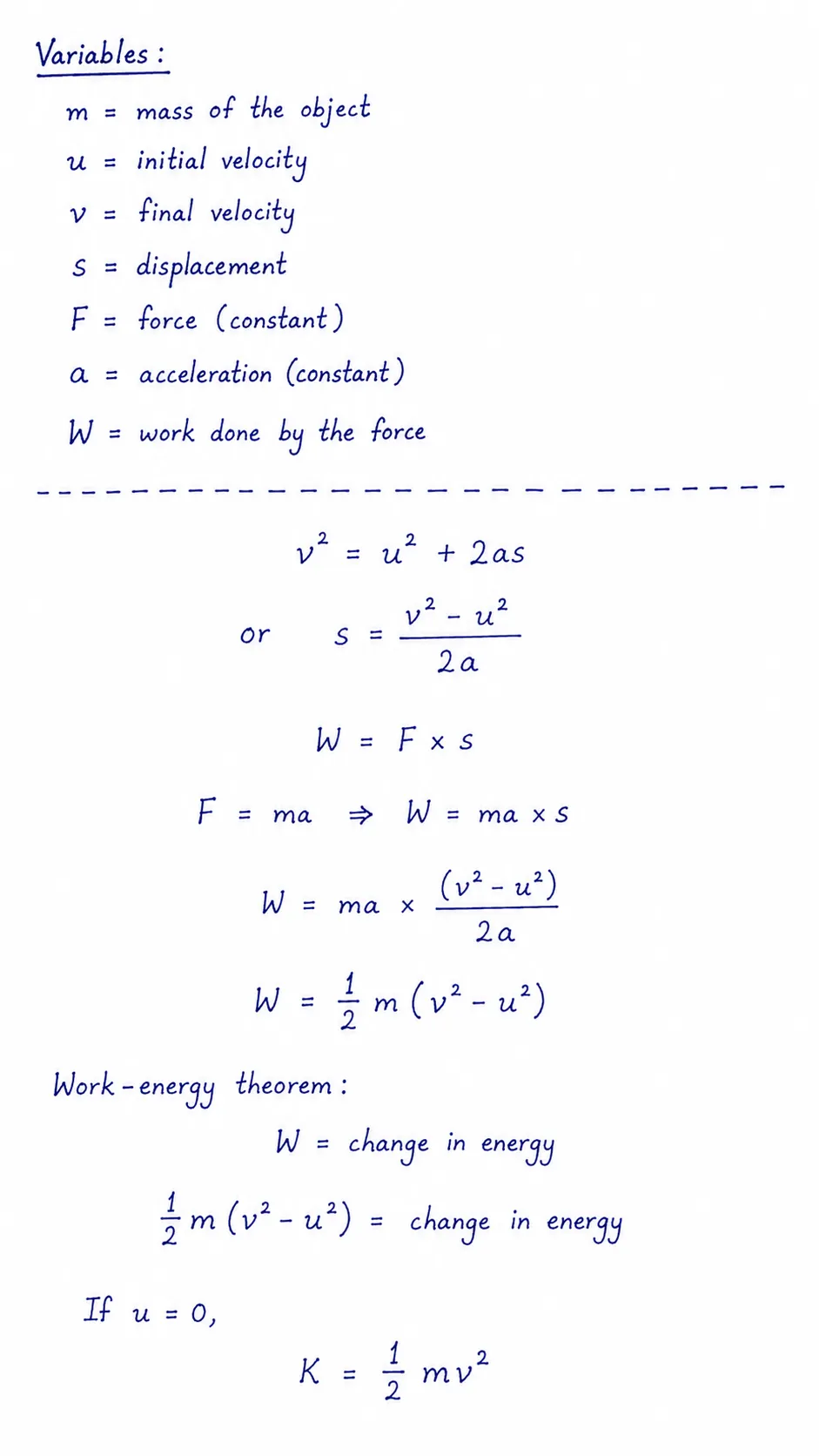
➽ m = mass (kg), v = velocity (m/s)
➽ SI unit ➜ Joule (J), no direction
KE & Work Relationship
| Work Done | Effect on KE |
|---|---|
| Positive (velocity ↑) | KE increases |
| Negative (velocity ↓) | KE decreases |
| Zero | KE unchanged |
Potential energy
“Energy stored by an object due to its deformation or in a system due to the relative positions of objects.“
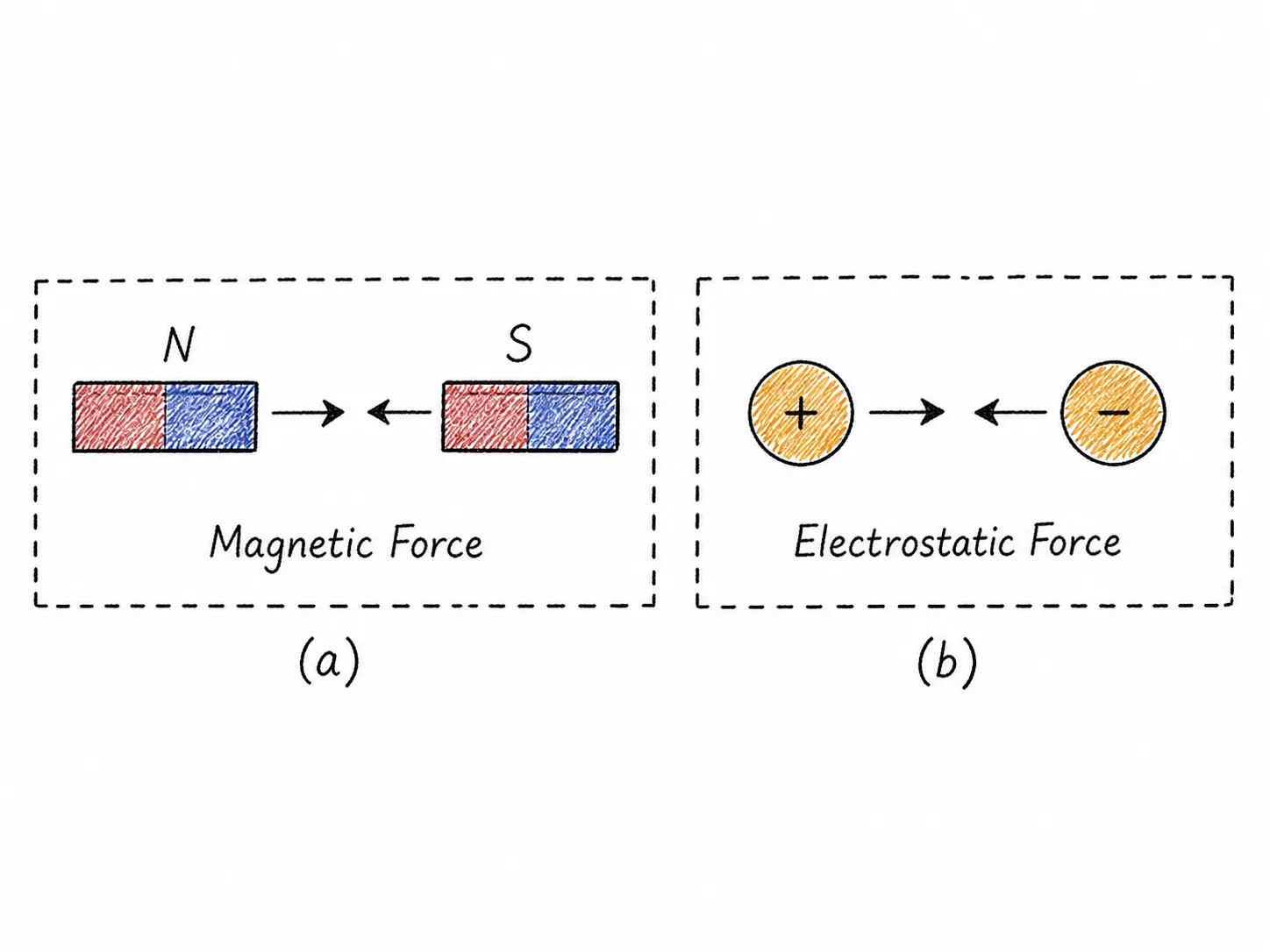
Sources of PE
➽ Deformation — stretched rubber band, compressed/stretched spring, bent bow
Work done to deform ➜ stored as PE ➜ released as KE
➽ Relative position (gravitational) — ball raised to a height; Earth-ball system stores energy
➽ Relative position (magnetic) — separated unlike poles store energy
➽ Relative position (electric) — separated charges store energy
Whenever objects interact through gravitational, electric, or magnetic forces, the system stores PE based on the arrangement/positions of objects
Gravitational Potential Energy
➽ Since Earth is far more massive than the ball, Earth barely moves ➜ stored energy of
➽ The Earth-ball system is called the GPE of the ball
➽ Greater height ➜ more work done to raise object ➜ more energy stored
➽ Ball dropped from greater height ➜ deeper depression ➜ more GPE
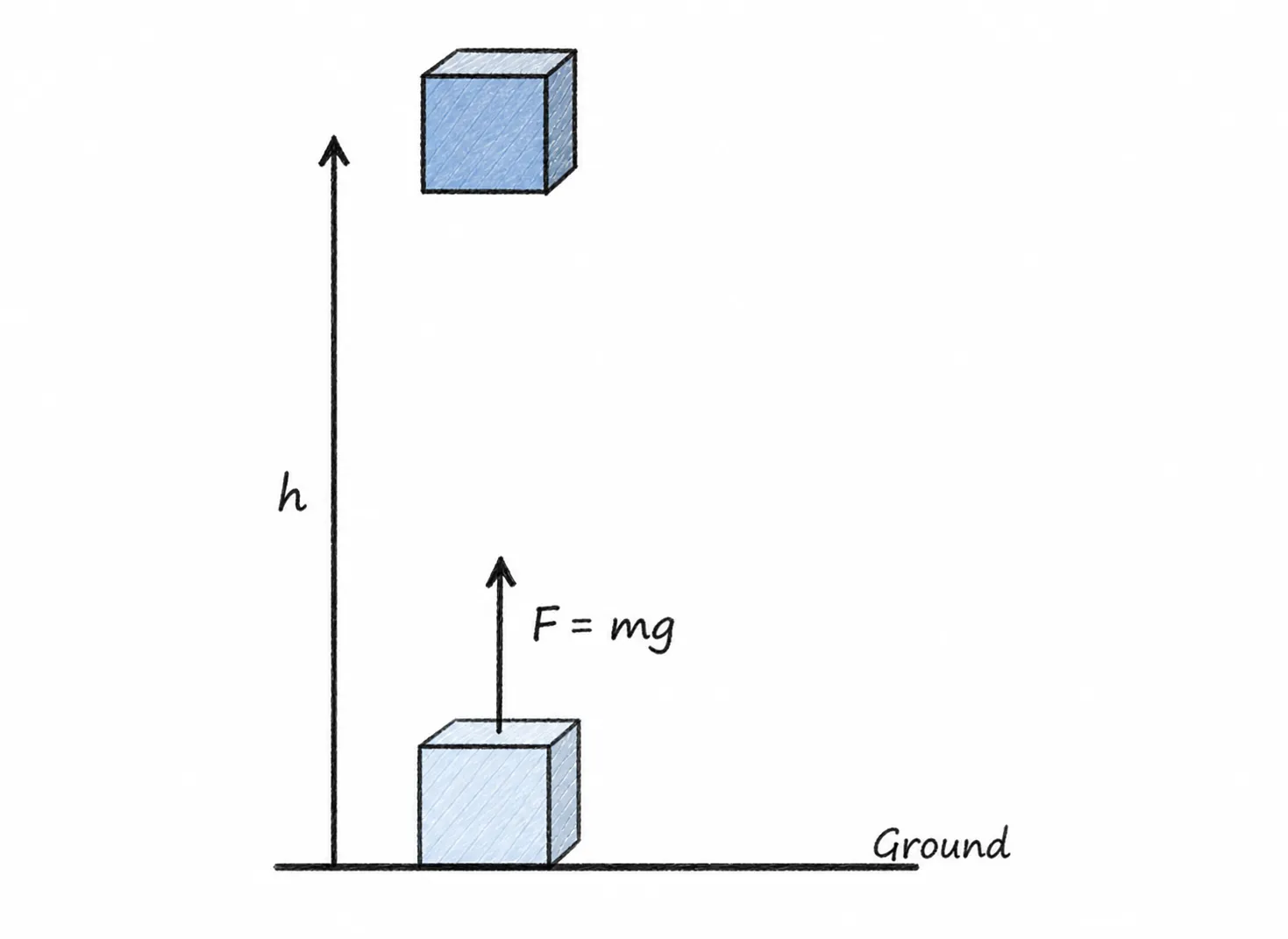
Formula
To raise an object of mass m to height h:
W = force × displacement
W = mg × h = mgh
By work-energy theorem, this work → stored as PE:
U = mgh
- m = mass (kg)
- g = acceleration due to gravity (m/s²)
- h = height above ground (m)
- Ground level → U = 0 (reference point)
- SI unit → Joule (J)
Conservation of mechanical energy
“Mechanical Energy = Kinetic Energy + Potential Energy“
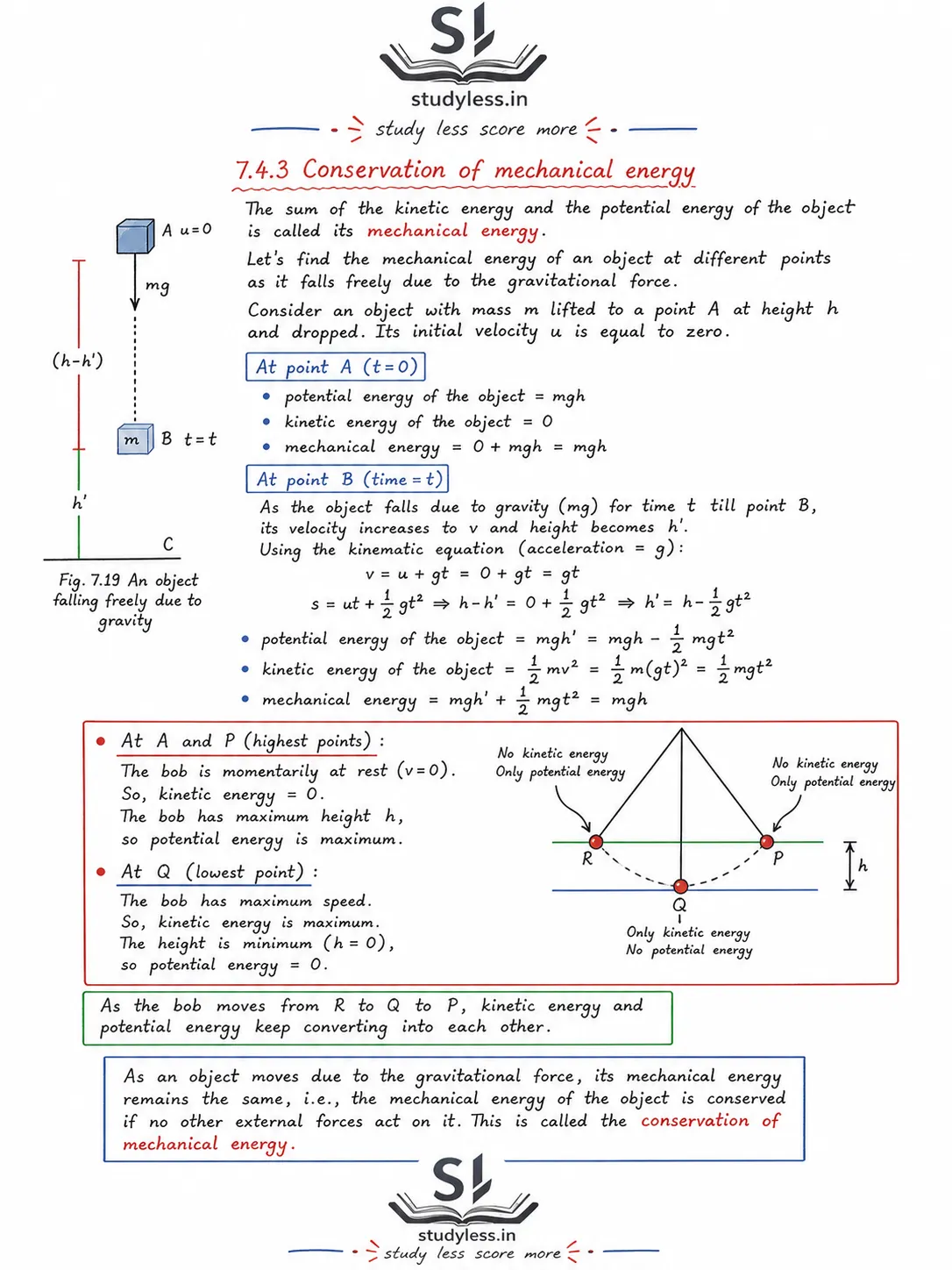
Free Fall Analysis (Object dropped from height h)
| Point | PE | KE | Mechanical Energy |
|---|---|---|---|
| A (top, u=0) | mgh | 0 | mgh |
| B (mid-fall) | mgh − ½mg²t² | ½mg²t² | mgh |
| Ground | 0 | mgh | mgh |
➽ PE decreases as the object falls
➽ KE increases by the same amount
➽ Total mechanical energy stays constant = mgh
The Law:
“As an object moves under gravitational force, its mechanical energy remains constant, provided no other external forces act on it.“
Loss in PE = Gain in KE
➽ This is the Conservation of Mechanical Energy
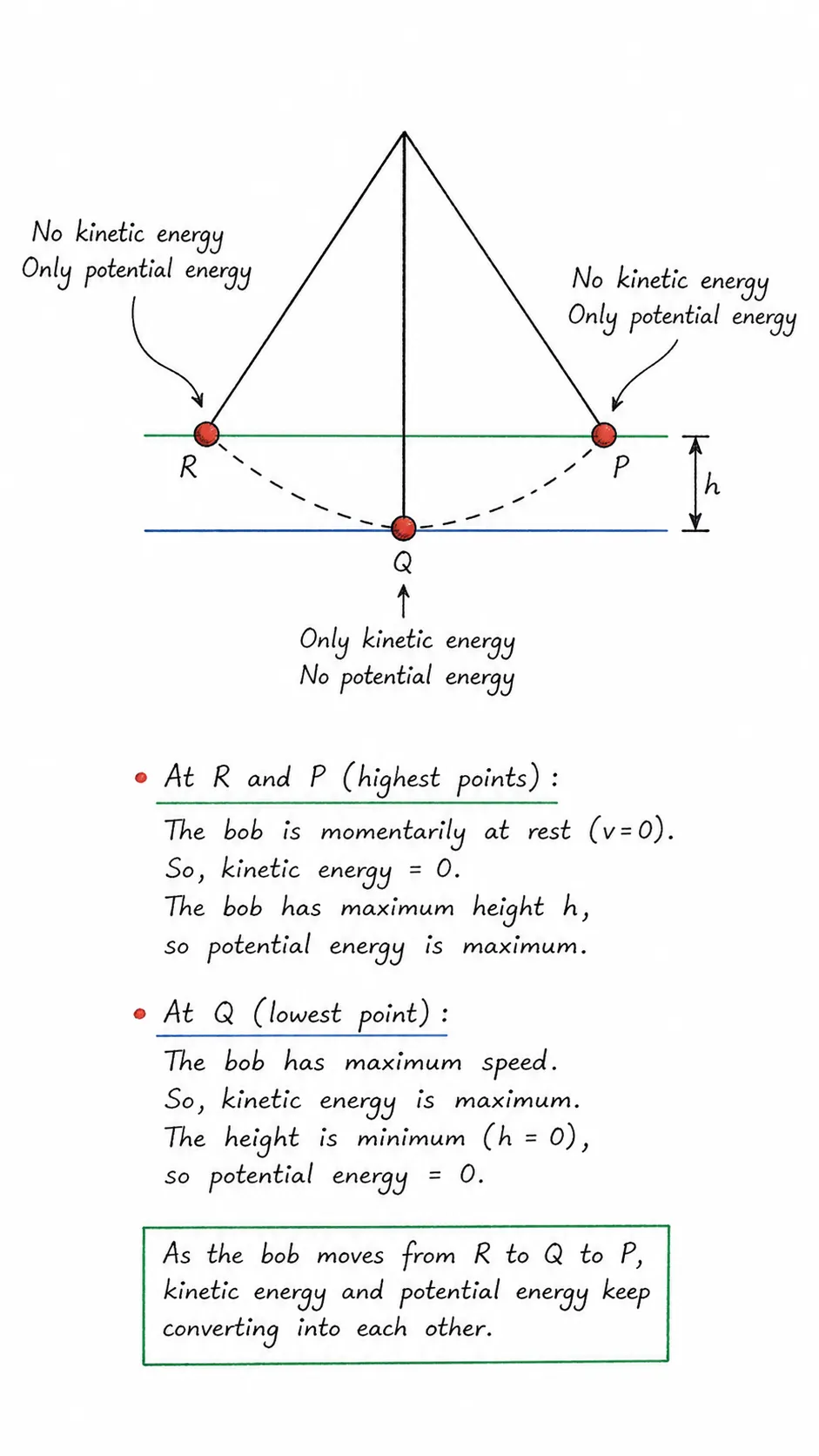
Energy is not lost — it only changes form (PE ↔ KE)
➽ Total always remains the same
Power
“Power = rate at which work is done.“
1 W = 1 J/s
W = work done (J), t = time taken (s)
SI unit → Watt (W)
Important Points
➽ Same work, less time ➜ more power
➽ More work, same time ➜ more power
➽ Running vs walking up stairs ➜ same work done, but running requires more power
Simple Machines
“Devices that make work easier by changing the magnitude or direction of the applied force“
➽ The total work required cannot be reduced
➽ But the force needed can be changed
Important Terms
➽ Mechanical Advantage (MA) = Load / Effort
➽ Effort — force applied to the machine.
➽ Load — force that needs to be overcome
Three Simple Machines
- Pulley
- Inclined Plane
- Lever
Pulley
“ A wheel with a groove that guides a rope “
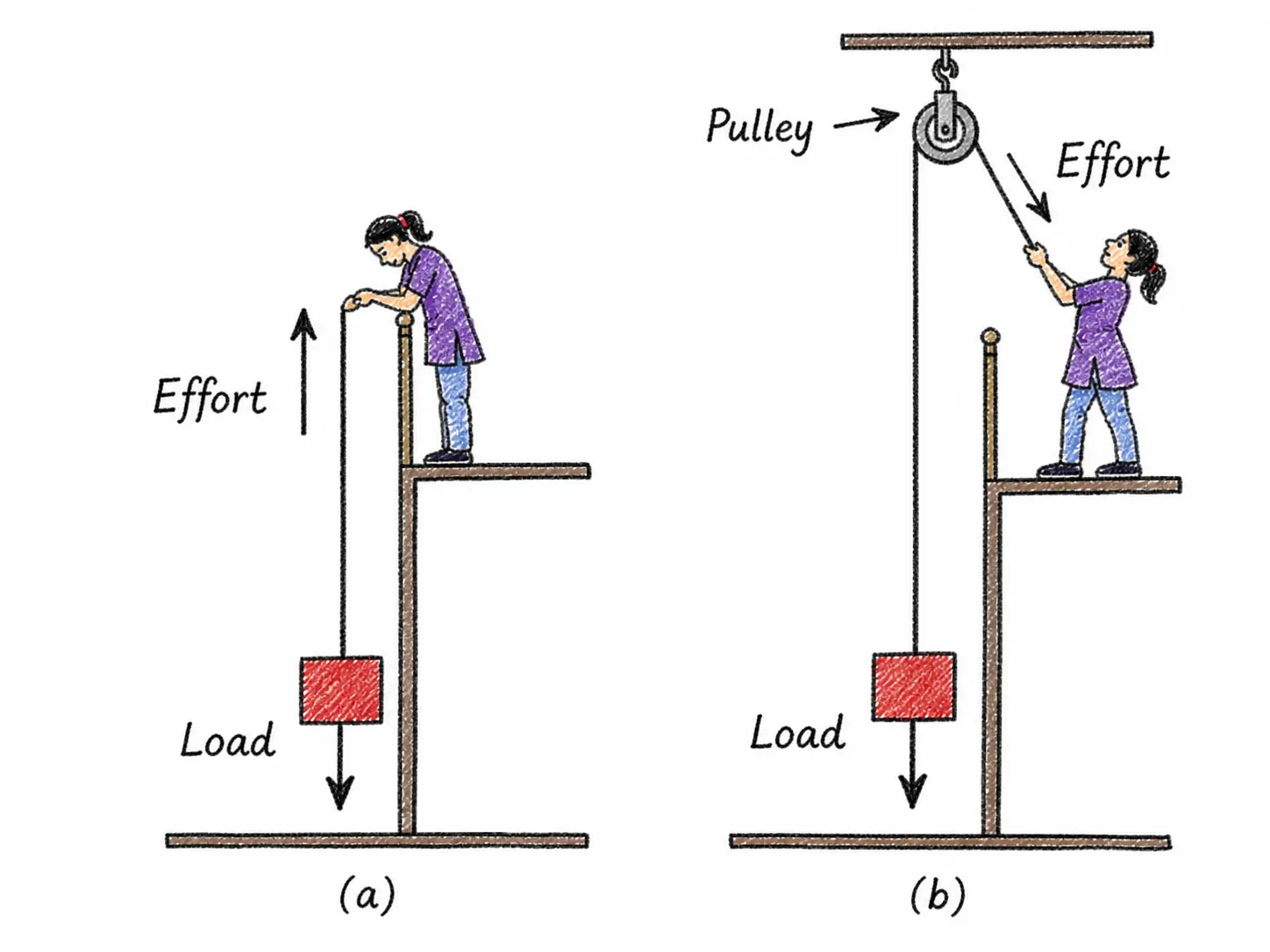
b) using a pulley| Work, Energy, and Simple Machines Ch 7 Notes
Fixed pulley ➜ does NOT reduce force, only changes direction of effort
➽ Pulling down is easier than pushing up ➜ provides convenience
➽ Effort = Load ➜ MA = 1
Inclined plane
“A sloped surface that helps move heavy loads to a higher (or lower) level.“
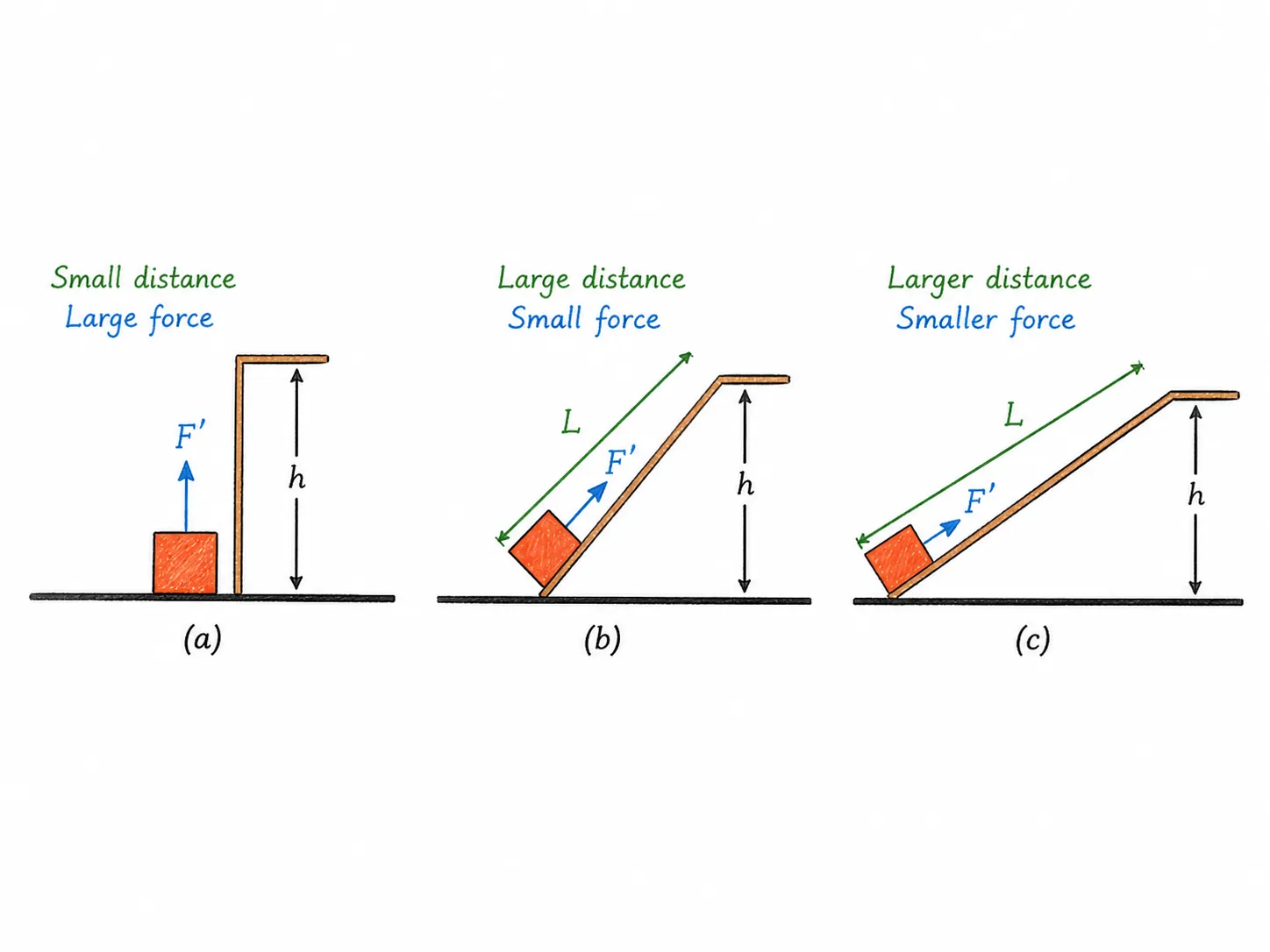
(c) along an inclined plane of larger length| Work, Energy, and Simple Machines Ch 7 Notes
How it helps:
➽ Reduces the force needed to lift an object
➽ Trade-off: force is applied over a larger distance
➽ Less steep (longer) slope ➜ less effort needed
Mechanical Advantage
Using work-energy theorem (ignoring friction):
F′ × L = mgh
- L = length of inclined plane
- h = height to be raised
- Since L > h ➜ MA > 1
- Longer, shallower slope ➜ larger L/h ➜ greater MA
Lever
“A rigid bar that rotates about a fixed point, used to lift heavy objects with less effort.“
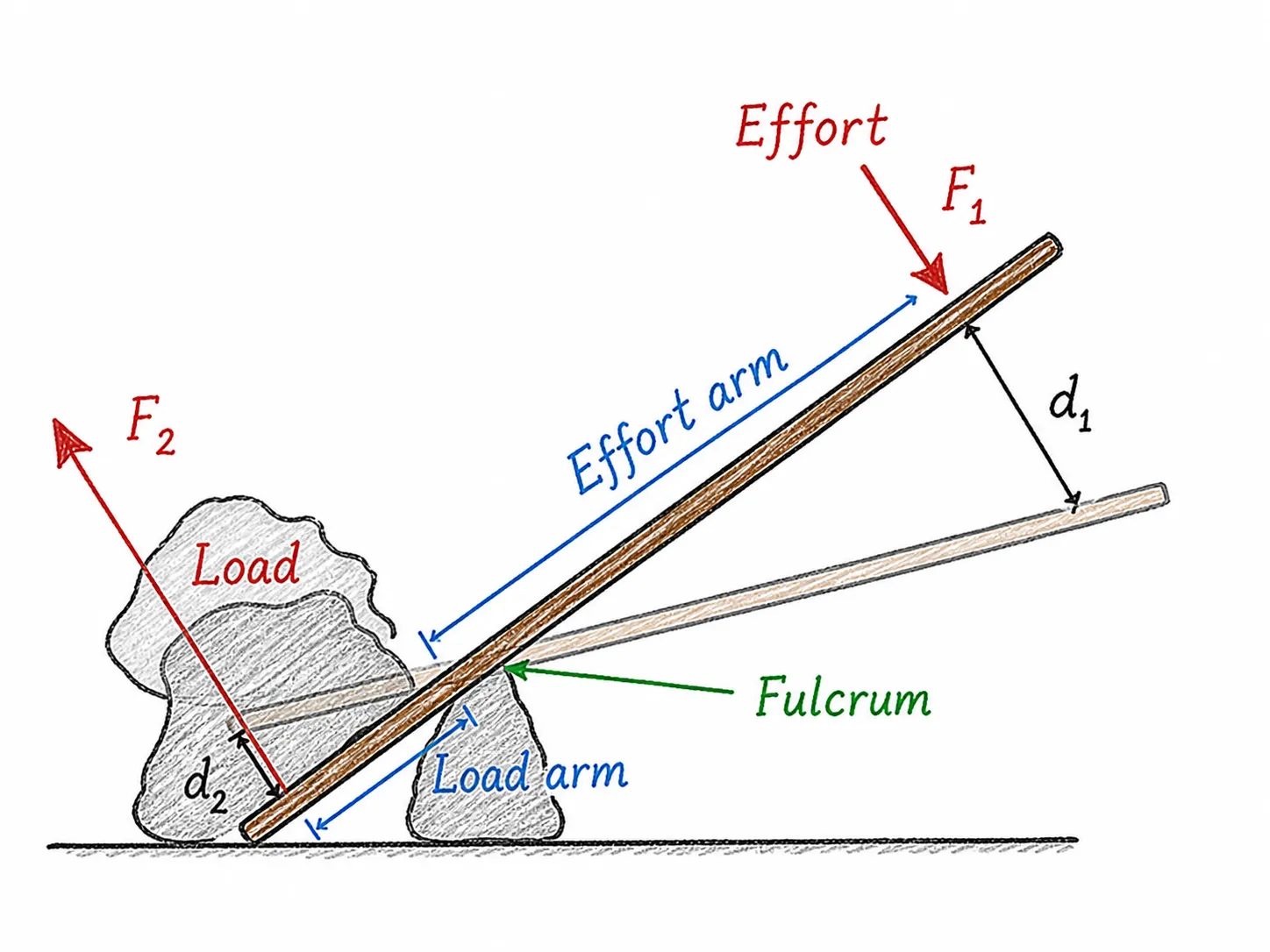
Parts Of Lever
➽ Fulcrum — fixed point about which the lever rotates
➽ Load — force to be overcome
➽ Effort — force applied
➽ Load arm — distance of load from fulcrum
➽ Effort arm — distance of effort from the fulcrum
How it Works
F₁ × d₁ = F₂ × d₂
➽ Small force (F₁) applied over a larger distance (d₁)
➽ Larger force (F₂) acts over a smaller distance (d₂)
➽ Work is transferred from one end to the other
➜ Longer effort arm = greater force on load
Key Points
- The effort needed is smaller, but it must
move a larger distance - Total work done remains the same
- MA = F₂/F₁ = d₁/d₂



very help ful amazing web for student