Health The Ultimate Treasure Short Notes Class 8 is created from the second chapter of your new NCERT textbook, Curiosity.
These short notes are not a replacement for your NCERT textbook. It only intends to make you revise and memorise the important points.
Health: Is It More Than Not Falling Sick?
What Does “Health” Really Mean?
- Health is not just the absence of disease
- True health includes:
- Physical well-being: feeling good physically
- Mental well-being: staying positive
- Social well-being: having strong relationships
Traits of a Healthy Person
- Takes care of their body
- Maintains a positive mindset
- Enjoys social life
- Performs tasks more efficiently
- Copes well in difficult situations
- Adjusts well with peers and society
WHO Definition of Health
“A state of complete physical, mental, and social well-being, and not merely the absence of disease.”
| Pillar | What It Means |
|---|
| Physical | Body functions well; free from illness |
| Mental | Positive mindset; emotional balance |
| Social | Strong relationships; good social adjustment |
Ayurveda teaches that true health is a balance of body, mind, and surroundings
Key Ayurvedic Concepts
| Term | Meaning | Role in Health |
|---|
| Dinacharya | Daily routine | Helps maintain balance |
| Ritucharya | Seasonal routine | Helps maintain balance |
| Prakriti | Body constitution | Guides food choices for individual needs |
Essential Practices for Well-being
- Eat fresh, wholesome food suited to one’s prakriti
- Regular exercise
- Cleanliness
- Restful sleep
- Calm mind
Supportive Practices
- Yoga
- Meditation
- Mindfulness
How Can We Stay Healthy?
What Does Staying Healthy Mean?
- Eating nutritious food
- Maintaining hygiene
- Living in a clean place
- Exercising regularly
- Getting proper sleep
- Spending time with family and friends
- Having a positive attitude
Key Habits to Build
- Eat fresh, wholesome meals
- Stay physically active daily
- Limit screen time
- Prioritize restful sleep
- Practice yoga or pranayama
- Say NO to tobacco, alcohol, and drugs
Maintain a Healthy Lifestyle
| Do This | Avoid This |
|---|
| Balanced diet with fruits, vegetables, whole grains | Processed, fatty, or sugary food and drinks |
| Physical activity: playing outdoors, walking, running, cycling | Excessive screen time |
| Enough sleep for rest and recovery | Harmful substances: tobacco, alcohol, addictive drugs |
| Yoga or pranayama (breathing exercises) | |
| Spend more time in nature | |
Key Habits to Build
- Eat fresh, wholesome meals
- Stay physically active daily
- Limit screen time
- Prioritize restful sleep
- Practice yoga or pranayama
- Say NO to tobacco, alcohol, and drugs
Keep the Environment Clean
Why Clean Surroundings Matter
- Clean spaces encourage play and activity
- Dirty areas attract flies and mosquitoes and increase sickness
Air and Water Quality:
- Clean air and water are essential for health
- Air pollution can cause coughing or asthma
- Air Quality Index (AQI) helps monitor air cleanliness
Mental and Social Well-being
- Health is not only about the body — feelings and relationships matter too
- Loneliness or upset feelings can affect health
- Spending time with friends and family supports a healthy mind
Simple Ways to Support Mental Health
- Connect with family and friends
- Share feelings through conversation
- Enjoy joyful activities together
How Do We Know That We Are Unwell?
Feeling unwell = something inside our body is not working properly
Symptoms vs Signs
| Type | Definition | Examples |
|---|
| Symptom | What we feel | Pain, tiredness, dizziness |
| Sign | What can be seen or measured | Fever, rash, high blood pressure, swelling |
Key Points
- Symptoms and signs indicate we are unwell
- Both help doctors understand the cause of illnesses
Diseases: What Are the Causes and Types?
What Is a Disease?
- A condition affecting the normal working of the body or mind
- Occurs when organs or organ systems stop functioning properly
Causes of Diseases
| Cause | Details |
|---|
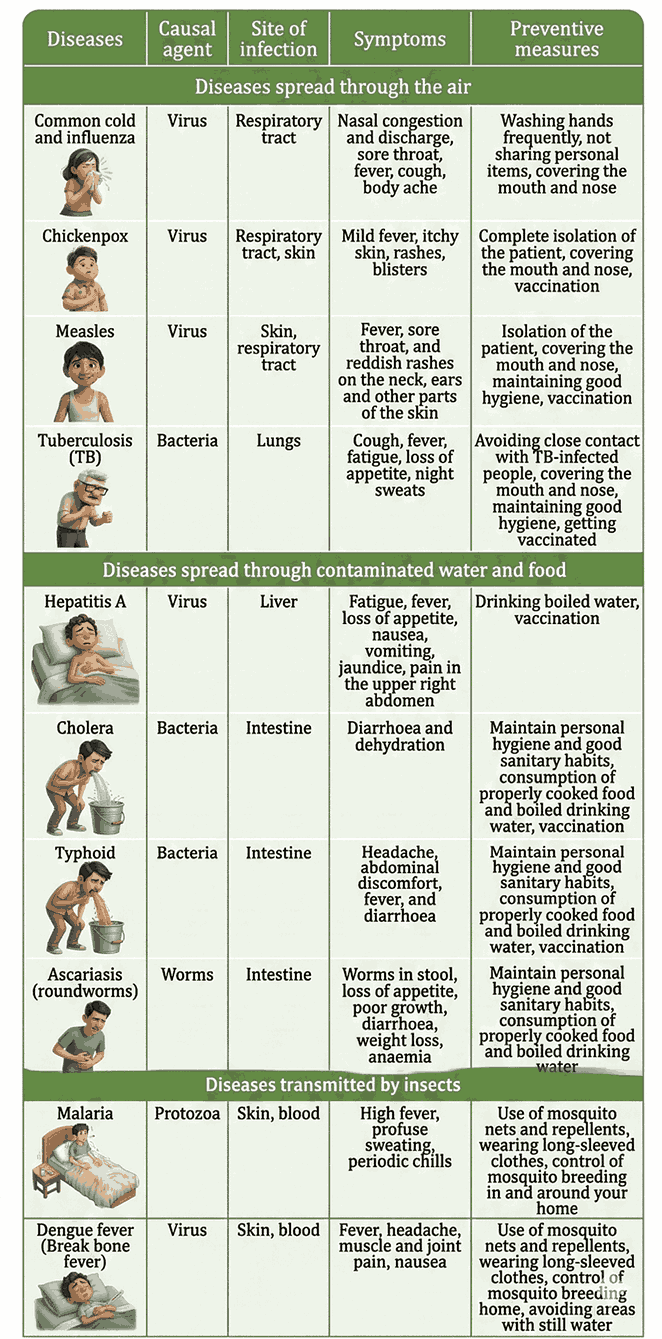
| Pathogens | Bacteria, viruses, fungi, worms, protozoa |
| Poor nutrition | Lack of proper diet |
| Unhealthy lifestyle | Habits affecting health |
Disease Duration
- Short-term: lasts briefly
- Long-term: need regular treatment or care
Two Major Types
| Type | Cause | Spreads? | Examples |
|---|
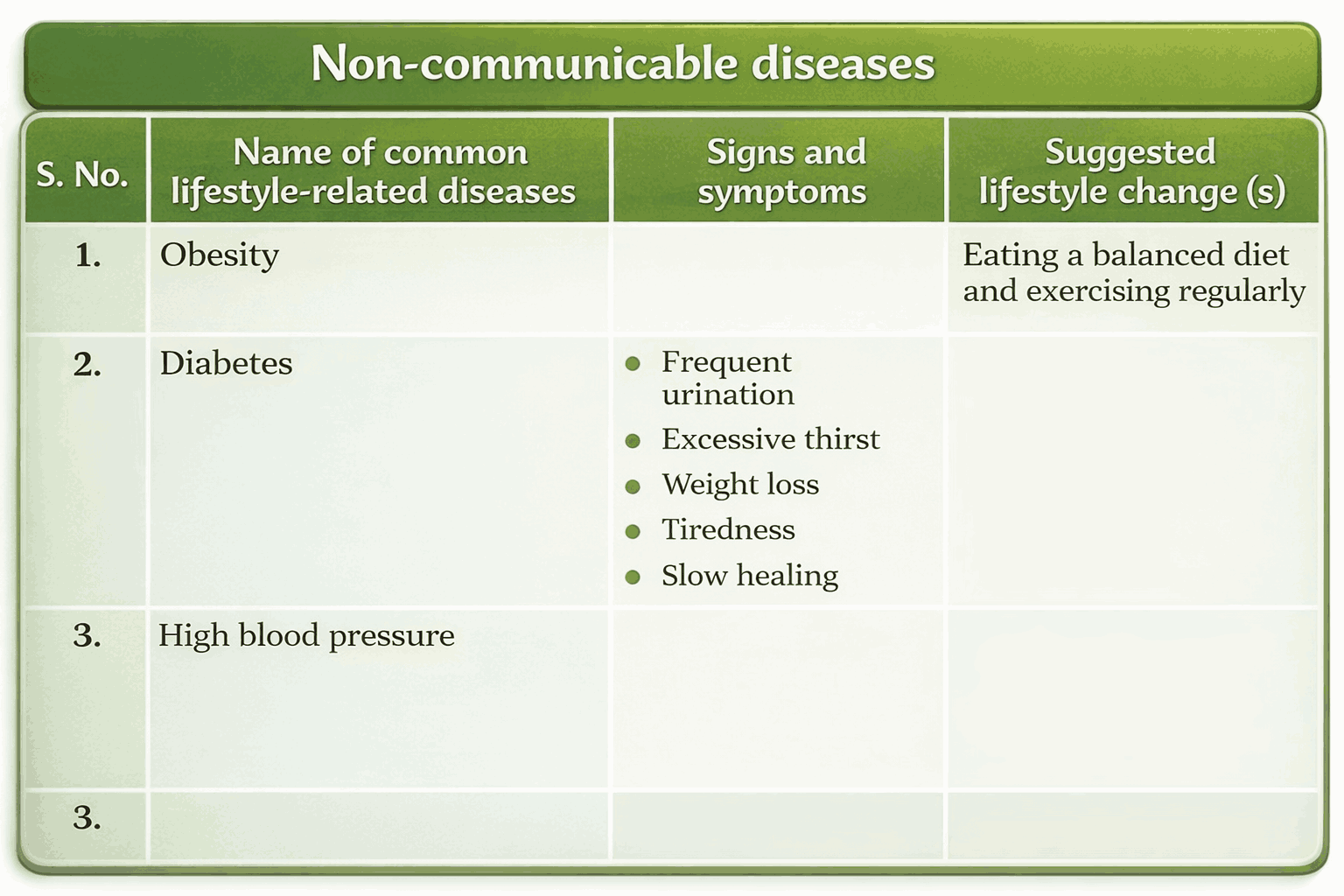
| Non-communicable | Lifestyle, diet, environment | No | Cancer, diabetes, asthma |
| Communicable | Pathogens | Yes, person to person | Typhoid, dengue, flu, chickenpox, COVID-19 |
NCDs in India
- Rising cases: diabetes, heart disease, cancer
- Key reasons: more processed food, less exercise, longer lives
- Most deaths in India now from NCDs
How Are Communicable Diseases Caused and Spread?
All communicable diseases are caused by pathogens
 Health The Ultimate Treasure Short Notes Class 8
How Pathogens Enter Body
- Through the air we breathe
- By consuming contaminated food or water
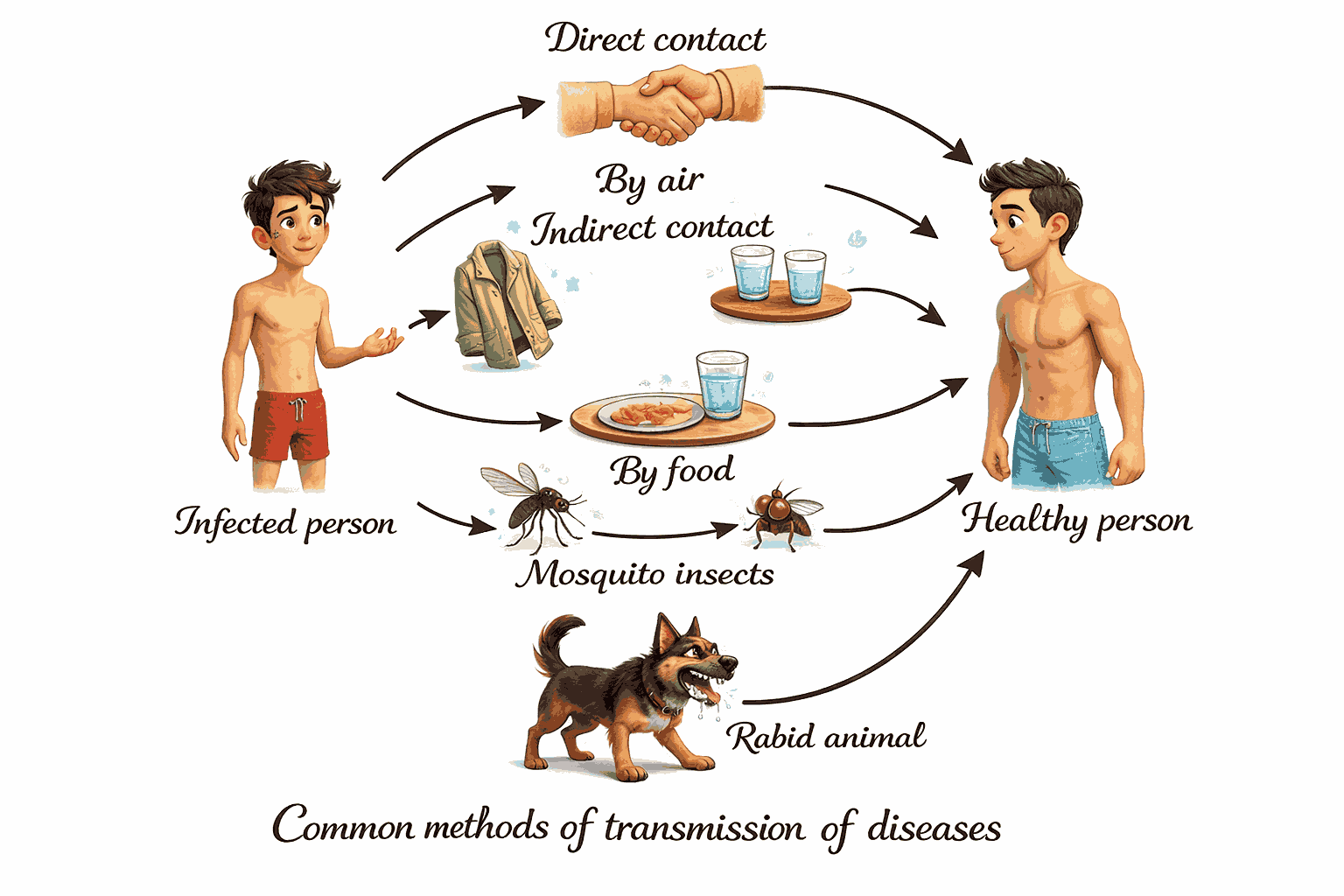
Modes of Spread
| Mode | How It Happens |
|---|
| Air | Infected person coughs or sneezes |
| Direct contact | Shaking hands with infected person |
| Indirect contact | Sharing personal items of infected person |
| Contaminated food/water | Eating or drinking infected items |
| Vectors | Insects like mosquitoes, houseflies |
Vectors: Insects that carry and spread pathogens
Prevention Precautions
- Keep yourself and your surroundings clean
- Practice basic hygiene daily
- Wash your hands with soap and water
- Cover your mouth and nose while coughing or sneezing
- Wear a mask in crowded places
- Avoid sharing personal items (towels, handkerchiefs)
- Keep home, food, and water clean
- Stay home and rest when unwell
Worm Infections
- Caused by worms (parasites) in the digestive system
- Worms feed on nutrients from the body
- Spread via:
- Contaminated food
- Contaminated water
- Contaminated soil
- Contact with infected people or animals
 Health The Ultimate Treasure Short Notes Class 8
How are non-communicable diseases caused?
What Are NCDs?
- Linked to lifestyle, diet, and environment
- Examples: cancer, diabetes, asthma
- The most common cause of death in India
Deficiency Diseases (Also NCDs)
| Disease |
|---|
| Scurvy |
| Anaemia |
| Goitre |
Chronic Diseases
- Persist for a long time (more than 3 months)
- Examples: cancer, diabetes, asthma
Diabetes: Key Facts
- Rising in adults and children
- India has one of the highest numbers globally
- Causes:
- Hormonal imbalances
- Unhealthy eating habits
- Lack of physical activity
- Overweight or obese
- Other reasons
How to Prevent and Control Diseases?
- Prevention is better than cure
- Protect against both communicable and non-communicable diseases
- Good sanitation reduces spread of communicable diseases
Immunity: Body’s Defence
- Immunity: Natural ability of the body to fight diseases
- Immune system: A special system that helps fight diseases
- Differences in immunity explain why some get sick more often
Vaccines: Building Protection
| Term | Meaning |
|---|
| Vaccine | Drops or injections to prevent serious infections |
| Acquired immunity | Protection after exposure to a pathogen or a vaccine |
How Vaccines Work
- Train the immune system to recognise and attack harmful germs
- Made from:
- Weakened or dead pathogens
- Inactive or harmless parts of the pathogen
- Instructions for body cells to make a harmless part of a germ
Example:
Tetanus Shot
- Given after injury
- Contains inactivated bacterial toxin
- Builds protection without causing disease
Historical Milestone: Edward Jenner
| Discovery | Impact |
|---|
| People with cowpox did not get smallpox | Led to first vaccine in late 1700s |
| Used cowpox to protect against smallpox | Helped eliminate deadly smallpox disease |
Key Facts
About Vaccines
- Protect all ages — infants to elderly
- Prevent illnesses, reduce spread, save lives
- Preventive, not curative — work before disease occurs
- Tested for safety by scientists and doctors
- Vaccination protects you and people around you
Treatment of diseases
Antibiotics: Key Facts
| Feature | Detail |
|---|
| Target | Kill bacteria |
| Mechanism | Attack parts of bacterial cells different from human cells |
| Effective against | Bacterial infections only |
| Not effective against | Attack parts of bacterial cells that are different from human cells |
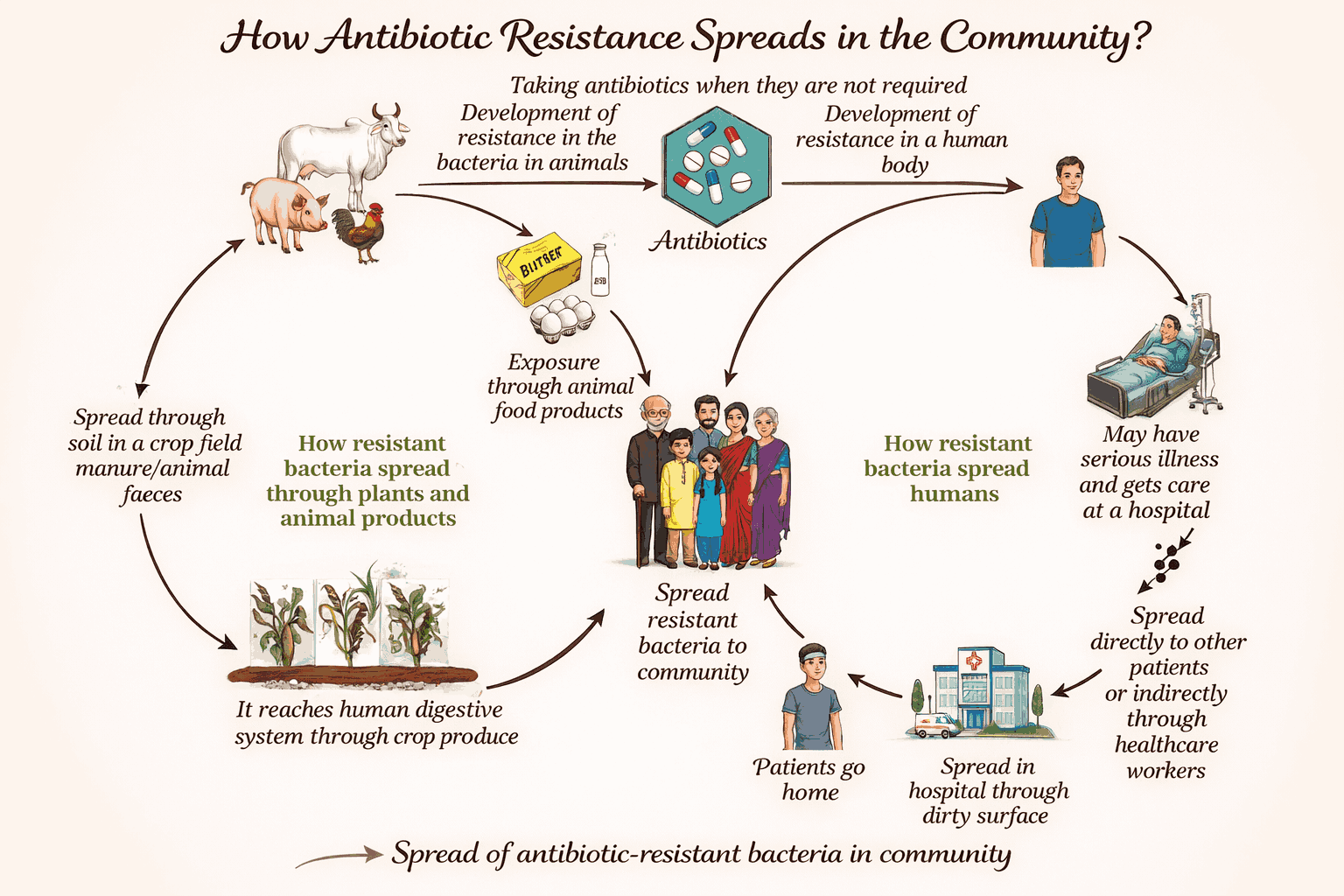
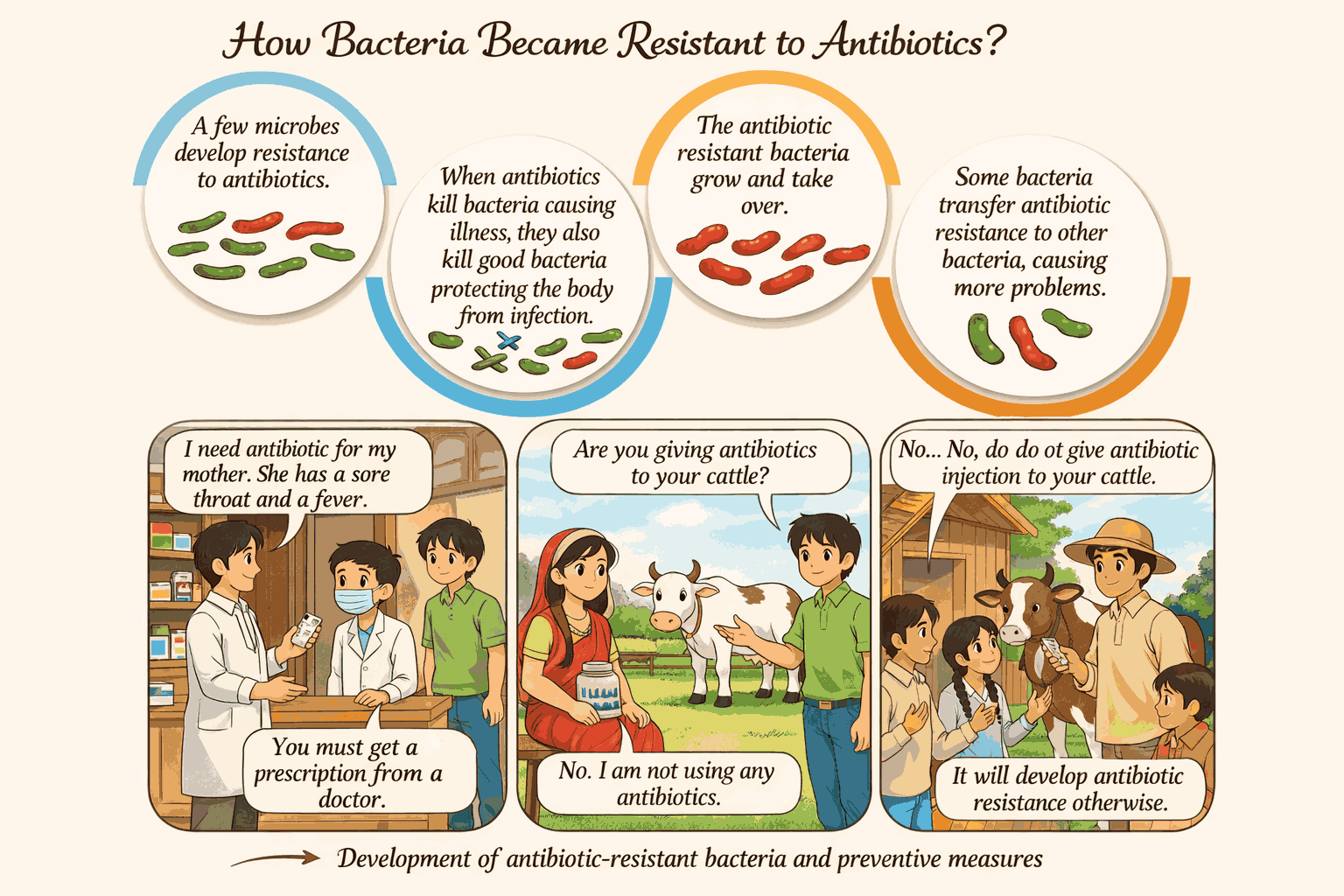
Antibiotic
Resistance
- Cause: Indiscriminate use of antibiotics
- Effect: Bacteria survive treatment and multiply
- Consequences:
- Infections are harder to treat
- Higher risk of complications
- Prolonged illness or death
Traditional Medicine Systems (India)
| Systems | Tools Used |
|---|
| Ayurveda, Siddha, Unani | Herbs, oils, minerals |
- Focus: Healthy lifestyle + balanced diet
- Useful for: Everyday well-being, some conditions
- Limitation: May not work for all diseases or stages
Treatment of Non-Communicable Diseases
Goal: Manage symptoms, improve quality of life
Approach
- Medication
- Lifestyle changes
- Rehabilitation
Key to Control
- Early diagnosis
- Continuous care