
Exercise Set 12.1
Q1
Let ABCD be a quadrilateral.
(i) List all sides of ABCD adjacent to side AB. List all sides
opposite to AB.
(ii) List all angles of ABCD adjacent to ∠A. List all angles opposite
to ∠A.
(iii) Define a pair of opposite sides and a pair of opposite angles
without using the names of the vertices.
ABCD is a quadrilateral.
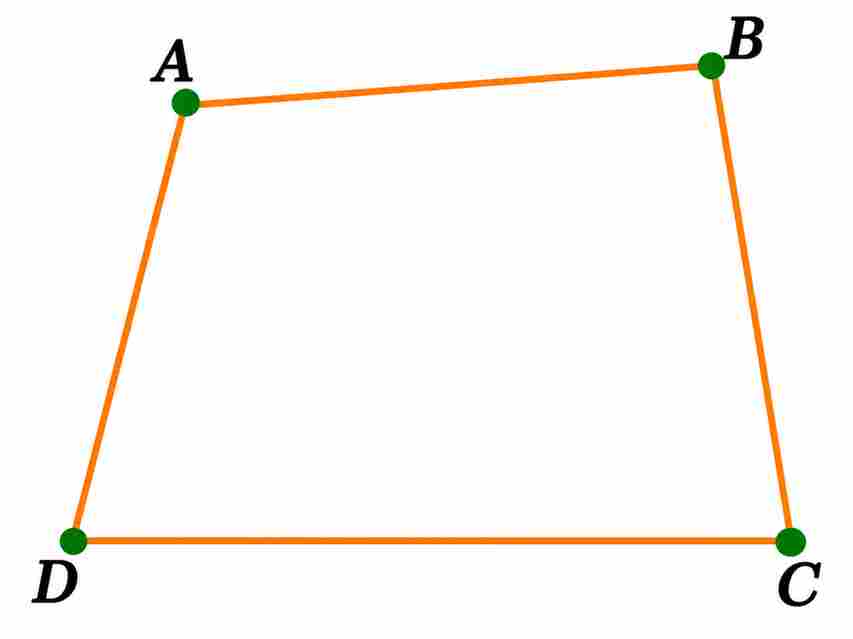
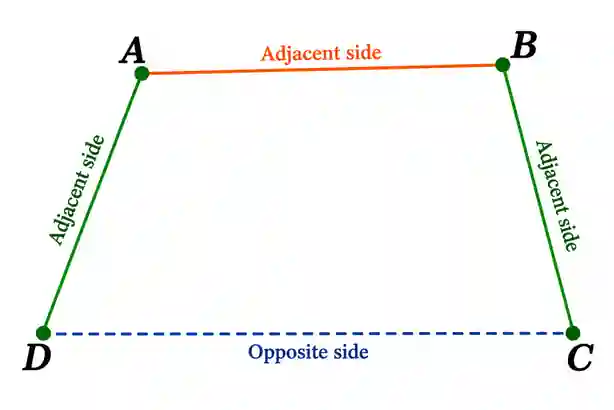
Adjacent to AB: BC and AD
Opposite to AB: CD
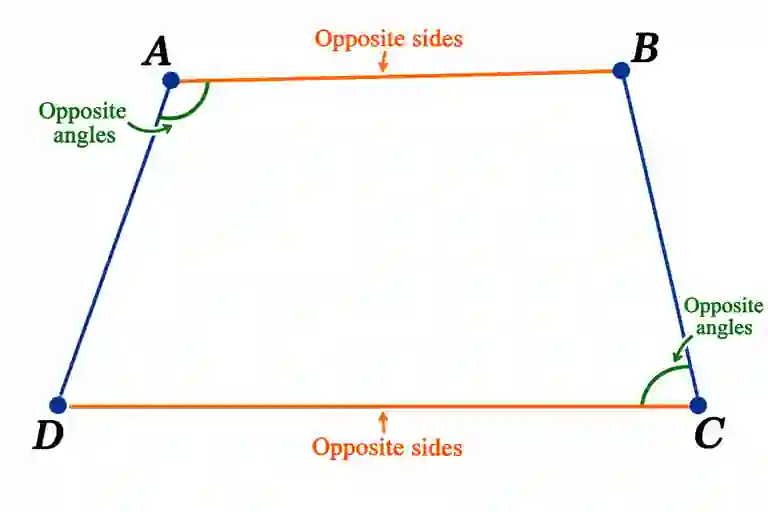
Adjacent to ∠A: ∠B and ∠D
Opposite to ∠A: ∠C
Opposite sides: two sides with no common endpoint.
Opposite angles: two angles with no common side.
Q2
You have used internal angles of quadrilaterals, but they too require an exact definition, just like how we gave one for a quadrilateral. Precisely define the internal angle of a quadrilateral
at a given vertex. Your answer should work for a non-convex quadrilateral too. (Hint: use the opposite vertex as well.)
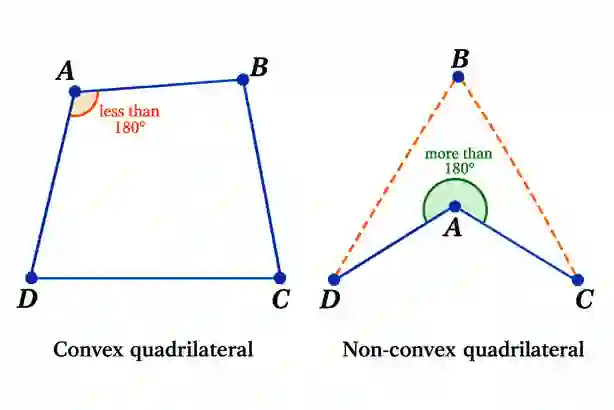
ABCD is a quadrilateral. It can be non-convex.
A is the vertex. B and D are adjacent vertices. C is the opposite vertex.
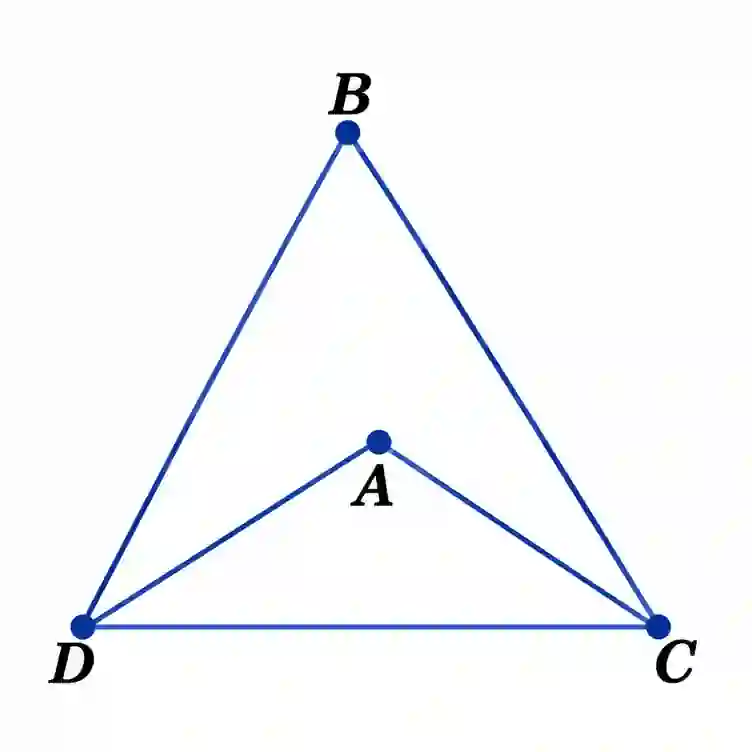
Rays AB and AD make two angles at A.
One is ∠BAD (less than 180°). The other is 360° − ∠BAD (more than 180°).
If A is outside △BCD, then the internal angle is ∠BAD.
If A is inside △BCD, then the internal angle is 360° − ∠BAD.
Q3
In a quadrilateral ABCD, suppose AB ‖ DC. Can ABCD be non-convex? What if we instead assume AB = CD? What if we instead assume ∠A = ∠C?
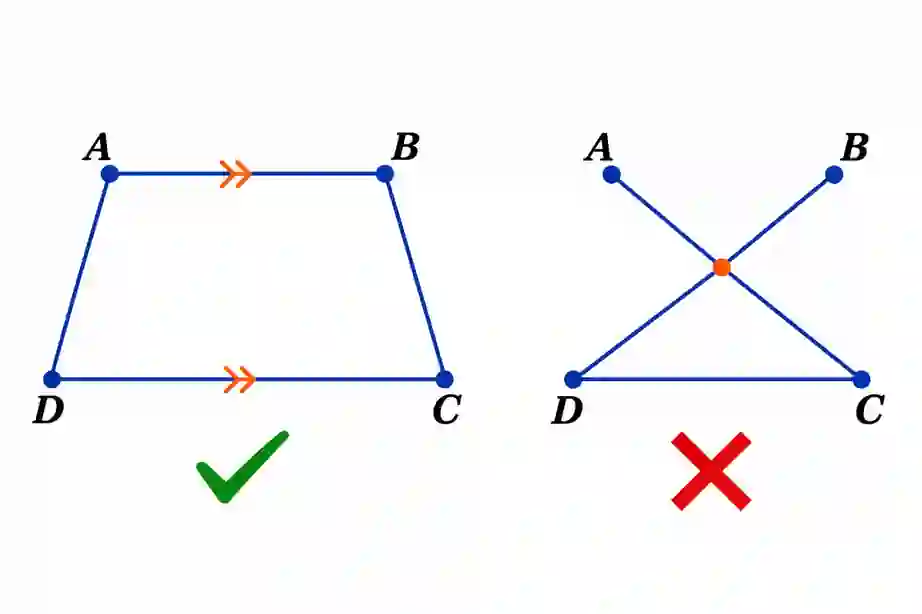
ABCD is a quadrilateral.
Lines AB and DC are parallel.
C and D lie on one side of line AB.
A and B lie on one side of line DC.
If A and D were on opposite sides of line BC, side AD would cross side BC.
This is not allowed. So A and D lie on one side of BC.
In the same way, B and C lie on one side of AD.
If AB ∥ DC, then ABCD is convex.
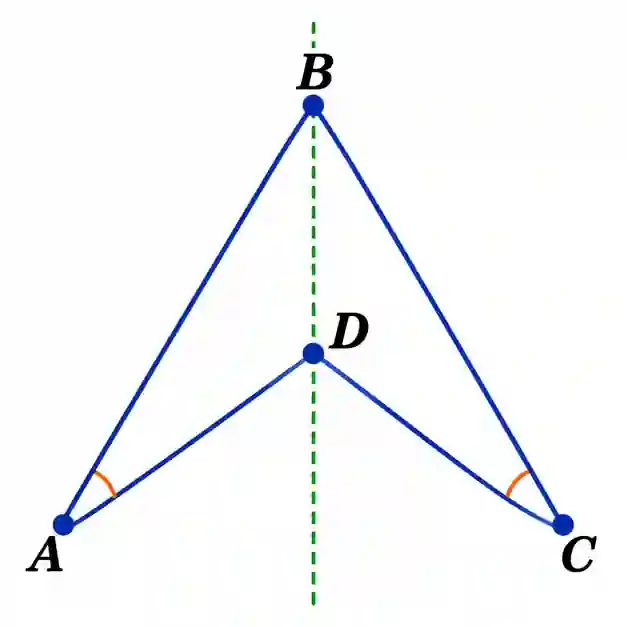
ABCD can be non-convex.
Take A(0, 0), B(4, 0), C(2, 6), D(2, 2).
AB = 4 and CD = 4.
D is inside △ABC. So ∠D is more than 180°.
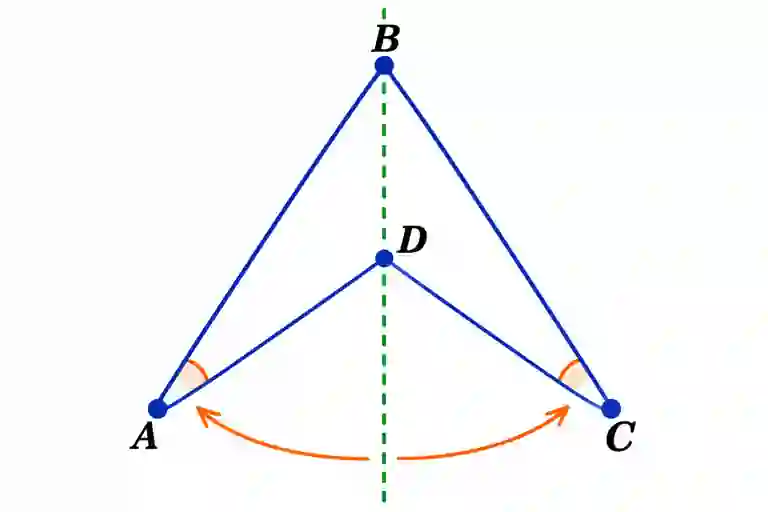
ABCD can be non-convex.
Take A(−3, 0), B(0, 6), C(3, 0), D(0, 2).
The y-axis is a mirror line. It swaps A and C.
So ∠A = ∠C.
D is inside △ABC. So ∠D is more than 180°.
(i) AB ∥ DC: non-convex is No
(ii) AB = CD: non-convex is Yes
(iii) ∠A = ∠C: non-convex is Yes
Q4
Consider three non-collinear points A, B, C and draw the lines AB, BC, CA. For every possible location of point D in the plane outside these lines, decide if ABCD is self-intersecting,
non-convex, or convex. (Hint: the three lines divide the plane into 7 regions.)
A, B, C are non-collinear points.
Lines AB, BC, CA divide the plane into 7 regions.
D is a point outside the three lines.
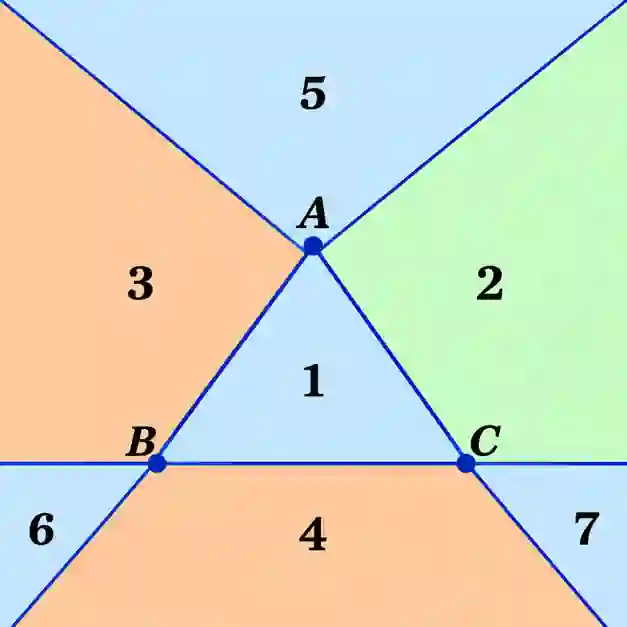
| D in region | Reason | ABCD |
|---|---|---|
| 1 (inside △ABC) | D is a dent. ∠D > 180°. | Non-convex |
| 2 (beyond AC) | BD cuts AC. Diagonals meet. | Convex |
| 3 (beyond AB) | CD cuts AB. | Self-intersecting |
| 4 (beyond BC) | AD cuts BC. | Self-intersecting |
| 5 (vertex A zone) | A is inside △BCD. ∠A > 180°. | Non-convex |
| 6 (vertex B zone) | B is inside △ACD. ∠B > 180°. | Non-convex |
| 7 (vertex C zone) | C is inside △ABD. ∠C > 180°. | Non-convex |
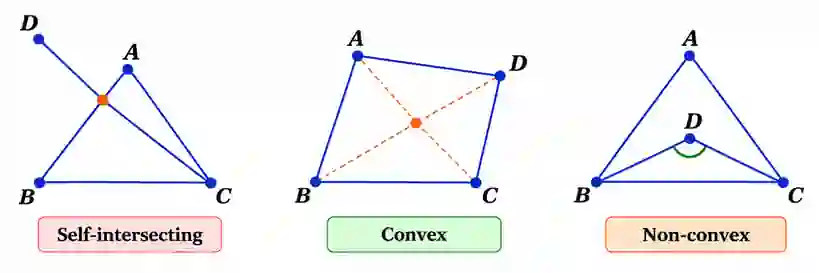
Convex: region 2
Non-convex: regions 1, 5, 6, 7
Self-intersecting: regions 3, 4
Q5
Can a quadrilateral be both self-intersecting and non-planar?
ABCD is a four-sided figure. No three vertices are collinear.
Suppose ABCD is self-intersecting.
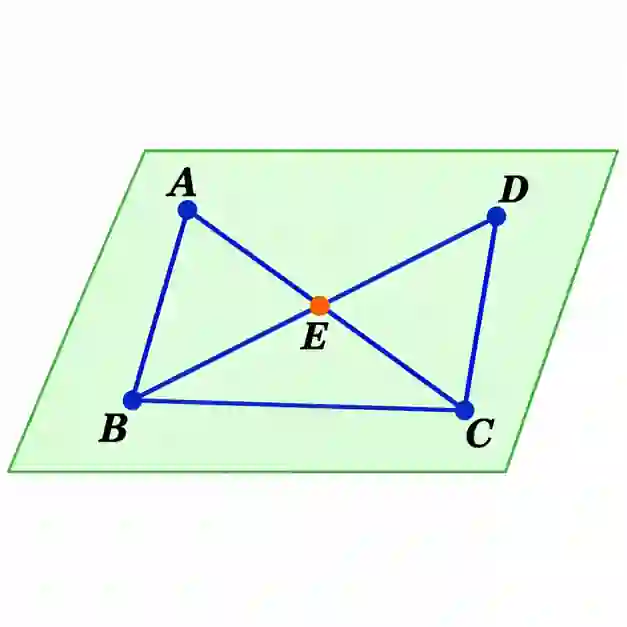
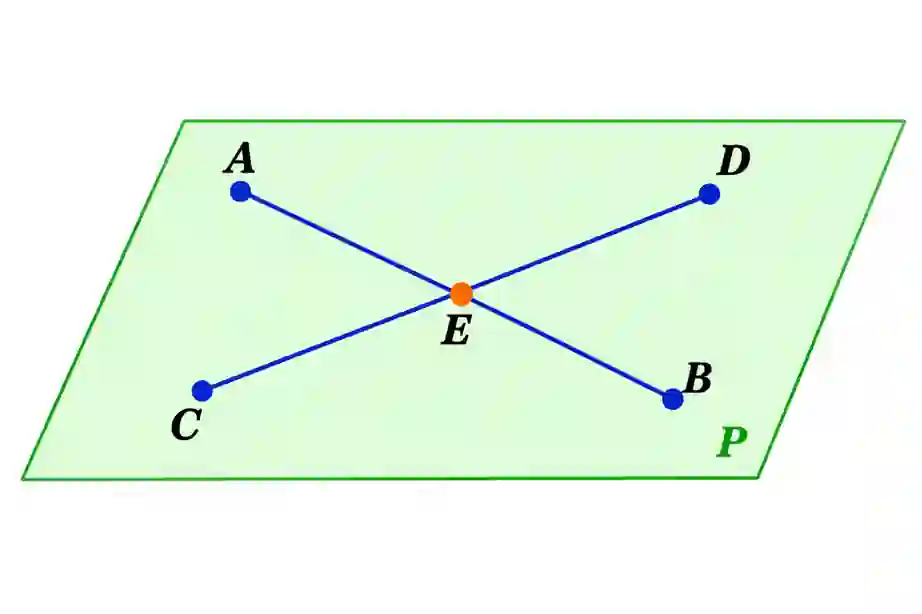
Two sides meet at a point E that is not a vertex.
Adjacent sides share one vertex only. So the crossing sides are opposite.
Take sides AB and CD. They meet at E.
So lines AB and CD meet at E.
Two lines that meet lie in one plane.
A, B lie on line AB. C, D lie on line CD.
So A, B, C, D lie in that plane.
If ABCD is self-intersecting, then ABCD is planar.
Self-intersecting and non-planar: No
More coming soon