Transverse and Longitudinal waves
Transverse & Longitudinal Waves
Interactive simulation • Drag sliders • Works perfectly on mobile • No scrolling needed
Transverse Wave
Particles move perpendicular
(up & down) to wave travel direction
Longitudinal Wave
Particles move parallel
(left & right) → watch compressions & rarefactions
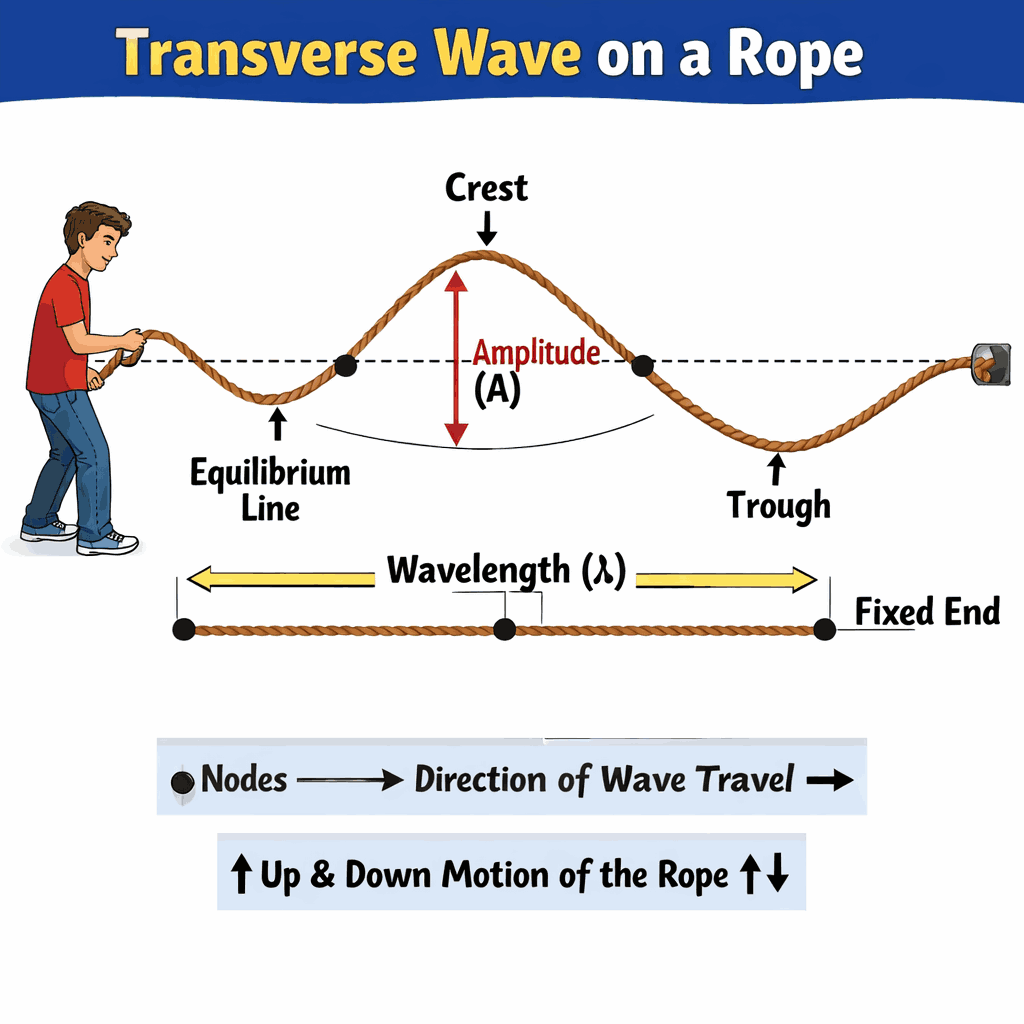
1. Transverse Wave (The Flick)
The Action: You flick your hand up and down.
The Result: A bump travels from your hand to the wall, but the rope moves up and down.
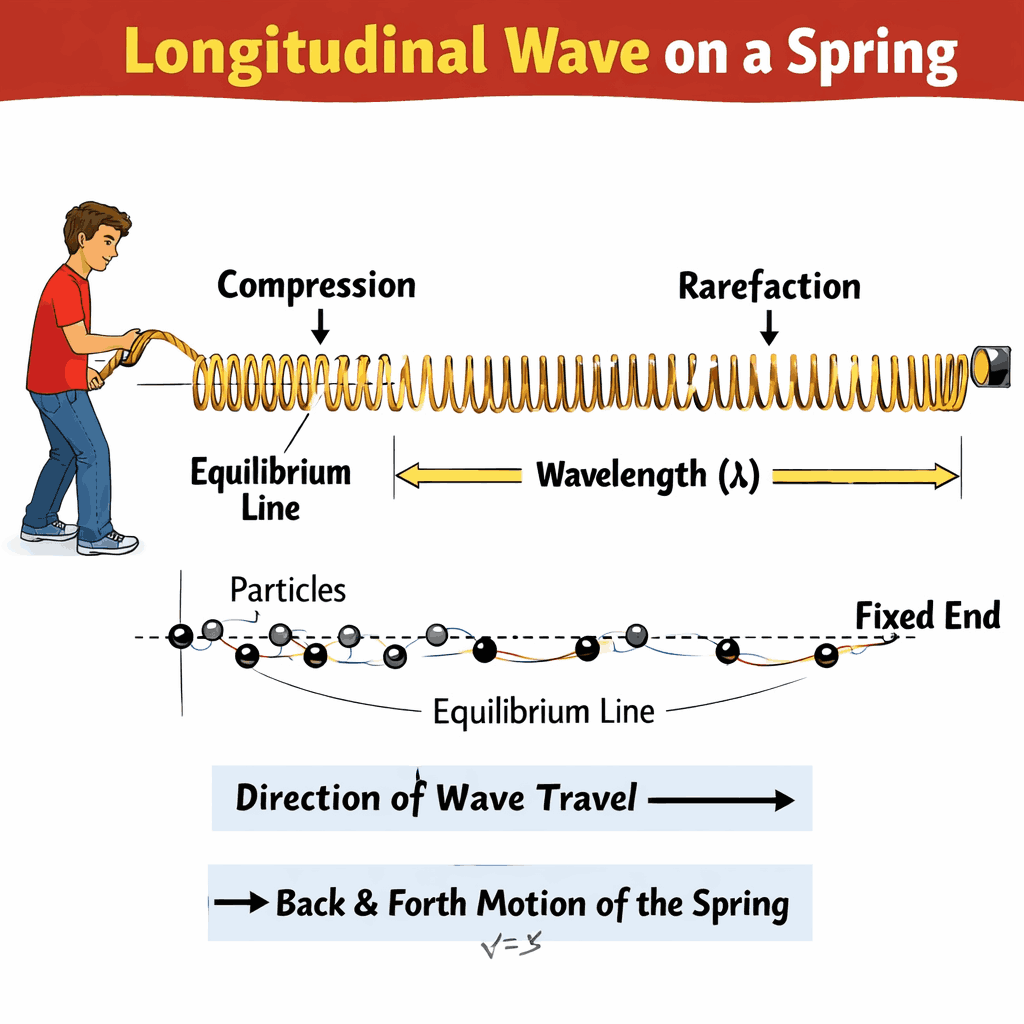
2. Longitudinal Wave (The Push)
The Action: You push your hand forward and back along the length of the rope.
The Result: A bunching up (compression) travels down the rope, untangling as it goes.
The Difference
- Transverse: Vibration is across the rope. (Like shaking a snake).
- Longitudinal: Vibration is along the rope. (Like pushing a domino).