The Invisible Living World Beyond Our Naked Eye Short Notes- is created from the new NCERT books, Curiosity for class 8.
The short notes have all the important points, and the notes are presented in a easy to read and memorable format.
Introduction
Discovery of Lenses
- Curved glass makes small things look bigger
- Lens shape: like a lentil seed
- Thick in the middle, thin at the edge
Tools for Viewing Invisible
- Magnifying glass → small objects appear larger
- A microscope → reveals tiny living creatures invisible to the naked eye
- The invention opened the hidden world of tiny life forms
Living Beings: Organisms
- Variety of living beings: plants, animals
- Characteristics:
- Different shapes, sizes, colours
- Some tiny, others really big
- Differ in structure and other features
- All living beings = organisms
Key Terms
| Term | Definition |
|---|
| Lens | Curved glass, thick in the middle, thin at edge, makes small things look bigger |
| Magnifying glass | Simple lens tool; makes small objects appear larger |
| Microscope | Curved glass, thick in the middle, thin at the edge, makes small things look bigger |
| Organisms | All living beings (plants or animals) |
| Naked eye | Curved glass, thick in the middle, thin at the edge, makes small things look bigger |
What Is a Cell?
- A cell is the basic unit of all living beings
- All living beings are made up of cells
Three Main Parts of a Cell
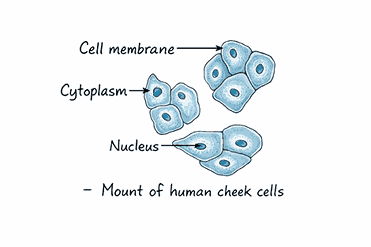
- Cell membrane – thin outer layer
- Nucleus – a round structure in the middle, covered by a thin membrane
- Cytoplasm – space between the cell membrane and the nucleus
- Some cells (e.g., onion peel) have an extra outer layer: the cell wall
Functions of Cell Parts
| Part | Function |
|---|
| Cell membrane | Encloses cytoplasm and nucleus; separates cells; porous; allows entry of essential materials, exit of waste |
| Cytoplasm | Contains cell components and compounds – carbohydrates, proteins, fats, mineral salts; most life processes occur here |
| Nucleus | Regulates all cell activities; regulates growth |
Cell wall
(plant cells only) | Provides rigidity and strength; cells are arranged compactly, and the structure looks firm |
Plant Cell Specific Structures
Plastids
- Tiny rod-shaped structures in all plant parts
- Chloroplasts: contain chlorophyll (green); help in photosynthesis
- In non-green parts: help in the storage of substances
Vacuole
- Large, empty-looking space in plant cells
- Functions:
- Stores important substances
- Removes waste
- Maintains cell shape
- Gives strength and support to the plant
Animal Cells
- Vacuoles are usually absent; if present, small
- Small vacuoles store substances dissolved in water
Key Terms
| Term | Definition |
|---|
| Cell | Basic unit of all living beings |
| Cell membrane | Thin outer layer; encloses cell contents; controls material movement |
| Cytoplasm | Jelly-like space between membrane and nucleus; site of most life processes |
| Nucleus | Central round structure; regulates cell activities and growth |
| Cell wall | Rod-shaped structures in plant cells include chloroplasts for photosynthesis |
| Plastids | Storage space: large in plant cells, small or absent in animal cells |
| Chlorophyll | Green pigment in chloroplasts; essential for photosynthesis |
| Vacuole | Storage space; large in plant cells, small or absent in animal cells |
Cell Structure and Function
The shape, size, and structure of cells help perform specific functions
Animal Cells: Examples
Inner Cheek Cells
- Thin, flat shape
- Form a protective lining on the inner cheek surface
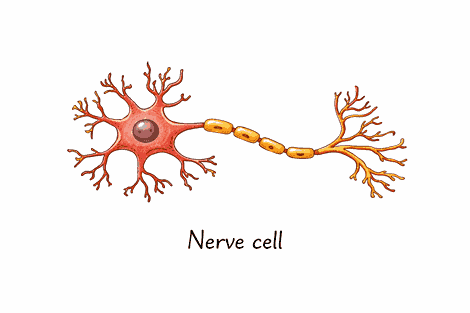
Nerve Cells (Neurons)
- Carry messages in the body
- Elongated shape, branched structure
- Reach different body parts; pass messages quickly
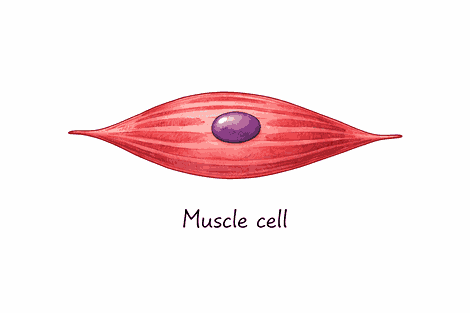
Muscle Cells (Food Pipe)
- Thin, flexible, spindle-shaped
- Contract and relax in a wave-like manner
- Push food down to the stomach
Plant Cells: Variation
- Shapes: rectangular, elongated, oval, tube-like
- Some form long tubes → carry water throughout the plant
Digestive System: Cell Cooperation
| Location | Cell Type | Function |
|---|
| Food pipe | Muscle cells | Contract-relax wave-like; push food to stomach |
| Stomach wall | Muscle cells | Churn food |
| Stomach inner lining | Gland cells | Contract-relax wave-like; push food to the stomach |
Key Terms
| Term | Definition |
|---|
| Neurons | Nerve cells are elongated, branched, and carry messages quickly in the body |
| Muscle cells | Thin, flexible, spindle-shaped; contract and relax for movement |
| Digestive juices | Nerve cells are elongated, branched, carry messages quickly in the body |
| Protective lining | Fluids produced by stomach lining cells help break down food |
| Cell specialization | Layer of thin, flat cells (e.g., cheek); shields the inner surfaces |
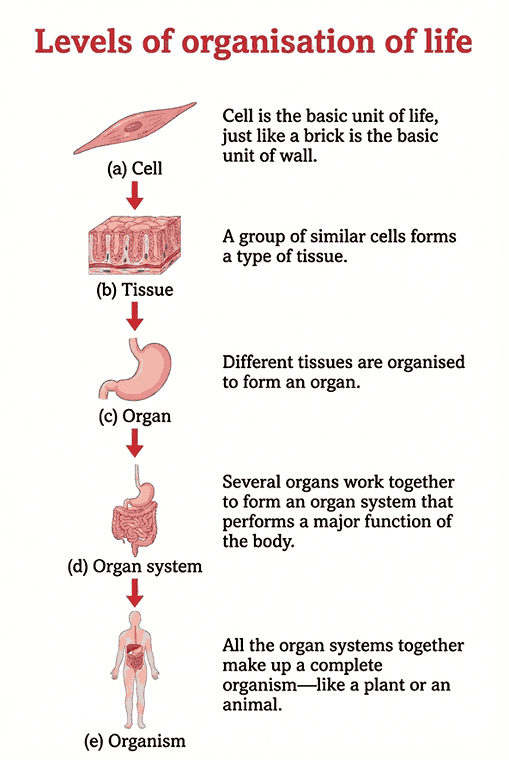
What Are the Levels of Organisation in the Body of a Living Organism?
Hierarchy of Organisation
| Level | Description |
|---|
| Cell | Basic unit of life |
| Tissue | Group of similar cells working together |
| Organ | A group of similar cells working together |
| Organ system | All organ systems together; a complete living being (plant or animal) |
| Organism | Several organs working together perform a major body function |
Sequence (Simple to Complex)
Cell → Tissue → Organ → Organ system → Organism
Multicellular Organisms
- Life begins with a single cell: an egg
- An egg can divide repeatedly → forms a complete living being with many cells
- Such beings = multicellular organisms
- Examples: Animals (including humans), plants
Key Terms
| Term | Definition |
|---|
| Cell | Basic structural and functional unit of life |
| Tissue | Group of organs performing a major body function |
| Organ | Structure made of different tissues working together |
| Organ system | A complete living being made of all organ systems |
| Organism | A single cell that divides repeatedly to form a complete multicellular organism |
| Multicellular organism | A living being formed from many cells starts from a single egg cell |
| Egg | A living being formed from many cells; starts from a single egg cell |
 The Invisible Living World Beyond Our Naked Eye: Short Notes
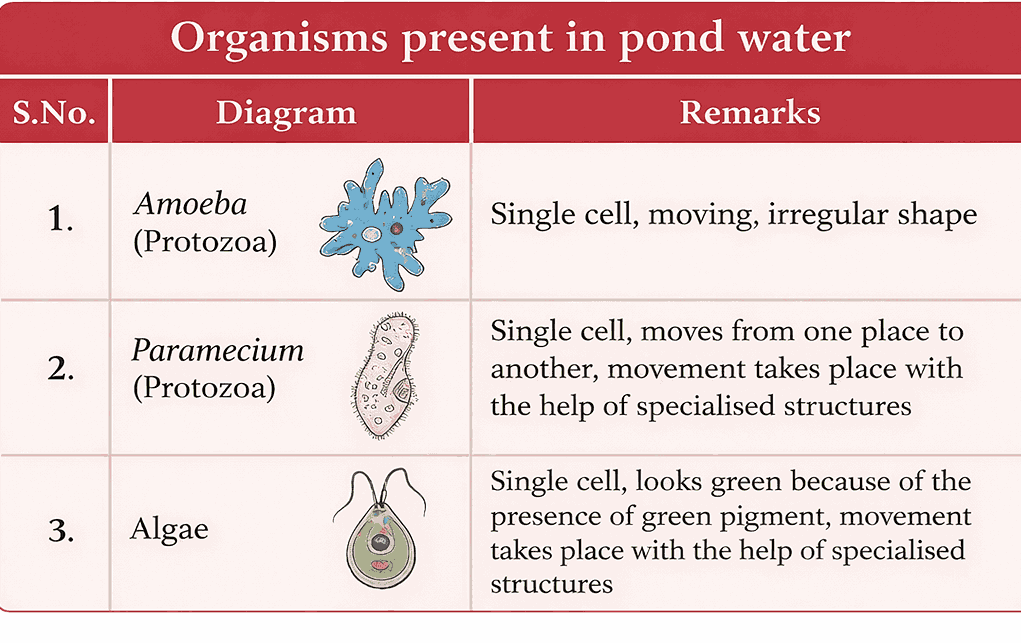
What Are Microorganisms?
Definition
- Living organisms made of one or very few cells
- Too small to see with the naked eye
- Called microorganisms or microbes
Types Based on Cell Number
| Type | Description | Examples |
|---|
| Unicellular | Made of one cell only | Bacteria, Amoeba |
| Multicellular | Made of many cells | Some fungi, algae |

Where Found
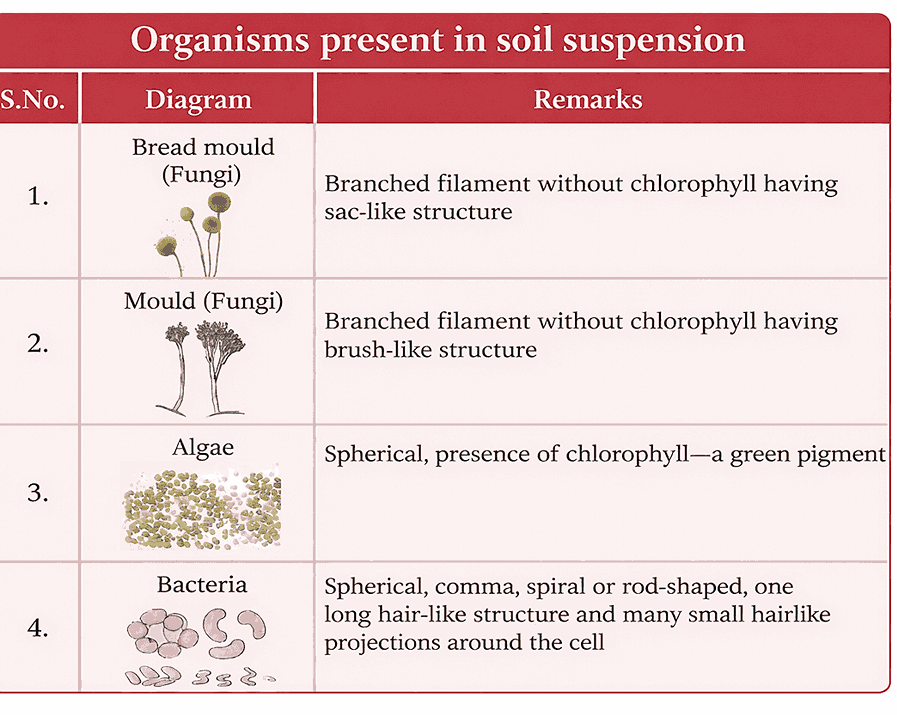
- Water, soil, air
- Even inside our body
Observing Microorganisms
- Need a microscope to see cells
- The microscope magnifies size → makes them visible
- Foldscope: low-cost, foldable paper microscope
- Less detail than high-powered lab microscopes
- Makes the microscopic world accessible to many people

Key Terms
| Term | Definition |
|---|
| Microorganisms | Organisms made of many cells (e.g., some fungi, algae) |
| Unicellular | An organism made of a single cell (e.g., bacteria, Amoeba) |
| Multicellular | A tool that magnifies tiny objects to make them visible |
| Microscope | Tool that magnifies tiny objects to make them visible |
| Foldscope | Organisms made of many cells (e.g., some fungi, algae) |
| Naked eye | Living beings too small to see with the naked eye; also called microbes |
How Are We Connected to Microbes?
Microorganisms Are Everywhere
- Found in water, soil, air, and even food items
- Present on the surfaces of leaves, stems, and roots (observe with a foldscope or a microscope)
Food Spoilage: Visible Evidence
- Leftover food (e.g., lemon, tomato, orange) develops powdery or cotton-like growth
- Caused by microbial infection
- Microbes reach food from the surrounding environment
Diversity of Microorganisms
| Feature | Details |
|---|
| Habitats | Extreme conditions: hot water springs, snow cold zones; also moderate temperatures |
| Location in body | Live inside the human body, especially the gut/intestine |
| Role in digestion | Intestinal bacteria help in digestion (Grade 7: Life Processes in Animals) |
| Variation | Live inside the human body, especially gut/intestine |
Shapes of Microorganisms
Key Terms
| Term | Definition |
|---|
| Microbial infection | Growth of microbes on food causing spoilage (powdery/cotton-like appearance) |
| Gut bacteria | Microbes living in intestine; assist in digestion |
| Extreme habitats | Places like hot springs or cold zones where certain microbes survive |
Points to Remember
- Microbes contact food from air, water, soil, or handling
- Microbial diversity enables survival in varied environments
- Some microbes are beneficial (e.g., digestion); others cause spoilage
Key players in cleaning the environment
Manure Formation from Plant Waste
- Fruit/vegetable peels turn into dark-coloured manure over time
- Manure = nutrient-rich; increases soil fertility
- Process: Microorganisms (fungi, bacteria) in soil act on plant waste
- Break down waste → simpler, nutrient-rich manure
Role of Microorganisms in Decomposition
| Material Decomposed | Outcome |
|---|
| Fruit/vegetable peels | Convert to nutrient-rich manure |
| Dry leaves, plant waste | Break down into simpler substances |
| Decaying plants, fallen leaves | Disappear; nutrients return to soil |
| Dead animals | Decomposed; nutrients recycled to nature |
| Animal waste (dung) | Broken down by helpful bacteria |
Conditions for Decomposition
- Optimal temperature
- Appropriate moisture level
Environmental Benefits
- Microorganisms recycle waste
- Return important nutrients to the soil
- Help plants grow better
- Clean environment by breaking down waste
Microbes as a Source of Biogas
Process
- Some bacteria and fungi live in an oxygen-free environment
- Decompose:
- Plant waste
- Animal waste
- Household wastewater
Uses of Biogas (Methane)
| Use | Application |
|---|
| Cooking | Fuel for kitchen stoves |
| Heating | Warm spaces in cold conditions |
| Electricity generation | Power production |
| Vehicles | Run engines as an alternative fuel |
Key Terms
| Term | Definition |
|---|
| Manure | Dark, nutrient-rich material from decomposed plant/animal waste; improves soil fertility |
| Decomposition | Breakdown of organic matter by microorganisms into simpler substances |
| Microorganisms | Fungi, bacteria that act on waste; enable decomposition and nutrient recycling |
| Biogas | Mixture of gases (mainly methane + carbon dioxide) produced by microbes in oxygen-free conditions |
| Methane | High-energy gas from biogas; used as fuel for cooking, heating, electricity, vehicles |
| Oxygen-free environment | Condition where certain bacteria decompose waste to produce biogas |
Microorganisms and food
Yeast and Dough Fermentation
Observation
- Dough with yeast + sugar + warm water:
- Risen, fluffy, different smell
- Dough without yeast: no change
Role of Yeast
- Yeast = microorganism; belongs to fungi group
- Grows well in warm conditions
- Respires; breaks down food → releases energy for growth
- Releases carbon dioxide → forms bubbles → makes dough soft, fluffy
- Produces small amount of alcohol → gives dough different smell
- Used in making breads, cakes
Why Add Sugar and Warm Water?
- Sugar = food source for yeast
- Warm water = optimal condition for yeast growth
Other Fermentation: Lactobacillus
| Food Item | Microorganism | Process |
|---|
| Idli, dosa batter | Lactobacillus (bacteria) | Fermentation |
| Bhatura dough | Lactobacillus (bacteria) | Fermentation |
Curd Formation from Milk
Observation
| Bowl | Condition | Result |
|---|
| A | Warm | Milk → curd; sour taste |
| B | Not warm | Milk not curdled; slightly sour |
Process
- Curd contains several bacteria;
one is Lactobacillus - Lactobacillus feeds on
lactose (milk sugar) - Multiplies; ferments milk → forms curd
- Produces lactic acid (not alcohol) → makes curd sour
- Bacteria grow well in warm conditions
→ curd forms in bowl A, not B
Categories of Microorganisms
- Protozoa
- Fungi (e.g., yeast)
- Bacteria (e.g., Lactobacillus, Rhizobium)
- Some algae
Rhizobium: Nitrogen Fixation in Plants
Location
- Rhizobium bacteria live in root nodules (swollen regions)
- Found in roots of legumes: beans, peas, lentils
Function
| Action | Benefit |
|---|
| Trap nitrogen from air | Make nitrogen useful for plants |
| Convert atmospheric nitrogen | Help plants grow without chemical fertilisers |
Agricultural Practice
- Farmers grow legumes in rotation with other crops
- Naturally increases nitrogen in soil
- Keeps soil healthy for next crop
Key Terms
| Term | Definition |
|---|
| Yeast | Fungi-type microorganism; ferments dough; releases CO₂ and alcohol |
| Fermentation | Process where microbes break down food; produces gases/acids |
| Lactobacillus | Bacteria that ferments milk to curd; produces lactic acid |
| Lactic acid | Acid produced by Lactobacillus; gives curd sour taste |
| Lactose | Sugar present in milk; food source for Lactobacillus |
| Rhizobium | Bacteria in legume root nodules; fixes atmospheric nitrogen for plants |
| Root nodules | Swollen regions on legume roots; house Rhizobium bacteria |
| Nitrogen fixation | Process of converting atmospheric nitrogen into plant-usable form |
Amazing Microalgae: Tiny Helpers in Water
What Are Microalgae?
- Microscopic plant-like organisms
- Found in: water, soil, air, even on trees
- Make own food using sunlight (photosynthesis)
- Release oxygen; produce more than half of Earth’s oxygen supply
- Rich in nutrients; food source for many aquatic animals
Uses of Microalgae
| Use | Details |
|---|
| Health supplements | Examples: Spirulina, Chlorella, Diatoms |
| Medicines | Used in pharmaceutical preparations |
| Water cleaning | Help remove pollutants from water |
| Biofuel production | Source of renewable energy |
Spirulina: A Superfood
| Feature | Details |
|---|
| Health benefits | Called superfood due to high nutritional value |
| Vitamin B12 | Good source; essential for body functions |
| Protein content | More than 60% of body weight |
| Fat and sugar | Only small amount present |
Threats to Microalgae
- Pollution
- Climate change
- Habitat destruction
Consequences
- Threatens microalgal diversity and abundance
- Risk to environmental protection and oxygen balance on Earth
Need for Action
- Conserve microalgae to maintain ecological balance
Key Terms
| Term | Definition |
|---|
| Microalgae | Microscopic plant-like organisms; produce oxygen, nutrients; live in water, soil, air |
| Photosynthesis | Process of making food using sunlight; releases oxygen |
| Spirulina | Microalga used as superfood; high in protein (>60%), vitamin B12, low in fat/sugar |
| Biofuel | Renewable fuel made from microalgae |
| Nitrogen fixation | (Not applicable here – remove) |
| Oxygen balance | Maintenance of atmospheric oxygen levels; microalgae contribute >50% |
Why is the cell considered to be a Basic Unit
of Life?
- All living organisms made of tiny building blocks called cells
- Single cell contains various components → perform life functions
- Cell = basic structural and functional unit of life
Types of Organisms Based on Cell Number
| Type | Description | Examples |
|---|
| Multicellular | Body made of many cells; cells have specialised functions; cooperate for survival | Plants, animals |
| Unicellular | Made of single cell; one cell performs all survival functions | Bacteria, protozoa |
| Variable | Can be one or more cells | Yeast (unicellular fungus), Mould (multicellular fungus), some algae, fungi |
Cell Structure: Key Comparisons
| Feature | Plant/Animal Cells | Fungi Cells | Bacteria |
|---|
| Cell membrane | Present | Present | Present |
| Cell wall | Plant: Present; Animal: Absent | Present | Present |
| Chloroplasts | Plant: Present; Animal: Absent | Well-defined, with a nuclear membrane | Absent |
| Nucleus | Well-defined, with nuclear membrane | Well-defined | Absent; has nucleoid instead |
- Nucleoid: region in bacteria with genetic material; no nuclear membrane
- This feature distinguishes bacteria from yeast, protozoa, algae, fungi, plants, and animals
Observing Cell Structures
- Basic structures covered at this level
- More subcellular components studied in higher classes
- Electron microscope:
- Magnifies cell ~10,00,000 times
- Reveals detailed internal structures
Key Principles
- All living beings (including microorganisms) = made of one or more cells
- Cells differ in size, shape, and structure
- Plant cells and animal cells have specific differences
- Understanding cell differences → helps learn how organisms function differently
Key Terms
| Term | Definition |
|---|
| Cell | Basic unit of life; contains components for life functions |
| Multicellular organism | Living being made of many cells; cells specialised and cooperative |
| Unicellular organism | Living being made of single cell; performs all functions in one cell |
| Cell membrane | Outer layer surrounding all cells; controls material movement |
| Cell wall | Rigid outer layer in plants, fungi, bacteria; provides support |
| Chloroplasts | Organelles for photosynthesis; absent in fungi and bacteria |
| Nucleus | Well-defined control centre with nuclear membrane; absent in bacteria |
| Nucleoid | Region in bacteria containing genetic material; no nuclear membrane |
| Electron microscope | High-power microscope; magnifies ~10,00,000× for subcellular observation |