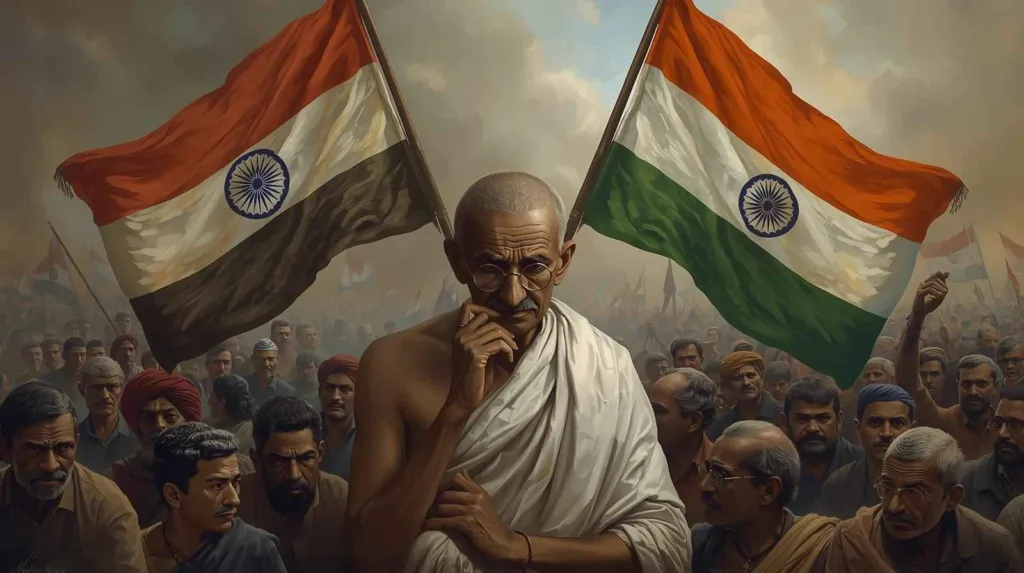
Get ready to test your knowledge of India’s freedom struggle with our MCQ quiz on ‘Towards Civil Disobedience’|Nationalism In India, Chapter 2 of Nationalism in India Class 10.
Based on NCERT 10th-grade curriculum, this topic-wise series of multiple-choice questions will help you assess your understanding of key concepts and historical events that shaped the nation’s fight for independence.
Practice MCQ Quiz Towards Civil Disobedience|Nationalim In India and boost your scores!
But before practicing the MCQs in Quix format, it is higly recomended to learn the questions of the MCQs. They are provided below.
Also Read| Short Notes – Nationalism In India
If you directly want to do the quiz instead, then please click on the link in the below table of contents.
MCQ Towards Civil Disobedience| Nationalism In India
- Why did Gandhi withdraw from the Non-Cooperation Movement in February 1922?
A) Because the movement was turning violent and satyagrahis needed proper training
B) Because the British accepted all demands
C) Because he was arrested
D) Because peasants refused to participate
Answer: A) Because the movement was turning violent and satyagrahis needed proper training
Explanation: Gandhi believed violence contradicted the principles of satyagraha and that people needed disciplined preparation.
- What did some Congress leaders want to do after 1922?
A) Launch armed rebellion
B) Participate in elections to provincial councils to oppose British policies and push for reform
C) Boycott all British goods permanently
D) Form alliances with princely states
Answer: B) Participate in elections to provincial councils to oppose British policies and push for reform
Explanation: They aimed to argue for reform and expose that the councils were not truly democratic.
- Who formed the Swaraj Party within the Congress?
A) Jawaharlal Nehru and Subhas Chandra Bose
B) Mahatma Gandhi and Sardar Patel
C) C. R. Das and Motilal Nehru
D) Muhammad Ali Jinnah and Liaquat Ali Khan
Answer: C) C. R. Das and Motilal Nehru
Explanation: They created the Swaraj Party to argue for returning to council politics.
- What did younger leaders like Nehru and Bose demand?
A) Cooperation with the British
B) More radical mass agitation and full independence
C) Focus on education only
D) Support for landlords
Answer: B) More radical mass agitation and full independence
Explanation: They rejected gradual reform and insisted on complete independence through mass action.
- What global event shaped Indian politics in the late 1920s?
A) World War I
B) Russian Revolution
C) Worldwide economic depression
D) Spanish Flu pandemic
Answer: C) Worldwide economic depression
Explanation: It began affecting India from 1926, with agricultural prices collapsing after 1930.
- What happened to peasants due to falling agricultural prices after 1930?
A) They became wealthier
B) They received government subsidies
C) They migrated to cities for factory jobs
D) They found it hard to sell harvests and pay revenue
Answer: D) They found it hard to sell harvests and pay revenue
Explanation: Declining exports and demand made it impossible for many peasants to meet their financial obligations.
- What was the purpose of the Statutory Commission set up by the new Tory government in Britain?
A) To grant immediate independence to India
B) To look into the functioning of the constitutional system in India and suggest changes
C) To arrest nationalist leaders
D) To promote British goods in India
Answer: B) To look into the functioning of the constitutional system in India and suggest changes
Explanation: The commission was officially meant to review India’s constitutional framework and recommend reforms.
- Who headed the Statutory Commission sent to India in 1928?
A) Lord Irwin
B) Sir John Simon
C) Winston Churchill
D) Lord Chelmsford
Answer: B) Sir John Simon
Explanation: The commission is historically known as the Simon Commission after its chairman.
- What was the main criticism of the Simon Commission?
A) It had no Indian members — all were British
B) It proposed too many reforms
C) It supported Gandhi’s demands
D) It was too expensive
Answer: A) It had no Indian members — all were British
Explanation: Indians resented being excluded from a body deciding their political future.
- What slogan greeted the Simon Commission in India?
A) “Inquilab Zindabad”
B) “Simon Go Back”
C) “Jai Hind”
D) “Do or Die”
Answer: B) “Simon Go Back”
Explanation: This slogan was raised by all parties, including Congress and Muslim League, during nationwide protests.
- What did Viceroy Lord Irwin announce in October 1929 to pacify nationalists?
A) Immediate independence
B) Release of all political prisoners
C) Abolition of all taxes
D) A vague offer of ‘dominion status’ in an unspecified future and a Round Table Conference
Answer: D) A vague offer of ‘dominion status’ in an unspecified future and a Round Table Conference
Explanation: This was a political gesture to win over moderates — but lacked clarity or commitment.
- Who became more assertive as Irwin’s offer failed to satisfy Congress?
A) Moderates and landlords
B) Princely rulers
C) British officials
D) Radicals like Jawaharlal Nehru and Subhas Chandra Bose
Answer: D) Radicals like Jawaharlal Nehru and Subhas Chandra Bose
Explanation: With moderates losing influence, radicals pushed harder for full independence.
- Where and when was the demand for ‘Purna Swaraj’ formalised?
A) Calcutta, 1928
B) Bombay, 1920
C) Lahore, December 1929
D) Madras, 1935
Answer: C) Lahore, December 1929
Explanation: The Lahore session under Nehru’s presidency declared complete independence as India’s goal.
- What date was chosen to celebrate Independence Day under the Purna Swaraj resolution?
A) 15 August
B) 2 October
C) 26 January
D) 14 August
Answer: C) 26 January
Explanation: People were to take a public pledge on this day in 1930 to fight for full independence.
- How successful were the 26 January 1930 Independence Day celebrations?
A) Extremely successful with mass participation
B) Attracted very little attention
C) Led to immediate British surrender
D) Caused violent riots across India
Answer: B) Attracted very little attention
Explanation: The idea of abstract freedom did not yet resonate widely with the masses.
- What challenge did Gandhi face after the Lahore resolution?
A) Relating the abstract idea of freedom to concrete everyday issues
B) Finding foreign allies
C) Convincing landlords to join
D) Stopping Muslim participation
Answer: A) Relating the abstract idea of freedom to concrete everyday issues
Explanation: Gandhi needed to connect “Purna Swaraj” with real, relatable grievances to mobilise people.
MCQ Quiz: Towards Civil Disobedience|Nationalism In India
FAQs MCQ Quiz Towards Civil Disobedience| Natioanlism In India
- Q: Are these MCQs based on the latest NCERT syllabus?
A: Yes, our MCQs are carefully curated from the NCERT 9th-grade curriculum, ensuring alignment with the latest syllabus and exam patterns. - Q: Will these MCQs help me prepare for my Class 10 exams?
A: Absolutely! Our topic-wise MCQ series is designed to help you assess your understanding and retain key concepts, making you better prepared for your Class 10 exams. - Q: How can I track my progress and identify areas for improvement?
A: After completing the quiz, you can review your answers and track your scores. This will help you identify areas where you need more practice, allowing you to focus your studies and improve your performance.