
Life Processes Class 10 Notes are prepared strictly from your NCERT books of class 10 science chapter 5.
So, you can relay for your school as well as board exams.
The PDF download link is at the end of the short notes. But first, read the short notes thoroughly. The notes are more engaging and interactive.
Happy learning!
Before you rush to memorise the short notes, may I request you to please read the Explanation of life processes, so that you can understand the chapter well.
If we understand something, then it becomes very easy to remember it.
Introduction: Life Processes
🧬 What Makes Something Alive?
Think 🤔
Is movement enough to define life?
| Term | Meaning |
|---|---|
| Molecular Movement | Movement of molecules inside organism |
| Organised Structure | Tissues, cells, organelles—arranged system |
| Repair & Maintain | Process to fight breakdown |
| Environment | Tissues, cells, organelles—an arranged system |
| Virus | Tissues, cells, organelles—an arranged system |
WHAT ARE LIFE PROCESSES?
These processes are essential for the survival and maintenance of living organisms.
🧬 Life Processes
🌿 Core Function
Acquiring & utilizing food → energy & organic materials
🔑 Key Point
Autotrophic (plants) vs Heterotrophic (animals, fungi). Essential for growth & repair.
⚡ Core Function
Breakdown of glucose → release ATP energy for cellular work
🔑 Key Point
Aerobic (with O₂) yields more ATP; Anaerobic occurs without oxygen.
🌬️ Example
During exercise, muscles switch to anaerobic respiration → lactic acid.
🔄 Core Function
Movement of nutrients, gases, hormones, and waste throughout organism
🔑 Key Point
In humans: circulatory system (heart, blood, vessels). In plants: xylem & phloem.
🧹 Core Function
Removal of metabolic wastes like urea, CO₂, and excess ions
🔑 Key Point
In humans: kidneys filter blood → urine. Plants store waste in leaves or bark.
Specialised Systems in Organisms
| Organism Type | Life Process Adaptation |
|---|---|
| Single-celled | Direct contact with the environment; no organs needed |
| Multi-cellular | Specialised tissues and transport systems are required |
| Term | Meaning |
|---|---|
| Life processes | Biological functions vital to survival and maintenance |
| Nutrition | Process of obtaining and using food |
| Carbon-based molecules | Organic compounds making up food and living matter |
| Oxidation-reduction | Chemical reactions involving electron transfer to release energy |
| Respiration | Energy-release process using oxygen |
| Excretion | Removal of harmful metabolic by-products |
| Transportation system | Internal system for distributing nutrients, gases, and wastes |
| Specialized tissues | Cells organized for specific bodily functions |
Nutrition
Definition
process of obtaining energy and materials from food.
Why Essential
• Growth & repair
• Maintenance (even at rest)
• Synthesis of proteins/biomolecules
Modes of Nutrition
Autotrophic Nutrition
- Make own food from
inorganic substances - Use CO₂ + H₂O → food
- Require sunlight + chlorophyll
- Base of all food chains
- Examples: Green plants, algae, some bacteria
Heterotrophic Nutrition
- Cannot make their own food
- Consume complex
organic food - Use enzymes to digest
- Depend on autotrophs (directly/indirectly)
- Examples: Animals, fungi
| Term | Meaning |
|---|---|
| Nutrition | Process of obtaining and utilizing food for energy and growth |
| Autotrophs | Organisms that produce their own food from inorganic substances |
| Heterotrophs | Organisms that depend on others for food |
| Enzymes | Biological catalysts that break down complex food into simpler forms |
| Photosynthesis | Process by which autotrophs convert light energy into chemical energy |
| Carbon-based molecules | Organic compounds essential for life (e.g., carbohydrates, proteins) |
Autotrophic Nutrition
🌿 Autotrophic Nutrition
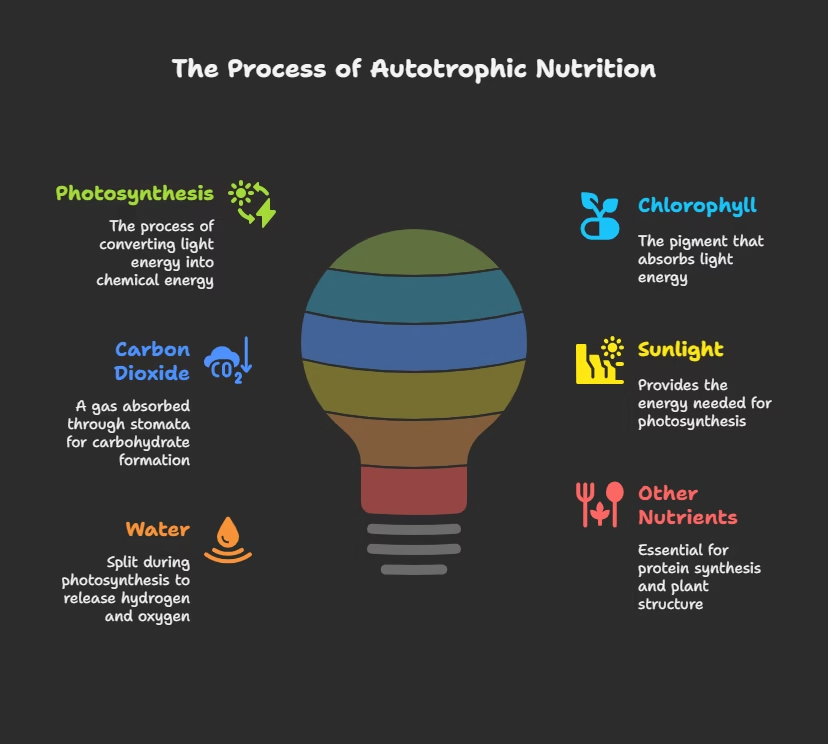
| Component | Role in Photosynthesis |
|---|---|
| Carbon Dioxide | Converted to carbohydrates |
| Water | Split into hydrogen and oxygen |
| Sunlight | Provides energy for reactions |
| Chlorophyll | Absorbs light energy |
Photosynthesis Process
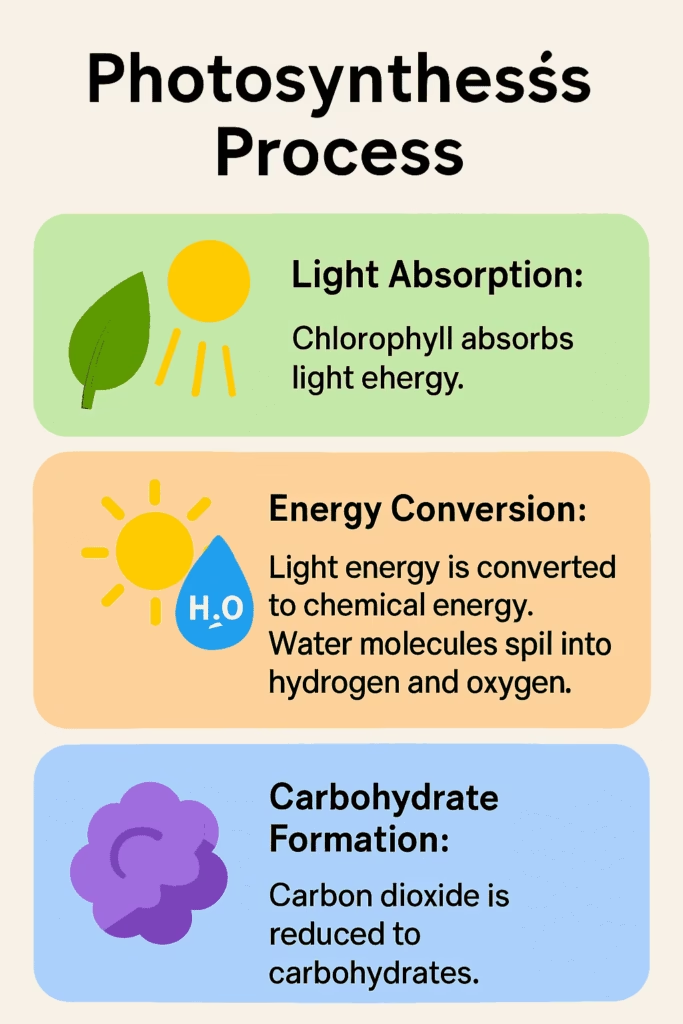
1. Light Absorption:
Chlorophyll absorbs light energy.
2. Energy Conversion:
Light energy is converted to chemical energy.
Water molecules split into hydrogen and oxygen.
3. Carbohydrate Formation:
Carbon dioxide is reduced to carbohydrates.
- Note: Steps may not occur immediately one after another (e.g., desert plants store intermediates at night).
| Step | Key Action | Outcome |
|---|---|---|
| 1. Absorption | Chlorophyll captures light | Energy available |
| 2. Conversion | Light energy → chemical energy | Water splits (H₂, O₂) |
| 3. Reduction | CO₂ → carbohydrates | Energy stored as starch |
Essential Components for Photosynthesis
1. Chlorophyll
- Found in chloroplasts.
- Absorbs light energy.
2. Carbon Dioxide
- Enters through stomata.
- Regulation:
- Guard cells control stomatal opening/closing.
- Swell with water → pore opens.
- Shrink → pore closes to prevent water loss.
| Component | Source | Function |
|---|---|---|
| Chlorophyll | Chloroplasts | Absorbs light |
| CO₂ | Stomata | Forms carbohydrates |
| Guard Cells | Leaf surface | Regulate stomatal pores |
3. Sunlight
- Provides energy for photosynthesis.
4. Water
- from the soil by roots.
- Split during photosynthesis
to release hydrogen and oxygen.
5. Other Nutrients
- Nitrogen, phosphorus, iron, and magnesium.
- Nitrogen:
- Essential for proteins and compounds.
- Absorbed as inorganic nitrates/nitrites or organic compounds.
| Nutrient | Source | Role |
|---|---|---|
| Water | Soil (roots) | Split for H₂ and O₂ |
| Nitrogen | Soil (nitrates/nitrites) | Protein synthesis |
| Phosphorus, Iron, Magnesium | Soil | Building the plant body |
Heterotrophic Nutrition
- Organisms obtain food from external sources (plants, animals, or organic matter).
- Varies based on environment, food type, and availability.
- Food source determines how food is accessed.
| Food Source | Example Organism | Nutritive Apparatus |
|---|---|---|
| Stationary (e.g., grass) | Cow | Grazing, chewing |
| Mobile (e.g., deer) | Lion | Hunting, sharp teeth |
Types of Heterotrophic Nutrition
1. External Digestion
- Food is broken down outside the body, then absorbed.
- Examples:
- Fungi (bread moulds, yeast, mushrooms).
- Enzymes are secreted to decompose organic matter externally.
2. Internal Digestion
- Whole foods are taken in and broken down inside the body.
- Body design and digestive system.
- Examples:
- Animals like humans, cows, and lions.
3. Parasitic Nutrition
- Derive nutrients from living hosts without killing them.
- Examples:
- Plants: Cuscuta (amar-bel).
- Animals: Ticks, lice, leeches, tapeworms.
- Feed on host’s nutrients, often via specialised structures.
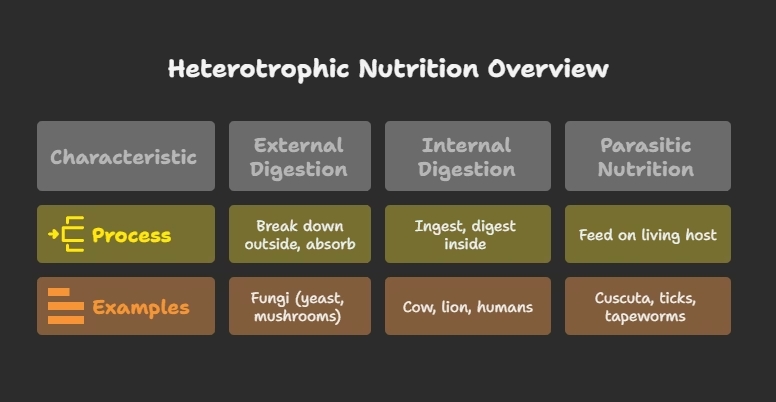
| Nutrition Type | Process | Examples |
|---|---|---|
| External Digestion | Break down outside, absorb | Fungi (yeast, mushrooms) |
| Internal Digestion | Ingest, digest inside | Cow, lion, humans |
| Parasitic | Feed on living host | Cuscuta, ticks, tapeworms |
How Organisms Obtain Nutrition
- Food type and acquisition method differ across organisms.
- Varies based on organism complexity.
- Simple organisms: Use the entire surface for food intake.
- Complex organisms: Specialised parts for digestion.
| Organism Type | Food Intake Method | Digestive System |
|---|---|---|
| Single-celled | Entire surface | Simple, no specialized organs |
| Complex | Specialized parts | Specific digestive structures |
Nutrition in Single-Celled Organisms
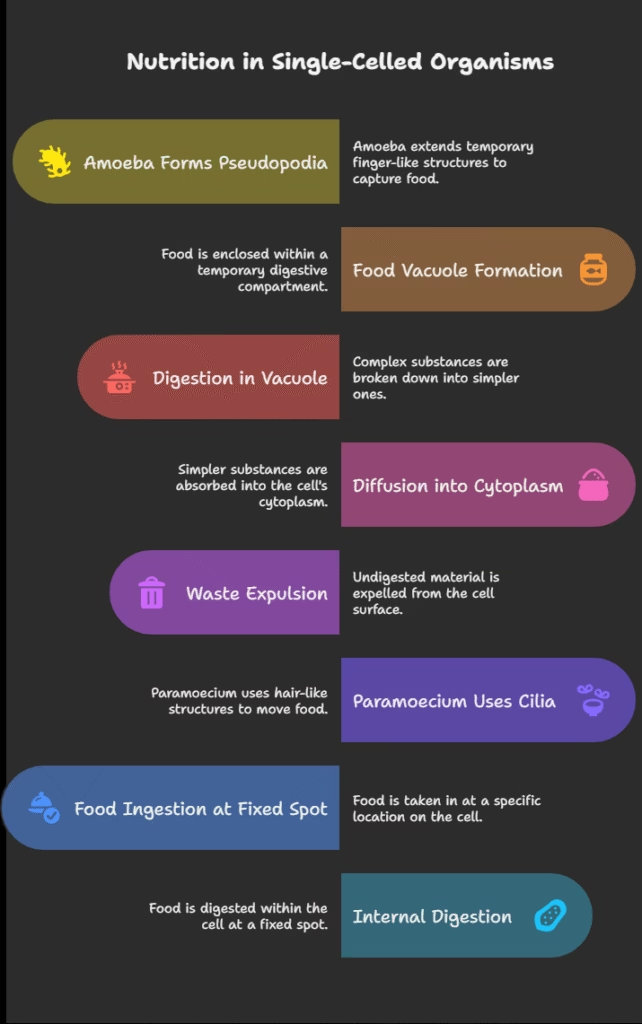
1. Amoeba
Uses temporary finger-like extensions (pseudopodia).
- Process:
- Pseudopodia surround food, forming a food vacuole.
- Complex substances are broken down into simpler ones inside the vacuole.
- Simpler substances diffuse into the cytoplasm.
- Undigested material is expelled from the cell surface.
- Key Feature: No fixed food intake spot.
2. Paramoecium
Food is taken in at a specific spot.
- Process:
- Cilia (hair-like structures) move food to a fixed spot.
- Food is ingested and digested within the cell.
| Internal digestion at a fixed spot | Food Intake | Mechanism | Digestion |
|---|---|---|---|
| Amoeba | Entire surface via pseudopodia | Forms food vacuole | Breaks down in vacuole, expels waste |
| Paramoecium | Specific spot | Cilia move food | Internal digestion at fixed spot |
Nutrition in Human Beings
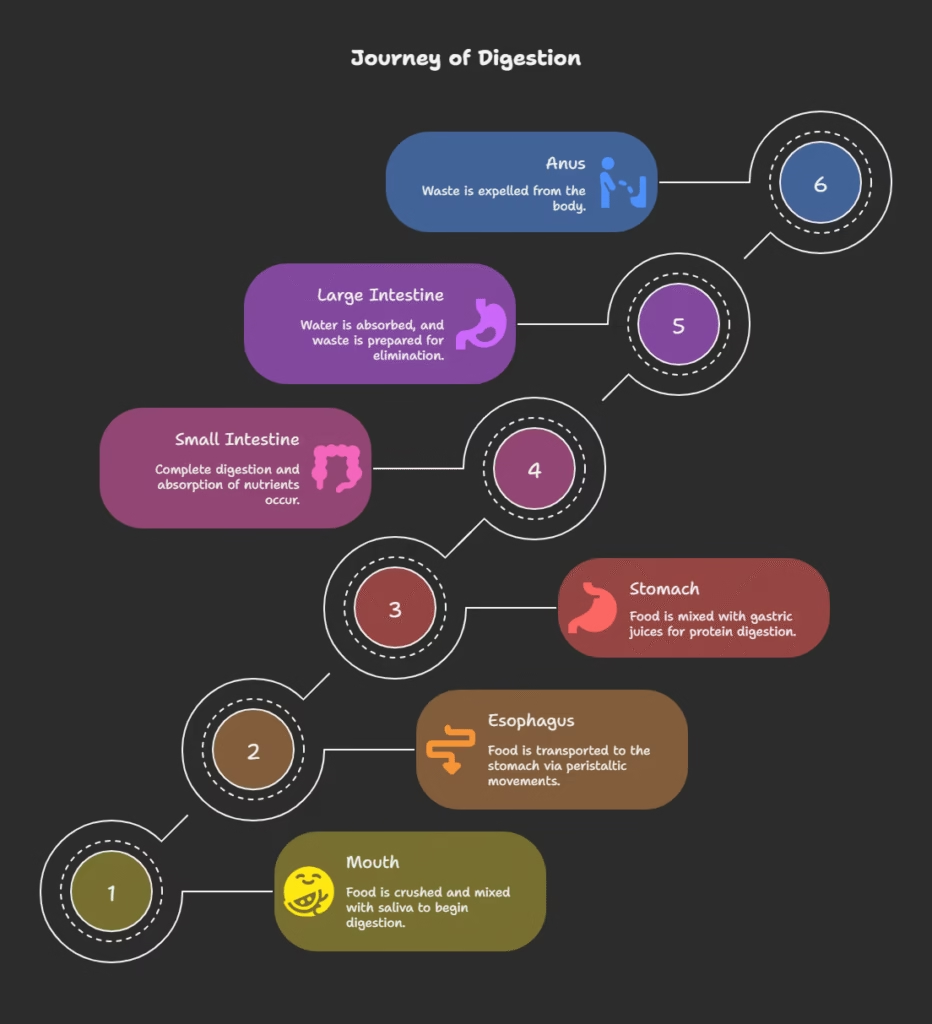
- Alimentary Canal: A long tube from the mouth to the anus with specialized regions.
- Function: Breaks down complex food into small, absorbable molecules.
- Key Processes: Digestion, absorption, and waste elimination.
| Region | Function |
|---|---|
| Mouth | Chewing, saliva secretion |
| Stomach | Mixing, protein digestion |
| Small Intestine | Complete digestion, absorption |
| Large Intestine | Water absorption, waste expulsion |
Digestive Process
1. Mouth
Food is crushed by teeth and mixed with saliva.
- Saliva:
- Secreted by salivary glands.
- Contains salivary amylase (enzyme) → Breaks down starch into simple sugars.
- Tongue: Mixes food with saliva, aids chewing.
- Movement: Food moved to the esophagus via peristalsis (rhythmic muscle contractions).
2. Esophagus
- Role: Transports food to the stomach via peristaltic movements.
- Structure: The food pipe connecting the mouth to the stomach.
3. Stomach
- Action: Expands to hold food, mixes with digestive juices.
- Gastric Glands secrete:
- Hydrochloric acid (HCl): Creates an acidic medium, aids pepsin.
- Pepsin: Digests proteins.
- Mucus: Protects the stomach lining from acid.
- Exit: Regulated by the sphincter muscle, releasing food to the small intestine.
- Note: Acidity issues may relate to excess HCl.
| Component | Role |
|---|---|
| HCl | Facilitates pepsin, kills bacteria |
| Pepsin | Breaks down proteins |
| Mucus | Protects stomach lining |
| Sphincter | Controls food exit |
4. Small Intestine
- Structure: Longest part, coiled for compact fit.
- Length varies: Longer in herbivores (e.g., for cellulose digestion), shorter in carnivores.
- Function: Complete digestion of carbohydrates, proteins, and fats.
- Secretions:
- Liver: Produces bile → Emulsifies fats (breaks into smaller globules).
- Pancreas: Secretes pancreatic juice with:
- Trypsin: Digests proteins.
- Lipase: Breaks down emulsified fats.
- Intestinal glands: Secrete intestinal juice → Converts:
- Proteins → Amino acids.
- Carbohydrates → Glucose.
- Fats → Fatty acids, glycerol.
- Absorption:
- Villi: Finger-like projections increase surface area.
- Rich in blood vessels → Transport nutrients to body cells for energy, tissue building, repair.
| Secretion | Source | Function |
|---|---|---|
| Bile | Liver | Emulsifies fats |
| Pancreatic Juice | Pancreas | Digests proteins, fats |
| Intestinal Juice | Small intestine | Final conversion to absorbable forms |
5. Large Intestine
- Role: Absorbs water from unabsorbed food.
- Waste: Remaining material expelled via the anus, regulated by the anal sphincter.
Respiration
Breaks down food (glucose) to release energy for life processes.
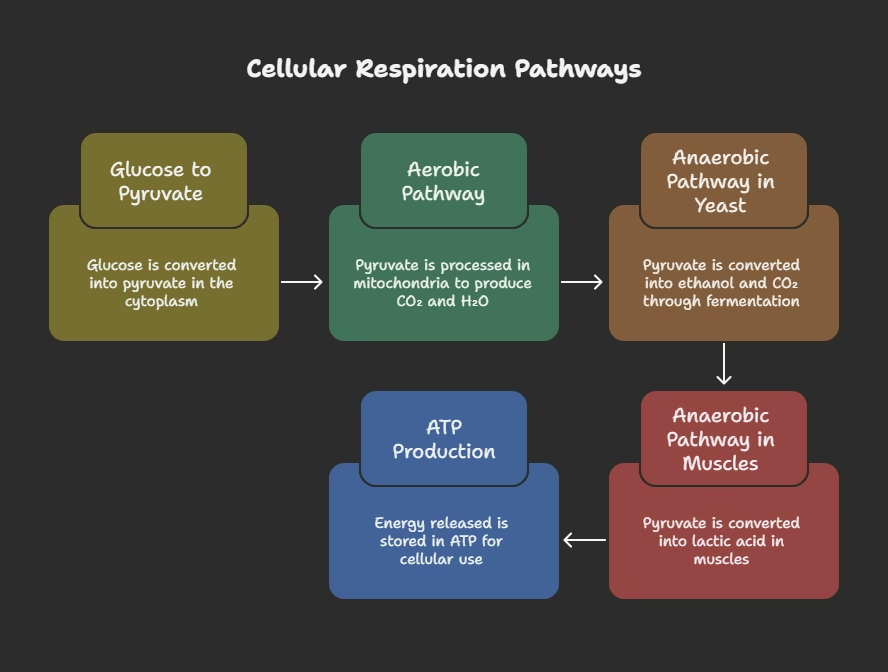
- Glucose (6-carbon) → Pyruvate (3-carbon) in cytoplasm.
- ATP (adenosine triphosphate) fuels cellular activities.
- Types:
- Aerobic Respiration: Uses oxygen, occurs in mitochondria, produces CO₂, water, and high energy.
- Anaerobic Respiration: No oxygen, produces less energy (e.g., ethanol in yeast, lactic acid in muscles).
| Respiration Type | Location | Oxygen | Products | Energy Yield |
|---|---|---|---|---|
| Aerobic | Mitochondria | Yes | CO₂, H₂O | High |
| Anaerobic (Yeast) | Cytoplasm | No | Ethanol, CO₂ | Low |
| Anaerobic (Muscles) | Cytoplasm | No | Lactic acid | Low (causes cramps) |
Respiration Pathways
- Step 1: Glucose → Pyruvate (cytoplasm, all organisms).
- Aerobic Pathway:
- Pyruvate → CO₂ + H₂O (mitochondria, high energy).
- Anaerobic Pathways:
- Yeast: Pyruvate → Ethanol + CO₂ (fermentation).
- Muscles (low oxygen): Pyruvate → Lactic acid (causes cramps).
- ATP: Energy is stored in ATP and used for cellular reactions.
Gas Exchange in Organisms
Plants
- Structures: Stomata, large intercellular spaces.
- Process: Diffusion of O₂ and CO₂.
- Day: O₂ is released (photosynthesis uses CO₂).
- Night: CO₂ released (no photosynthesis).
Animals
- Terrestrial: Use atmospheric O₂, have specialized organs
(e.g., lungs). - Aquatic: Use dissolved O₂
(low O2concentration, faster breathing rate). - Fish use gills to extract O₂ from water.
| Organism | O₂ Source | Gas Exchange Organ | Key Feature |
|---|---|---|---|
| Plants | Air | Stomata | Diffusion-based |
| Fish | Dissolved in water | Gills | Fast breathing |
| Terrestrial Animals | Atmosphere | Lungs, etc. | Large surface area |
Respiration in Humans
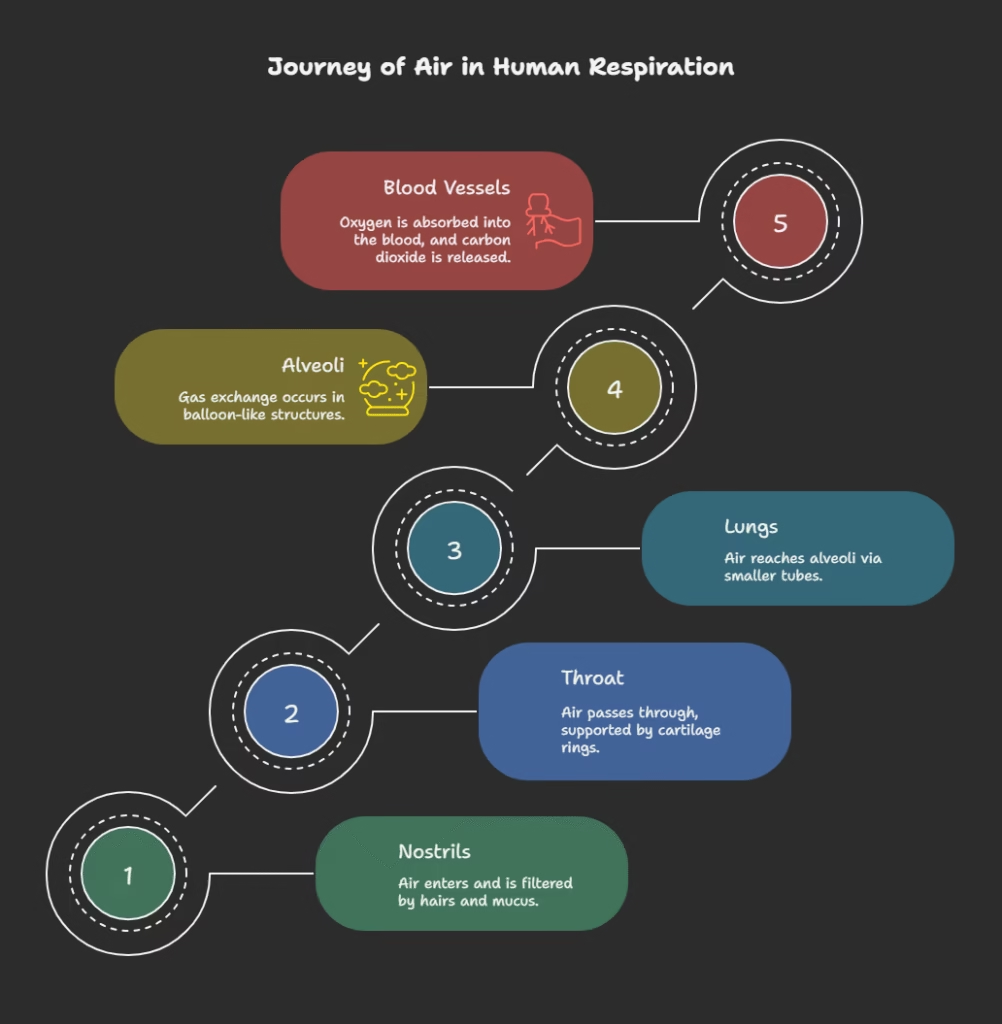
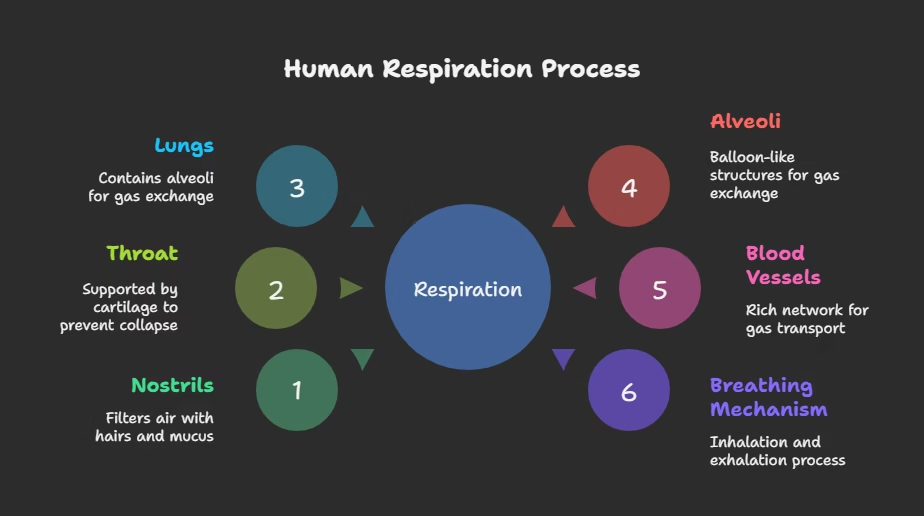
Pathway
- Nostrils: Air filtered by hairs and mucus.
- Throat: Supported by cartilage rings to prevent collapse.
- Lungs: Air reaches alveoli via smaller tubes.
- Alveoli: Balloon-like structures for gas exchange.
- Rich in blood vessels.
- O₂ is absorbed into the blood, and CO₂ is released into the alveoli.
- Breathing Mechanism:
- Inhalation: Ribs lift, diaphragm flattens, chest cavity expands → Air sucked in.
- Exhalation: CO₂ is released, and residual air remains for continuous gas exchange.
Oxygen Transport
- Respiratory Pigment: Haemoglobin (in red blood cells).
- High affinity for O₂, carries it to tissues.
- CO₂ Transport: Mostly dissolved in blood (more soluble than O₂).
| Structure | Role | Feature |
|---|---|---|
| Nostrils | Air intake | Filter air with hairs, mucus |
| Cartilage Rings | Support throat | Prevent collapse |
| Alveoli | Gas exchange | Large surface area, blood vessels |
| Haemoglobin | O₂ transport | High O₂ affinity |
Transportation in Human Beings
- Role of Blood: Transports food, oxygen, carbon dioxide, nitrogenous wastes, and salts.
- Blood Composition:
- Plasma: Fluid medium, transports food, carbon dioxide, and nitrogenous wastes in dissolved form.
- Red Blood Corpuscles: Carry oxygen via haemoglobin.
- Platelets: Aid in clotting to minimize blood loss.
- System Components:
- Heart: A pumping organ that pushes blood.
- Blood Vessels: A network of tubes to reach all tissues.
- Lymph: Fluid for fat transport and excess fluid drainage.
| Component | Function |
|---|---|
| Plasma | Transports dissolved food, CO₂, nitrogenous wastes |
| Red Blood Corpuscles | Transports dissolved food, CO₂, and nitrogenous wastes |
| Platelets | Clot blood at injury sites |
| Lymph | Transports fats, drains excess fluid |
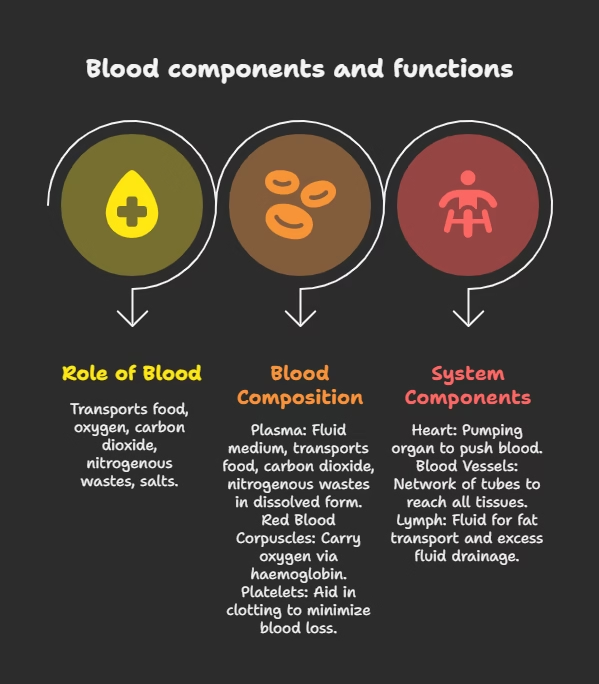
Blood components and function
The Heart
- Structure: Muscular organ, the size of a fist, with four chambers.
- Chambers:
- Left Atrium: Receives oxygen-rich blood from lungs.
- Left Ventricle: Pumps oxygen-rich blood to the body.
- Right Atrium: Receives deoxygenated blood from the body.
- Right Ventricle: Pumps de-oxygenated blood to lungs.
- Function:
- Prevents mixing of oxygen-rich and deoxygenated blood.
- Valves: Ensure blood does not flow backwards during contraction.
- Ventricles have thicker muscular walls than atria for pumping under pressure.
- Circulation:
- Double Circulation: Blood passes through the heart twice per cycle (lungs → heart → body → heart).
| Collects from the body | Role | Blood Type |
|---|---|---|
| Left Atrium | Collects from lungs | Oxygen-rich |
| Left Ventricle | Pumps to body | Oxygen-rich |
| Right Atrium | Collects from body | De-oxygenated |
| Right Ventricle | Pumps to lungs | De-oxygenated |
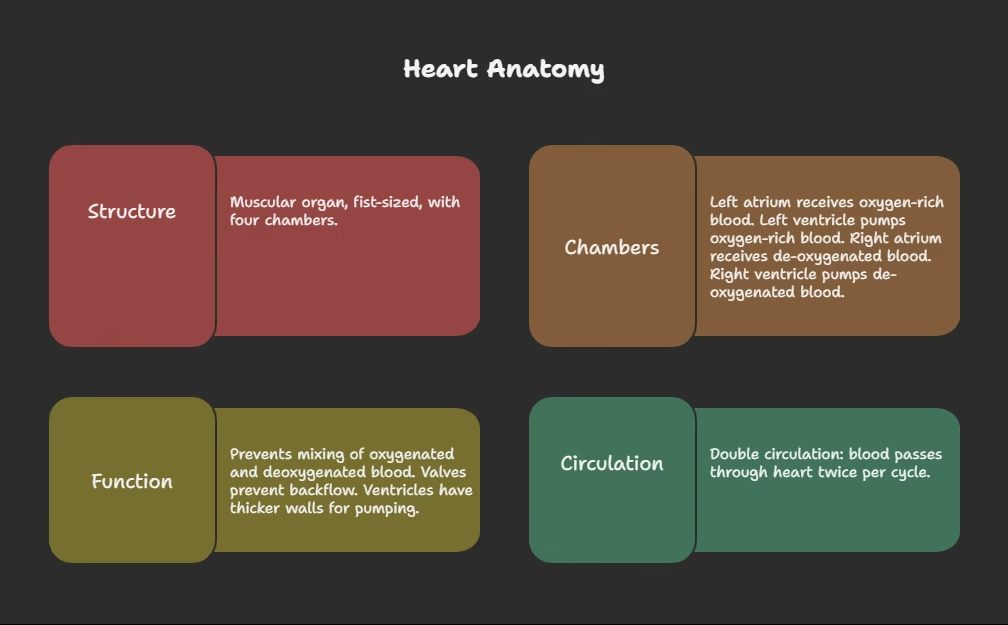
Blood Vessels
- Arteries:
- Carry blood away from the heart to various organs.
- Thick, elastic walls to withstand high pressure.
- Veins:
- Collect blood from organs, bring it back to the heart.
- Thin walls contain valves to ensure one-directional flow.
- Capillaries:
- Smallest vessels, one-cell-thick walls.
- Enable exchange of material (oxygen, carbon dioxide, nutrients) between blood and surrounding cells.
| Vessel Type | Function | Features |
|---|---|---|
| Arteries | Return blood to the heart | Thick, elastic walls |
| Veins | Return blood to heart | Thin walls, valves |
| Capillaries | Exchange material | One-cell-thick walls |
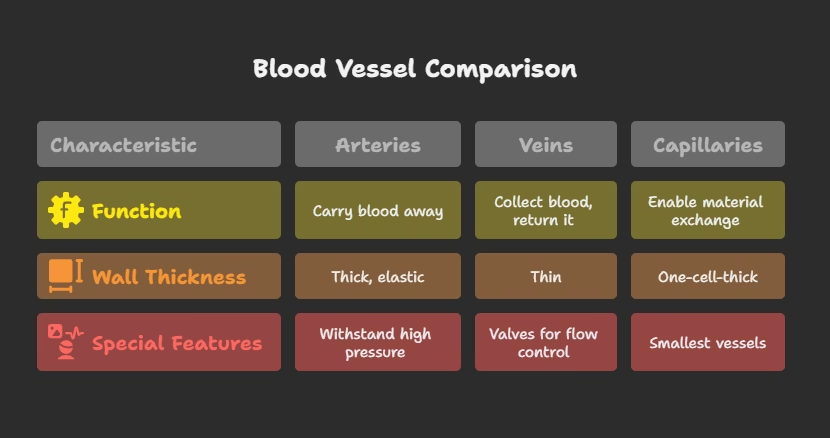
Gas Exchange in Lungs
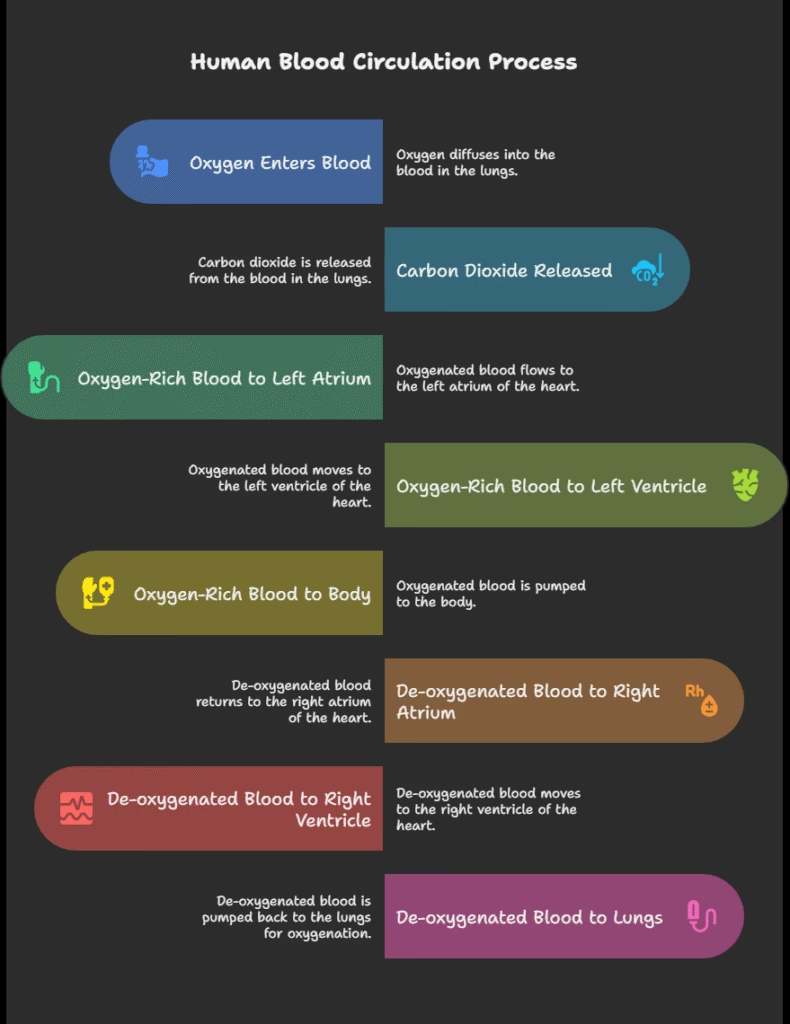
- Process: Oxygen enters the blood, and carbon dioxide is released in the alveoli.
- Pathway:
- Oxygen-rich blood: Lungs → Left atrium → Left ventricle → Body.
- De-oxygenated blood: Body → Right atrium → Right ventricle → Lungs.
- Efficiency: Separation of oxygen-rich and de-oxygenated blood supports high energy needs (e.g., birds, mammals).
- Comparison:
- Amphibians/Reptiles: Three-chambered hearts, tolerate some mixing of oxygenated and de-oxygenated blood.
- Fish: Two-chambered hearts, single circulation (blood passes through the heart once).
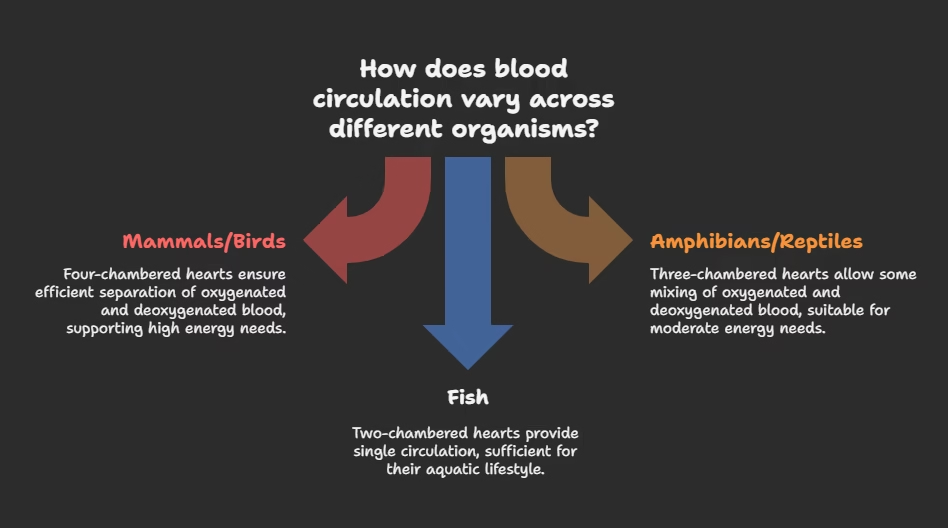
Maintenance by Platelets
- Role: Minimize blood loss by forming clots at points of injury.
- Mechanism: Platelet cells circulate, plug leaks, and maintain pressure in the pumping system.
Lymph
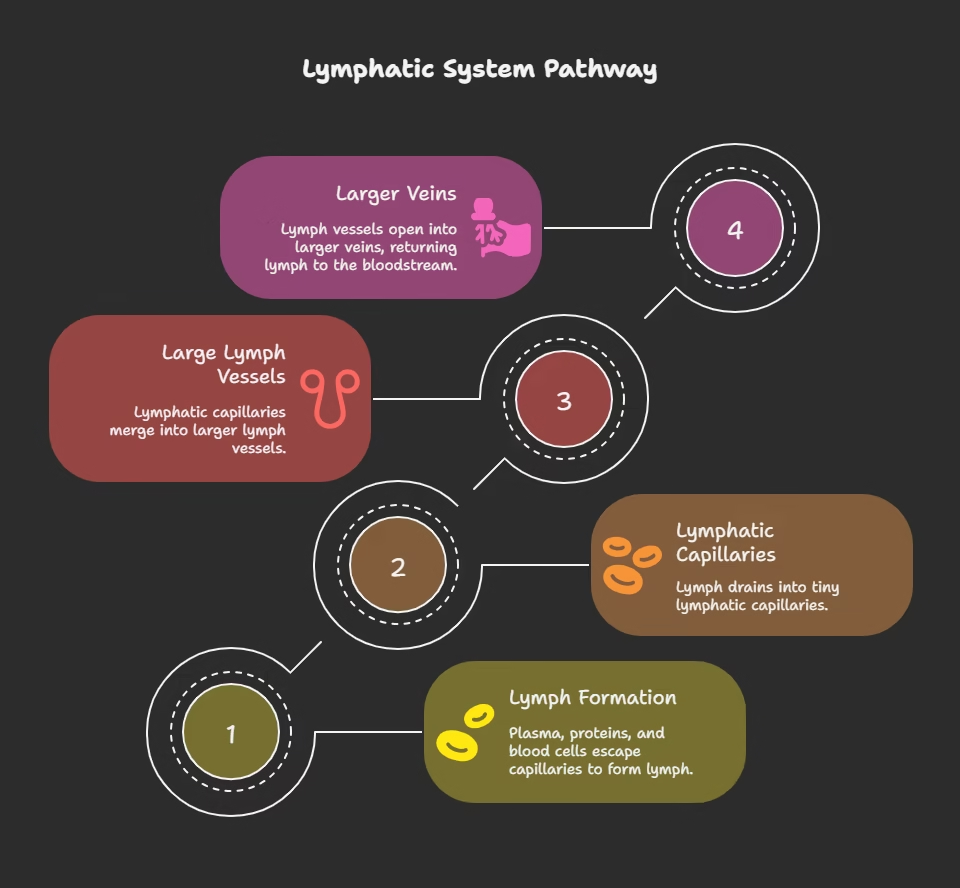
- Definition: Tissue fluid (lymph) is formed when plasma, proteins, and blood cells escape through pores in capillary walls into intercellular spaces.
- Composition: Colourless, similar to plasma, but contains less protein.
- Functions:
- Carries digested and absorbed fat from the intestine.
- Drains excess fluid from intercellular spaces back into the blood.
- Pathway:
- Lymph drains into lymphatic capillaries.
- Lymphatic capillaries join to form large lymph vessels.
- Large lymph vessels open into larger veins.
| Fluid | Composition | Function |
|---|---|---|
| Lymph | Plasma-like, less protein | Carries fats, drains excess fluid into blood |
| Plasma | Fluid with cells | Transports food, CO₂, nitrogenous wastes |
Transportation in Plants
- Purpose: Moves energy (from leaves) and raw materials (from roots) to support plant functions.
- Raw Materials: Nitrogen, phosphorus, minerals from soil; CO₂ for photosynthesis.
- Source: Soil (via roots), air (via leaves).
- Need for Transport: Diffusion insufficient for large plants; specialized systems required.
- Energy Needs: Low due to immobile nature and dead cells in tissues.
- Transport Systems:
- Xylem: Moves water and minerals from roots.
- Phloem: Transports photosynthesis products (e.g., sucrose) and other substances.
| Transport System | Substances Moved | Source | Destination |
|---|---|---|---|
| Xylem | Water, minerals | Roots | Leaves, other parts |
| Phloem | Photosynthesis products, amino acids | Leaves | Storage organs, growing parts |
Transport of Water
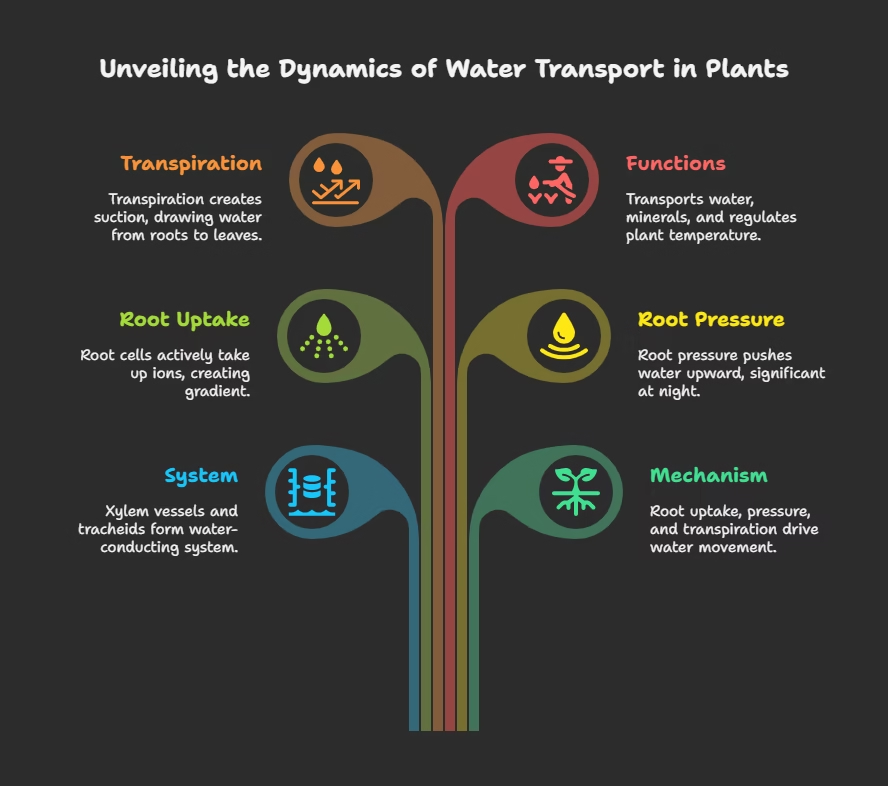
- System: Xylem vessels and tracheids form a continuous water-conducting channel (roots → stems → leaves).
- Mechanism:
- Root Uptake: Root cells actively take up ions, creating a concentration gradient.
- Water moves into roots to balance ion concentration, forming a water column in xylem.
- Root Pressure: Pushes water upward (more significant at night).
- Transpiration:
- Loss of water vapor from aerial parts (via stomata).
- Creates suction (transpiration pull) to draw water from xylem in roots to leaves.
- Major driving force during the day when stomata are open.
- Functions:
- Transports water and dissolved minerals to leaves.
- Regulates plant temperature.
| Process | Role | Driving Force | Time of Impact |
|---|---|---|---|
| Root Pressure | Pushes water up | Ion concentration gradient | Night |
| Transpiration Pull | Pulls water up | Evaporation from leaves | Day |
Transport of Food and Other Substances
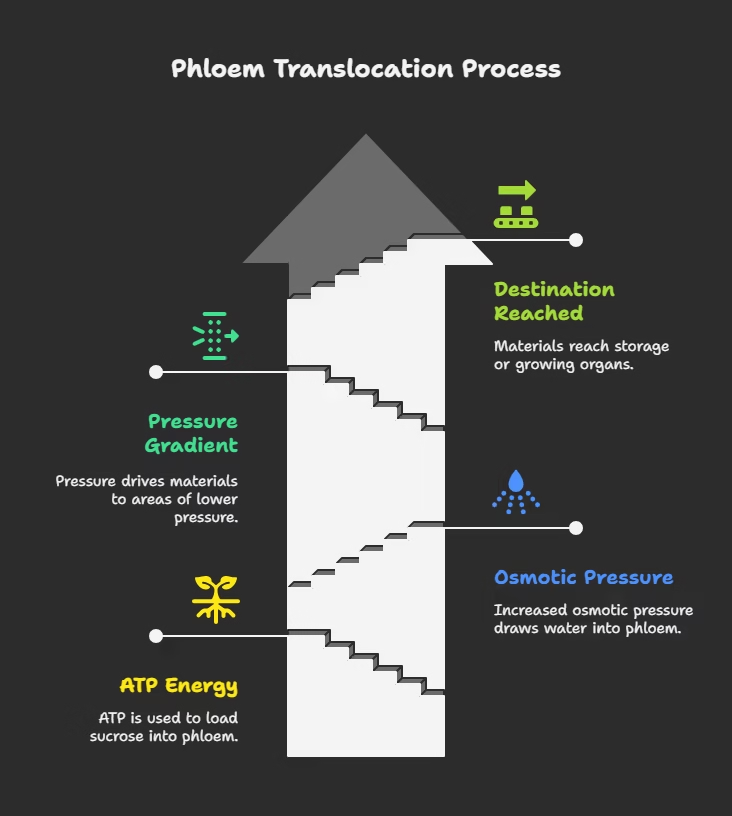
- System: Phloem (sieve tubes and companion cells).
- Process: Translocation – Movement of soluble photosynthesis products (e.g., sucrose), amino acids, and other substances.
- Mechanism:
- Uses ATP energy to transfer materials (e.g., sucrose) into phloem.
- Increases osmotic pressure, causing water to enter the phloem.
- Pressure drives materials to areas of lower pressure (e.g., storage organs, growing parts).
- Direction: Upward and downward, based on plant needs (e.g., sugar from roots to buds in spring).
- Destinations: Storage organs (roots, fruits, seeds), growing organs.
| Component | Role | Substances Moved | Energy Source |
|---|---|---|---|
| Phloem | Translocation | Sucrose, amino acids | ATP |
| Sieve Tubes | Transport pathway | Soluble products | Osmotic pressure |
| Companion Cells | Assist transport | Support sieve tubes | ATP |
Excretion
- Definition: Biological process of removing harmful metabolic wastes from the body.
- Types of Wastes:
- Gaseous: CO₂ (via respiration/photosynthesis).
- Nitrogenous: Urea, uric acid (via excretory system).
- Methods:
- Unicellular organisms: Simple diffusion across the body surface into the surrounding water.
- Multicellular organisms: Specialized organs for excretion.
| Organism Type | Excretion Method | Wastes Removed |
|---|---|---|
| Unicellular | Diffusion | Nitrogenous wastes |
| Multicellular | Specialized organs | Nitrogenous wastes, excess water |
Excretory System in Human Beings
- Components:
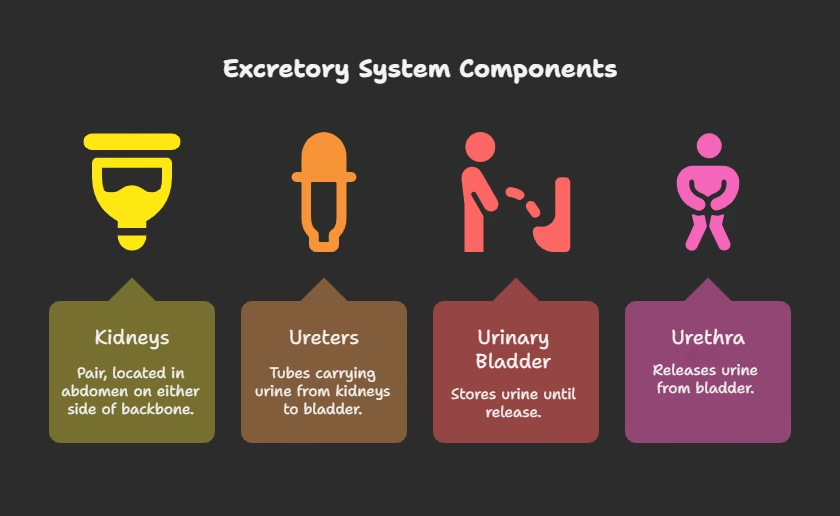
- Kidneys: Pair, located in the abdomen on either side of the backbone.
- Ureters: Tubes carrying urine from the kidneys to the bladder.
- Urinary Bladder: Stores urine until release.
- Urethra: Releases urine from the bladder.
- Function: Filters nitrogenous wastes (urea, uric acid) from blood.
| Connect the kidneys to the bladder | Location | Function |
|---|---|---|
| Kidneys | Abdomen, either side of backbone | Filter blood, produce urine |
| Ureters | Connect kidneys to bladder | Transport urine |
| Urinary Bladder | Pelvis | Store urine |
| Urethra | Below bladder | Release urine |
Urine Formation
- Process:
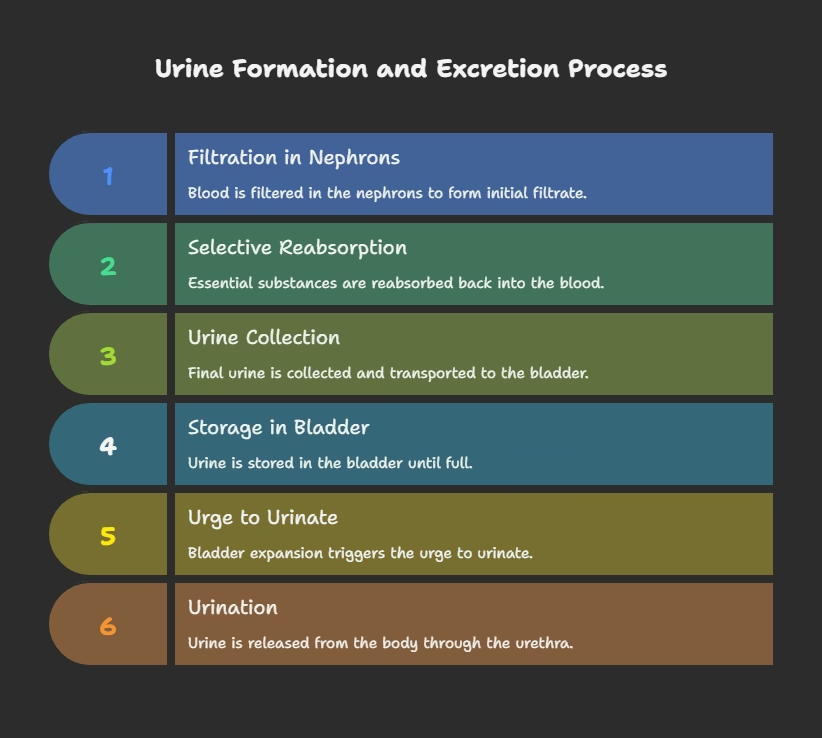
- Filtration: Occurs in nephrons (basic filtration units in the kidneys).
- Each nephron has a Bowman’s capsule (cup-shaped) with a cluster of thin-walled blood capillaries.
- Blood is filtered to form the initial filtrate (contains waste, water, glucose, amino acids, salts).
- Selective Reabsorption: As filtrate flows through the nephron tubes:
- Glucose, amino acids, salts, and most water are reabsorbed into the blood.
- The amount of water reabsorbed depends on the body’s water and waste levels.
- Urine Collection: Final urine (waste + some water) enters the ureters → urinary bladder.
- Storage and Release:
- Urine is stored in the muscular urinary bladder.
- Bladder expansion triggers the urge to urinate via the urethra.
- Urination under nervous control, allowing voluntary regulation.
| Process | Location | Action | Outcome |
|---|---|---|---|
| Filtration | Nephrons (Bowman’s capsule) | Filters blood | Initial filtrate (waste, nutrients, water) |
| Reabsorption | Nephron tubes | Reabsorbs glucose, salts, water | Concentrated urine |
| Storage | Urinary bladder | Stores urine | Controlled release |
| Release | Urethra | Expels urine | Waste removal |
Excretion in Plants
- Definition: Removal of metabolic waste products from plant tissues.
- Key Difference: Unlike animals, plants lack specialized excretory organs.
- Wastes:
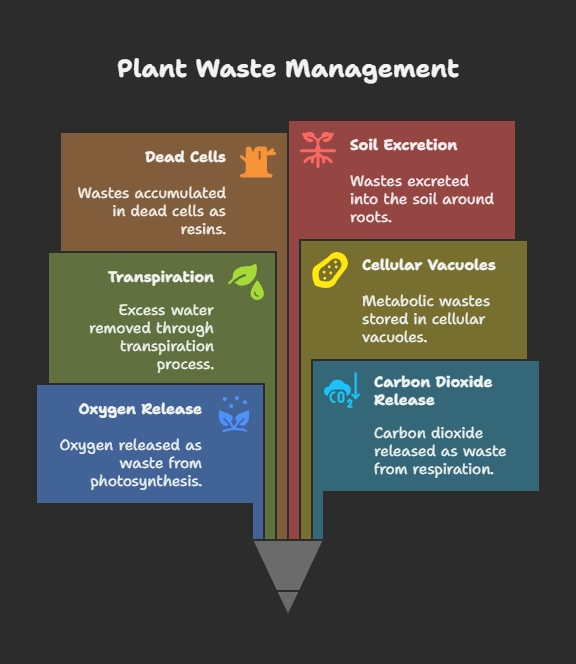
- Gaseous: Oxygen (from photosynthesis), CO₂ (from respiration).
- Liquid: Excess water.
- Other: Metabolic byproducts (resins, gums, etc.).
- Strategies: Utilize dead tissues, shedding parts, and diffusion into the surroundings.
| Waste Type | Examples | Removal Method |
|---|---|---|
| Gaseous | O₂, CO₂ | Diffusion via stomata |
| Liquid | Excess water | Transpiration |
| Other | Resins, gums | Storage in dead cells, leaves, or soil |
Excretion Mechanisms
- Gaseous Wastes:
- Oxygen: Waste from photosynthesis, released via stomata.
- Carbon Dioxide: Waste from respiration, released via stomata.
- Excess Water:
- Removed through transpiration (evaporation of water vapor from aerial parts, mainly leaves).
- Other Metabolic Wastes:
- Stored in cellular vacuoles (compartments within cells).
- Accumulated in dead cells (e.g., old xylem) as resins or gums.
- Stored in leaves that fall off, removing wastes from the plant.
- Excreted into the soil around roots.
| Mechanism | Waste | Storage/Removal Site |
|---|---|---|
| Diffusion | O₂, CO₂ | Stomata |
| Transpiration | Excess water | Leaves (stomata) |
| Storage | Resins, gums | Cellular vacuoles, old xylem, leaves |
| Excretion | Metabolic wastes | Soil around roots |
Conclusion: Life Processes Short Notes Class 10
If you’ve read this far, you know the Life Processes chapter is long and full of technical terms.
But,
With the right mindset and zeal, you can master it. Keep revising from your NCERT book and our website. We’ll add more study tools to help you study less and score more.
Please share with your friends!
![[2025] Federalism Explained! : Brilliant & Game-Changer – Master India’s Power-Sharing Secrets for Class 10](https://studyless.in/wp-content/uploads/2025/04/100-MCQs-ON_11zon-1024x576.avif)


Leave a Comment